

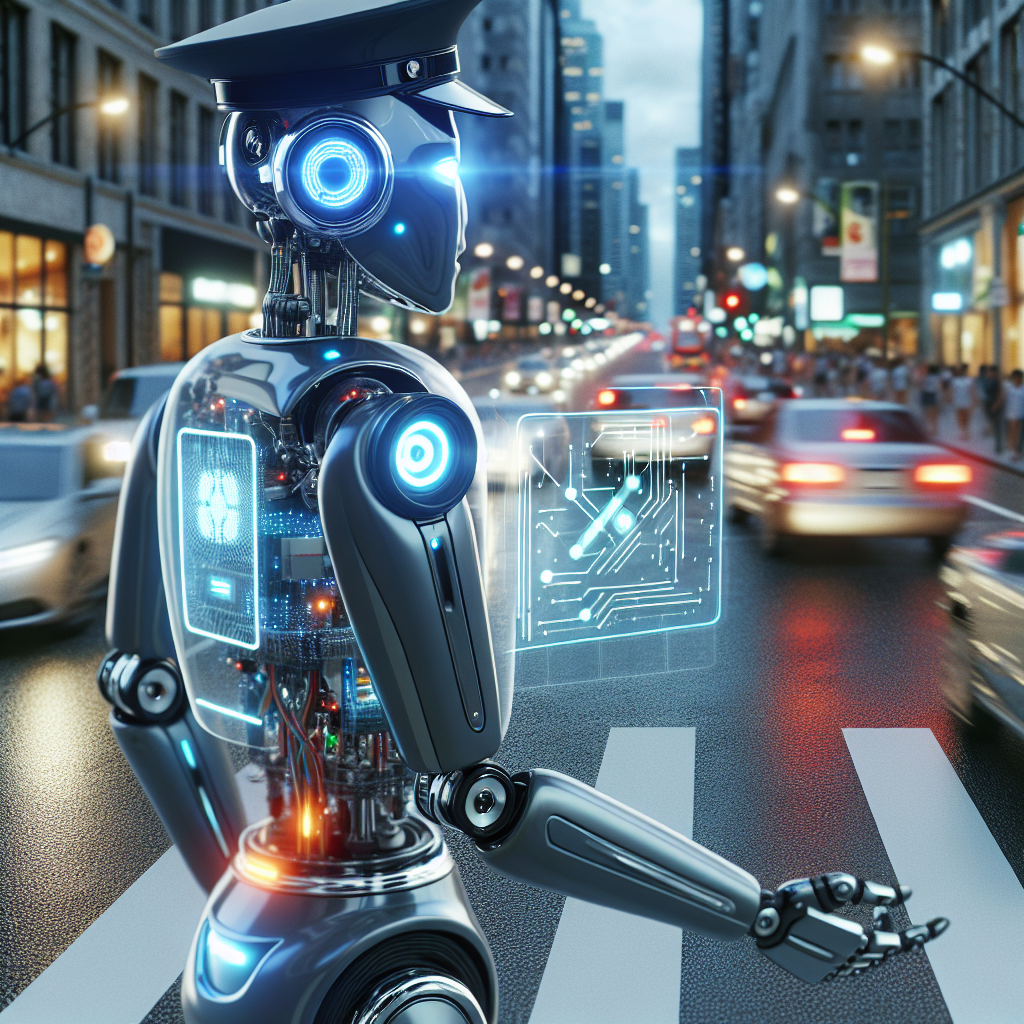
In a significant advancement in urban management, Hangzhou has introduced its first AI-powered traffic officer, Hangxing No. 1. This innovative robot is designed to enhance road safety and streamline traffic flow, marking an important shift toward automation in city infrastructure.
Launched under the auspices of the Hangzhou Traffic Police Tactical Unit, Hangxing No. 1 made its debut on December 1, specifically in the bustling Binjiang district. This cutting-edge robot is strategically positioned at one of the city’s busiest intersections, adding a contemporary and futuristic element to urban transport management.
Equipped with high-definition cameras and an array of sensors, Hangxing No. 1 has been programmed to assist human officers in directing both pedestrian and vehicular traffic. The robot’s movements in directing traffic—such as gestures for “go straight” or “stop”—are directly modeled on the actions of real traffic officers. This design choice not only lends credibility to its authority but also facilitates seamless integration with existing traffic signal systems.
One of Hangxing No. 1’s most impressive features is its real-time violation detection capability. The AI system is adept at identifying various traffic infractions, such as motorcyclists riding without helmets, vehicles that breach stop lines, and pedestrians who jaywalk. In instances of rule-breaking, the robot engages its intelligent voice system to deliver immediate and polite reminders, helping to foster a culture of compliance amongst road users.
What sets Hangxing No. 1 apart is its potential for continuous learning. As the robot operates at real-life intersections, it is designed to refine its capabilities based on the traffic patterns it encounters. Currently, its primary function is traffic management, but future enhancements could see it gaining advanced Large Language Model (LLM) capabilities. These improvements would allow the robot to provide directions, disseminate safety educational content, and engage in more complex interactions with drivers and pedestrians alike.
Despite the groundbreaking nature of Hangxing No. 1, specific details regarding its battery life have not been disclosed. However, it has been reported that similar robots in other provinces typically have an operational lifespan of 6 to 8 hours per charge, indicating that Hangxing No. 1 will likely possess comparable endurance.
The deployment of this AI-powered traffic robot highlights the evolving landscape of urban management and the increasing role of technology in enhancing public safety. As cities worldwide grapple with traffic congestion and safety issues, innovations like Hangxing No. 1 offer promising solutions. The integration of AI in everyday functions provides a clear example of how automation can improve efficiency and effectiveness in public services.
Not only does Hangxing No. 1 symbolize a leap forward for Hangzhou, but it also sets a precedent for other cities considering the adoption of similar technologies. The ripple effect of such advancements could lead to widespread changes in how urban environments manage traffic, contributing to safer and more efficiently run cities.
As Hangzhou continues to test and refine Hangxing No. 1, the observations and data collected during trial runs will be invaluable. They will serve to inform future enhancements and adaptations of robotic assistance in traffic management and potentially beyond, laying the groundwork for a future where AI plays an integral role in urban living.
Leave a Reply