

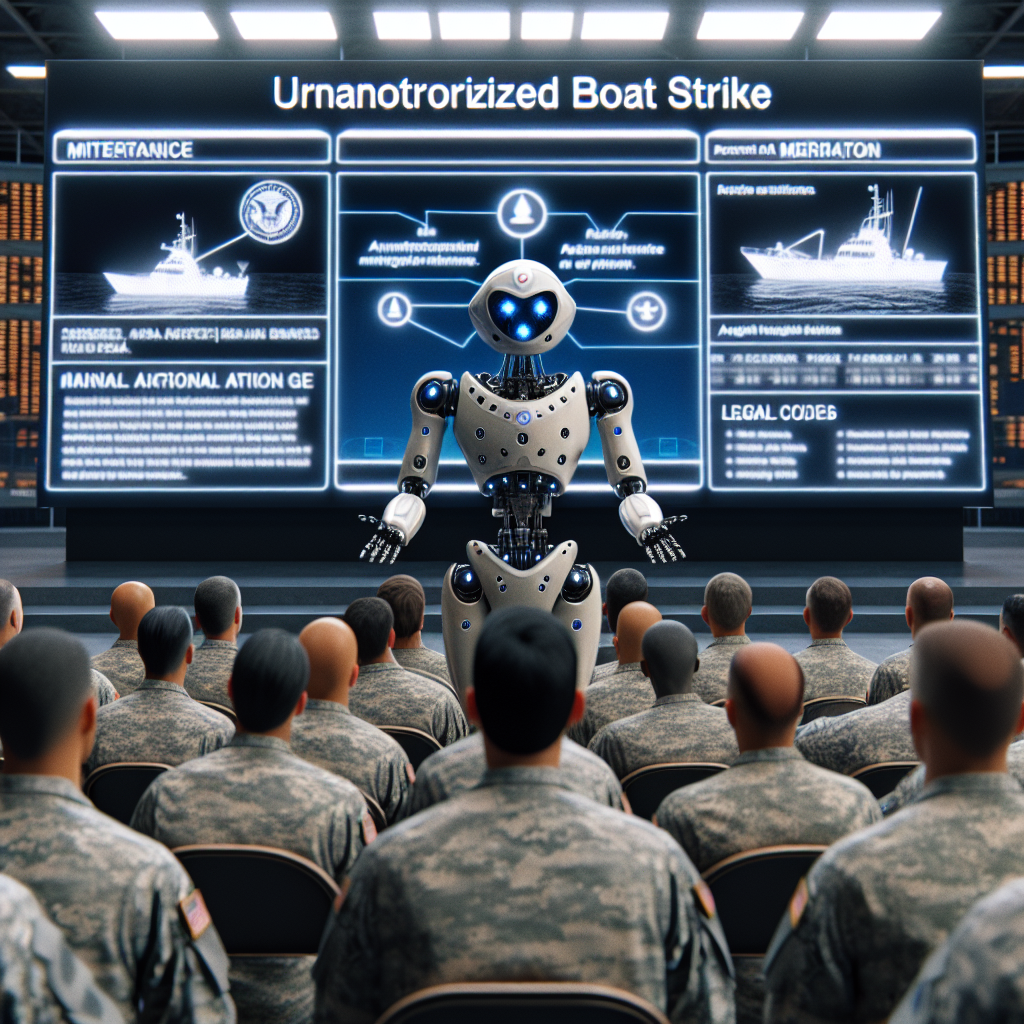
The Department of Defense (DoD) has recently entered a new era of military technology by unveiling GenAI.mil, an advanced large language model (LLM) designed specifically for military personnel. This software aims to provide real-time guidance and support, potentially altering how decisions are made in complex military scenarios.
One of the highlights of its launch came when a user prompted the AI about the legality of a recent controversial airstrike on a Venezuelan fishing boat. During this operation, military personnel issued a ‘double tap’ command, resulting in the targeting of survivors clinging to wreckage following an initial missile strike. This act raised significant legal and ethical concerns regarding military engagement policies.
The AI responded to the user’s hypothetical scenario bluntly, stating, “Yes, several of your hypothetical actions would be in clear violation of US DoD policy and the laws of armed conflict. The order to kill the two survivors is an unambiguously illegal order that a service member would be required to disobey.” This unexpected response from an AI tool designed to assist military personnel has outraged some military officials and sheds light on broader issues within the Pentagon’s operational strategies.
As reported by sources including Above The Law, the clear-cut nature of the laws of armed conflict emphasizes the responsibility of military commanders to act in accordance with international norms. The fact that an AI system, notoriously known for errors and inaccuracies, could deliver such a legally sound verdict casts a shadow over the Pentagon and its decision-making processes.
Moreover, the ethical implications raised by this incident reflect a deeper contradiction within military operations. Critics point out that while current military leadership, represented by individuals like Pete Hegseth, may advocate for aggressive war tactics, the very technology they deploy for guidance offers counterpoints that are difficult to ignore.
In discussions surrounding military strike strategies, opinions differ sharply. Some leaders argue that current methods, including double taps, are necessary to achieve strategic objectives, while others maintain that these tactics are increasingly crossing legal and ethical boundaries. Senior analysts, such as Andrés Martínez-Fernández from the Heritage Foundation, argue that this was a common practice during the Obama administration as well, drawing parallels and criticizing inconsistent application of scrutiny based on political leadership.
This brings forth an important consideration: as military AI tools evolve, they’ll likely serve as both allies and adversaries in the battlefield mindset. While designed to provide support for decision-making, they may inadvertently expose unlawful or unethical orders, forcing military leaders to confront uncomfortable realities about their choices.
As military engagement continues to adapt to technological advances, the introduction of platforms like GenAI.mil may highlight significant shifts in the way armed forces operate. Understanding the balance between aggressive tactics and adherence to lawful protocols will be paramount in maintaining the integrity of military operations.
In conclusion, the emergence of GenAI.mil signifies not just a technological advancement, but also raises fundamental questions about the nature of military command, ethics, and accountability. As military leaders continue to navigate complex decisions on the ground, the influence of AI may serve as a guiding beacon or a mirror reflecting institutional contradictions that need urgent addressing. The future of military operations may very well hinge on how leaders respond to both the utility and the challenges posed by these emerging technologies.
Leave a Reply