

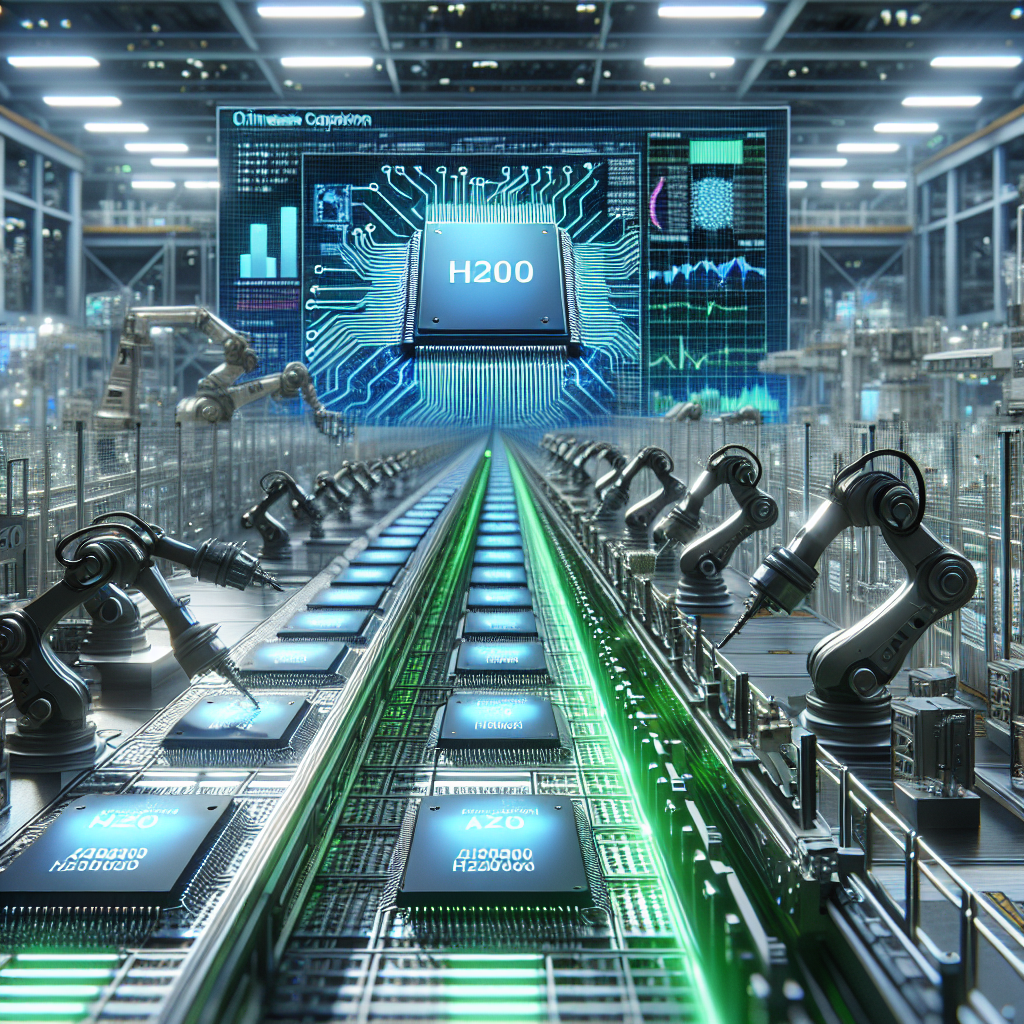
The global landscape of artificial intelligence (AI) technology is rapidly evolving, and major players are stepping up to meet unprecedented demands. Recently, Nvidia, a leading US chip manufacturer, announced its consideration to increase production capacity for its H200 AI chips. This decision comes in response to a surge in demand from several Chinese companies, including e-commerce giant Alibaba and TikTok’s parent company, ByteDance. According to reports, the current output of these chips is insufficient to meet this booming demand.
Nvidia’s response to inquiries indicated a strategic approach to managing their supply chain effectively. A spokesperson for the company reassured stakeholders that any licensed sales of the H200 to authorized customers in China would not adversely affect their ability to maintain supply levels for clients in the United States. This highlights Nvidia’s commitment to balancing international relations and market demands as tensions rise over technology exports.
Notably, the demand for the H200 chips has been so robust that Nvidia is actively considering new capacity additions. A source indicated that the company is recognizing the urgent requirements from Chinese clients, who have begun to place large orders for the chips. This is a significant development, especially following US President Donald Trump’s recent approval that allows Nvidia to export these advanced AI chips to China while charging a sales fee of 25%.
However, the path forward remains uncertain. Reports indicate that the Chinese government has yet to officially approve any purchases of the H200 chips. Following this announcement, Chinese officials held emergency meetings to discuss the implications and requirements for these acquisitions. This scenario exemplifies the complex dynamics at play in international tech trade, where geopolitical factors intertwine with commercial interests.
The H200 chip itself is a marvel of modern technology, having been launched into mass deployment in 2024. Manufactured by TSMC, using cutting-edge 4nm process technology, the H200 boasts performance capabilities that are six times greater than its predecessor, the H20, which was tailored for the Chinese market. This leap in performance positions the H200 as one of the most advanced options in the market, particularly as the Chinese tech sector looks to enhance its AI and cloud service capabilities.
Market analysts are keenly observing these developments. Nori Chiou, an investment director at White Oak Capital Partners, noted the significance of the H200’s compute performance, which is estimated to be 2-3 times that of the most advanced domestically produced accelerators in China. His observations reflect a clear trend among cloud service providers and enterprise customers in China who are aggressively placing orders. These businesses are not just seeking to secure their supply of H200 chips, but are also lobbying the government to relax existing restrictions, which could enhance their competitive positioning.
This situation underscores the wider implications for the AI industry and chip manufacturing as a whole. As demand for high-performance AI capabilities continues to outstrip local production capacities in China, Nvidia could find itself at a pivotal point in shaping the future of technology in one of the world’s largest markets. Such dynamics point to a potential shift in the balance of power within the global chip market, where companies capable of innovating and responding to demands swiftly may hold a distinct advantage.
The unfolding scenario serves as a reminder of the intricate relationship between technology and geopolitics. With strong demand for AI products from key players, adjustments in production capacity and export policies will be crucial in determining market trajectories in the coming years. Companies involved in AI and chip production are advised to keep a keen eye on regulatory developments in both the US and China, as these decisions will undoubtedly impact their operations and strategic planning.
Leave a Reply