

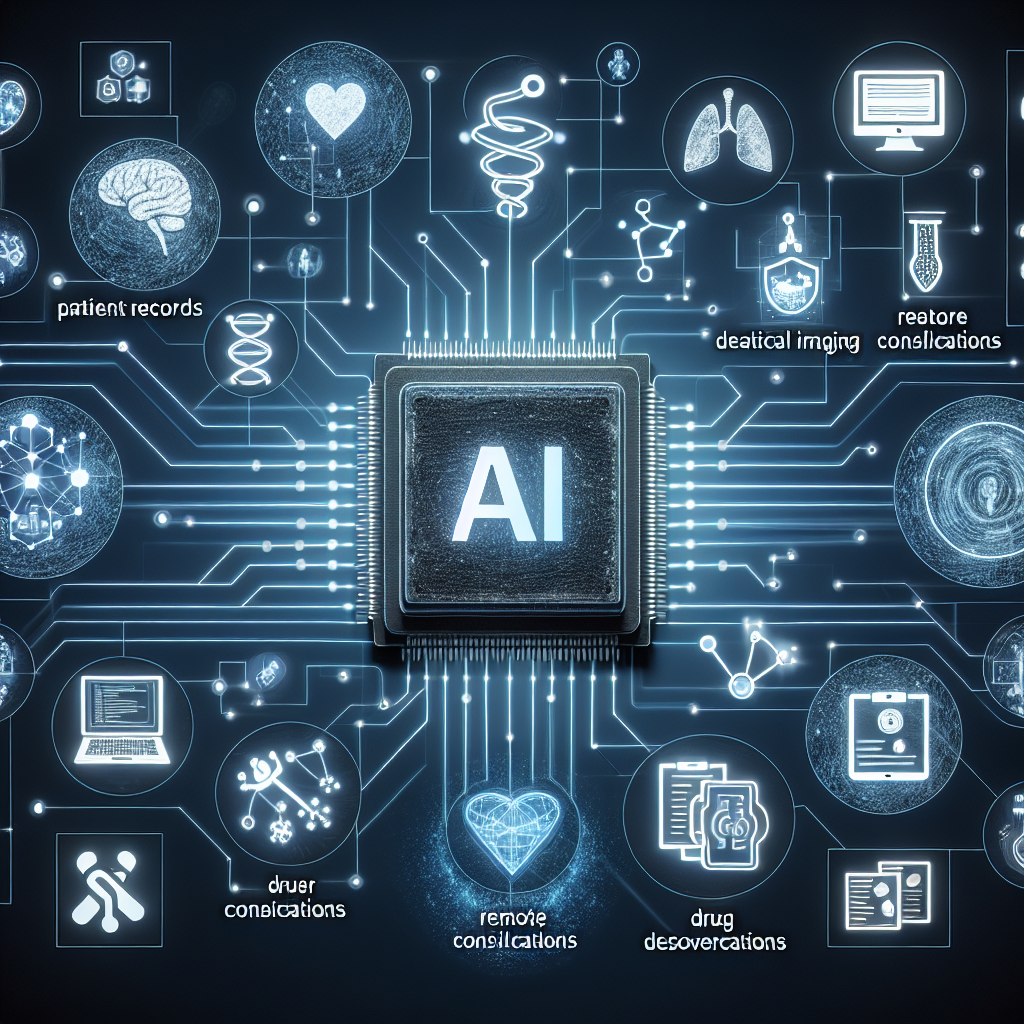
As the healthcare landscape continues to evolve, the integration of artificial intelligence (AI) is proving to be a game-changer. Faced with mounting complexities and labor pressures, health systems are increasingly turning to AI technologies to make faster, more reliable decisions. The need for innovation in this sector has never been greater, and AI is stepping up to meet those demands.
One of the most significant advancements being made is the use of AI to predict hospital operations. Traditional analytics often struggle to handle the myriad of variables that influence healthcare delivery. However, GE HealthCare’s Digital Twin technology redefines how hospitals manage these dynamics by creating virtual replicas of operations. This allows healthcare leaders to explore different scenarios, understand patient flows, and anticipate staffing needs before crises emerge.
The implementation of Digital Twins has led to remarkable improvements at institutions like Children’s Mercy Kansas City. For instance, the senior vice president and chief nursing officer, Stephanie Meyer, notes that this technology has helped the hospital prepare for surges in demand. By simulating potential increases in patient volume and testing staffing changes, hospitals can identify bottlenecks and mitigate them before they disrupt the patient care continuum.
Moreover, AI is rapidly advancing the capability of hospitals to make real-time operational adjustments. These digital tools can be deployed within months instead of years, relying on existing operational data to inform their simulations. This agility not only enhances operational efficiency but also allows healthcare leaders to make more informed decisions regarding capital planning and resource allocation.
In addition to enhancing predictive capabilities, the convergence of AI and cloud technologies is driving significant improvements in operational intelligence and financial performance. Cloud infrastructures empower health systems by aggregating operational, staffing, and clinical data, enabling continuous, real-time AI modeling. GE HealthCare’s Command Center exemplifies this effective utilization, allowing healthcare providers to project inpatient census levels, spot staffing shortages, and monitor bed capacity across their networks with unprecedented accuracy.
These innovations have tangible benefits. Reports indicate that some AI tools can achieve accuracy rates exceeding 90% in their predictive capabilities. This high level of precision allows hospitals to proactively tackle potential congestion issues and address delays in care. The financial implications of such efficiencies can lead to substantial cost savings while simultaneously improving patient outcomes.
Beyond just operational enhancements, AI is also personalizing patient care on a broader scale. For instance, health systems are employing multimodal models that analyze various data types to tailor cancer treatment plans. This individualized approach not only improves patient satisfaction but also fosters better healthcare results.
As artificial intelligence continues to reshape the operational paradigm of healthcare, hospitals that embrace these technologies will likely lead the pack in terms of efficiency, quality of care, and patient satisfaction. The integration of AI not only serves the immediate needs of hospitals but also positions them for future challenges as they continue to navigate the complex landscape of modern medicine.
In summary, the ongoing transformation fueled by AI in healthcare is indeed rewriting the playbook for how systems operate and deliver care. The convergence of predictive technologies and cloud solutions stands to reshape not only the financial viability of hospitals but also the quality of care provided to patients. As these technologies develop further, their potential to drive radical improvements in healthcare will only increase.
Leave a Reply