

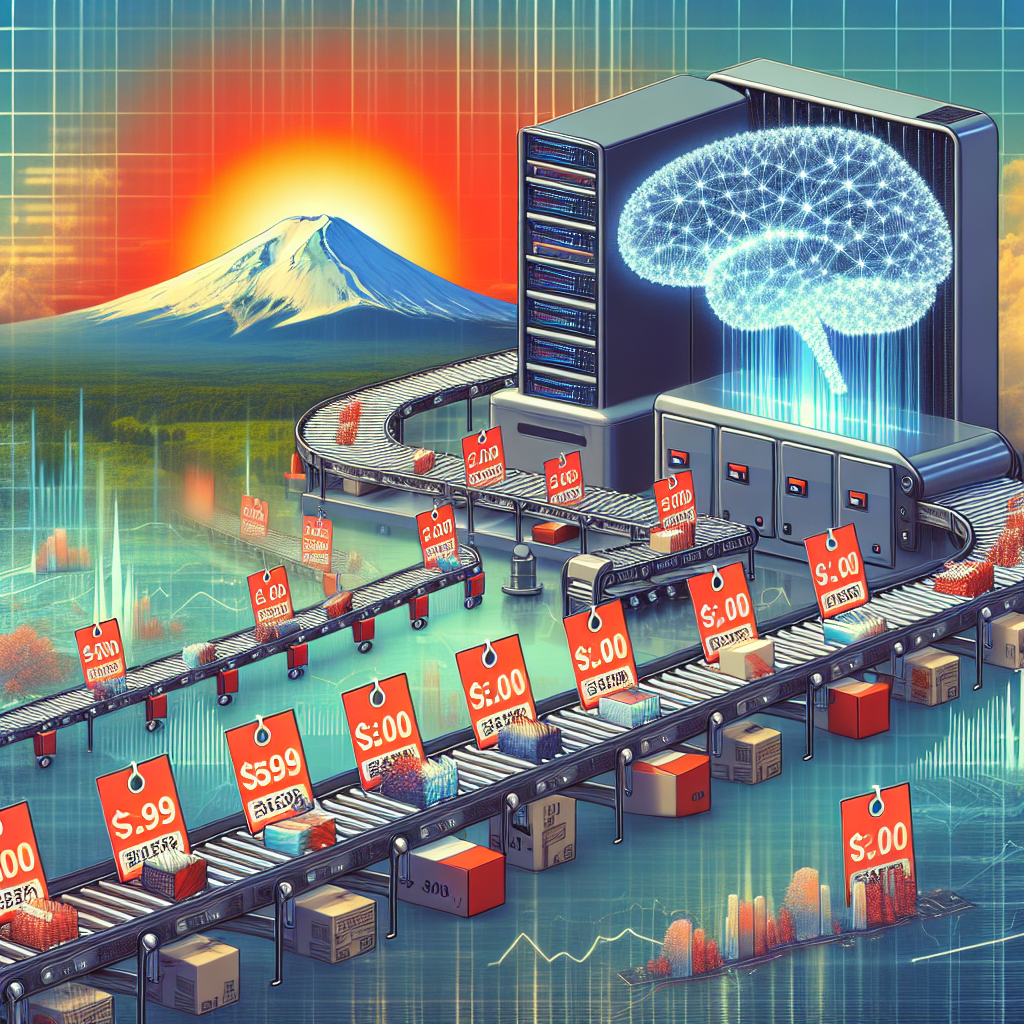
In an era where inflation is becoming a significant concern, the retail industry in Japan is undergoing a transformational shift. This change is largely driven by an innovative AI-powered system designed to optimize discount timing and levels, significantly impacting pricing strategies across the sector.
Developed by Harmonia, a startup spearheaded by CEO Daiki Matsumura, the technology aims to assist food retailers struggling with razor-thin profit margins that hover around just 1.5 percent. The system’s fundamental goal is twofold: to enhance earnings for retailers and to tackle the issue of food waste by allowing for more accurate and timely price adjustments.
In October 2025, this noteworthy technology caught the eye of Toshiba Tec, a major player in point-of-sale solutions, which ultimately led to Harmonia’s acquisition. This move raised intriguing questions regarding Matsumura’s decision to sell the startup instead of pursuing a public offering. Matsumura affirmed that the choice was rooted in a desire for scalability and significant impact. By collaborating with an established industry leader, they could roll out the technology more swiftly and affect pricing standards across Japan’s retail landscape.
The AI system utilizes advanced algorithms to analyze vast datasets, examining variables such as demand fluctuations, inventory levels, and even the time of day to suggest optimal pricing strategies. Such an approach allows food retailers to not only attract customers but also maintain profitability—an area often fraught with traditional pricing methods relying heavily on instinct and experience.
Interestingly, this technology is not limited to food retailers alone; its application has been observed in various sectors, including hospitality and transportation. For instance, one bus operator implemented the system and reported an increase in revenue by several percentage points, showcasing its broader implications beyond food retail.
During a recent stroll through Ginza’s vibrant shopping scene, Matsumura illustrated how current pricing strategies already influence consumer behavior. He pointed to a food shop that priced takeout items lower than dine-in options, effectively enticing customers to sample their offerings. For example, spring rolls were priced at 250 yen for an in-store experience but offered at 150 yen for takeout, a deliberate strategy designed to attract first-time customers.
Matsumura emphasized that these pricing decisions are carefully crafted, not whimsical. The intent is to draw customers into stores, foster familiarity with the brand, and eventually drive them towards higher-value purchases. The AI system seeks to formalize this strategy by utilizing data intelligence to dictate pricing fluctuations throughout the day.
As consumer behavior shifts from deflationary to inflationary periods, understanding and managing pricing becomes increasingly imperative. Matsumura expresses optimism that by automating these critical pricing decisions, retailers can navigate the heightened competition of the market. More importantly, this approach stands to reduce waste and enhance efficiency throughout the entire food distribution chain.
In conclusion, as AI-driven pricing mechanisms gain traction in Japan, this initiative could signify a pivotal moment for the retail industry. By addressing one of its core challenges—effective pricing at the right time—the sector could not only survive but thrive in a rapidly changing economic environment. As this technology evolves, stakeholders in Japan’s retail landscape will likely find themselves at an exciting intersection of innovation and tradition.
Leave a Reply