

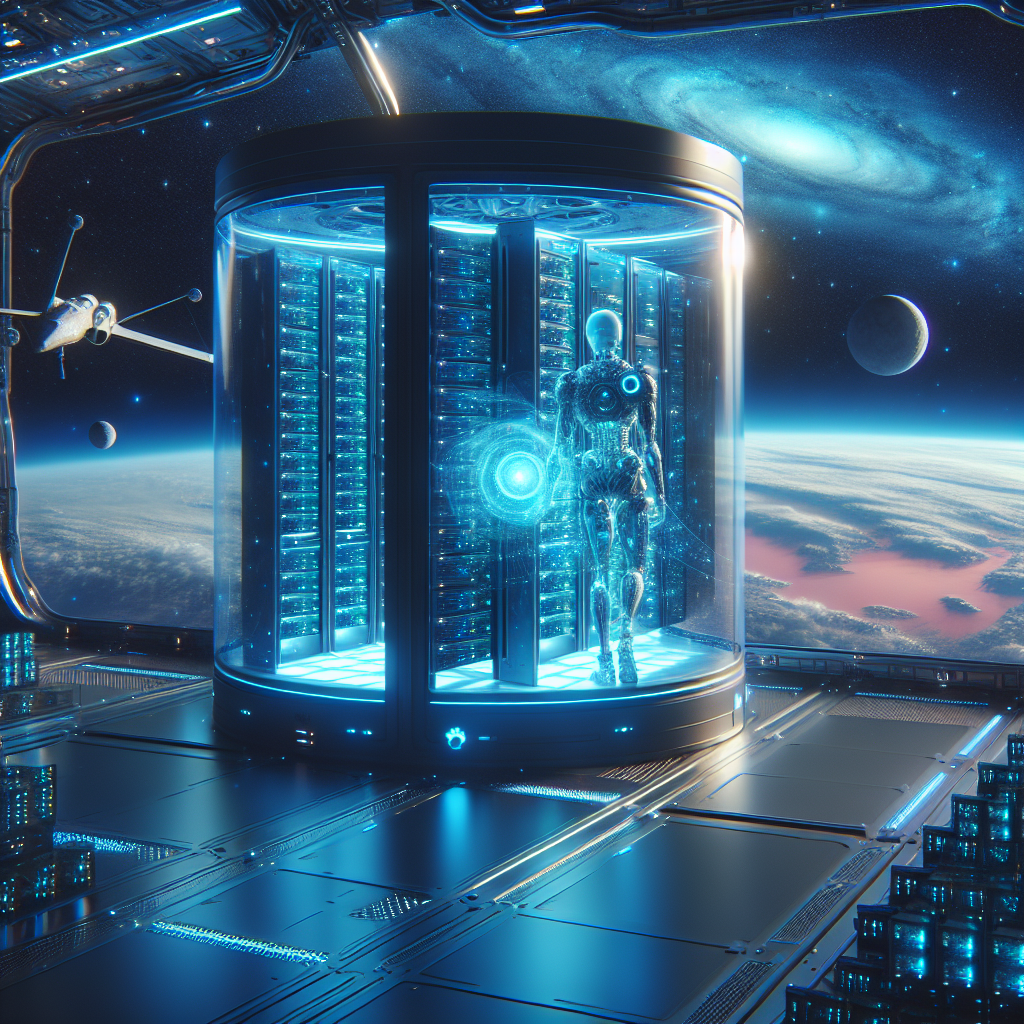
The rapid advancements in artificial intelligence (AI) are prompting prominent tech leaders, including Google, Elon Musk, Jeff Bezos, Sam Altman, and Jensen Huang, to explore an unconventional solution to the growing demands for data: space-based data centres. Project Suncatcher, initiated by Google, aims to test the viability of these orbital facilities starting in 2027, presenting a futuristic vision where massive data centres float in the night sky.
This pioneering idea stems from the concerns that terrestrial data centres, as they scale to meet the insatiable computing needs of AI, will soon exhaust available energy and land on Earth. Philip Johnston, CEO of Starcloud, highlights that the transformation into space-based data centres is no longer a matter of if, but when. He emphasizes that as the competition in AI heats up, the existing limits of earthbound facilities push this narrative towards becoming a reality.
The global AI race, now accelerated by significant financial commitments from tech giants like OpenAI, which alone invests an estimated $1.4 trillion in data centres, demonstrates the urgency surrounding the need for innovative infrastructures. The pressures are not limited to market competition; the feasibility of current terrestrial data centres faces obstacles like power shortages and local opposition due to rising utility costs and environmental concerns.
Against this backdrop, the exploration of space-based alternatives may prove vital. Although some scientists have expressed skepticism regarding the technological and economic feasibility of such ambitious projects, the benefits of solar energy accessibility and fewer regulatory constraints in space present compelling arguments. Johnston notes that a space data centre could exploit near-constant solar exposure, unlike Earthbound counterparts which are often hampered by weather.
The idea of space-based data repositories is not entirely new; the National Aeronautics and Space Administration (NASA) first proposed the notion in the 1960s, and it has appeared in various science fiction narratives since the 1980s. Yet, the modern perception of these facilities as integral to power AI systems has gained traction only in recent years. As the tech community grapples with the realities of scaling AI infrastructure, investing in space-based solutions may appear less fantastical and more necessary.
However, the high costs associated with launching and maintaining data centres in orbit cannot be ignored. Critics like Pierre Lionnet, a space economist, argue that the projections for the size and capacity of space data centres, suggested by Musk and others, surpass current scientific research capabilities. This skepticism indicates a need for measured approaches to realize such projects while balancing aspirations with technical realities.
As major players from different sectors unite to advocate for space-based data centres, the challenge lies not just in overcoming engineering hurdles but also addressing public concerns. For instance, environmental considerations and the ramifications of enormous orbital constructions must be evaluated alongside their potential benefits. Countries like Saudi Arabia are already funneling substantial investments into this concept, showcasing a willingness to become leaders in this emerging field.
The intersection of AI advancement and space exploration opens doors to unprecedented possibilities; however, it also necessitates rigorous discourse around sustainability and logistics. If the desires of today’s tech giants breathe life into space data centres, the future may indeed see these behemoths illuminating the night sky, standing as testimony to humanity’s ambition to conquer the final frontier for technological innovation.
Leave a Reply