

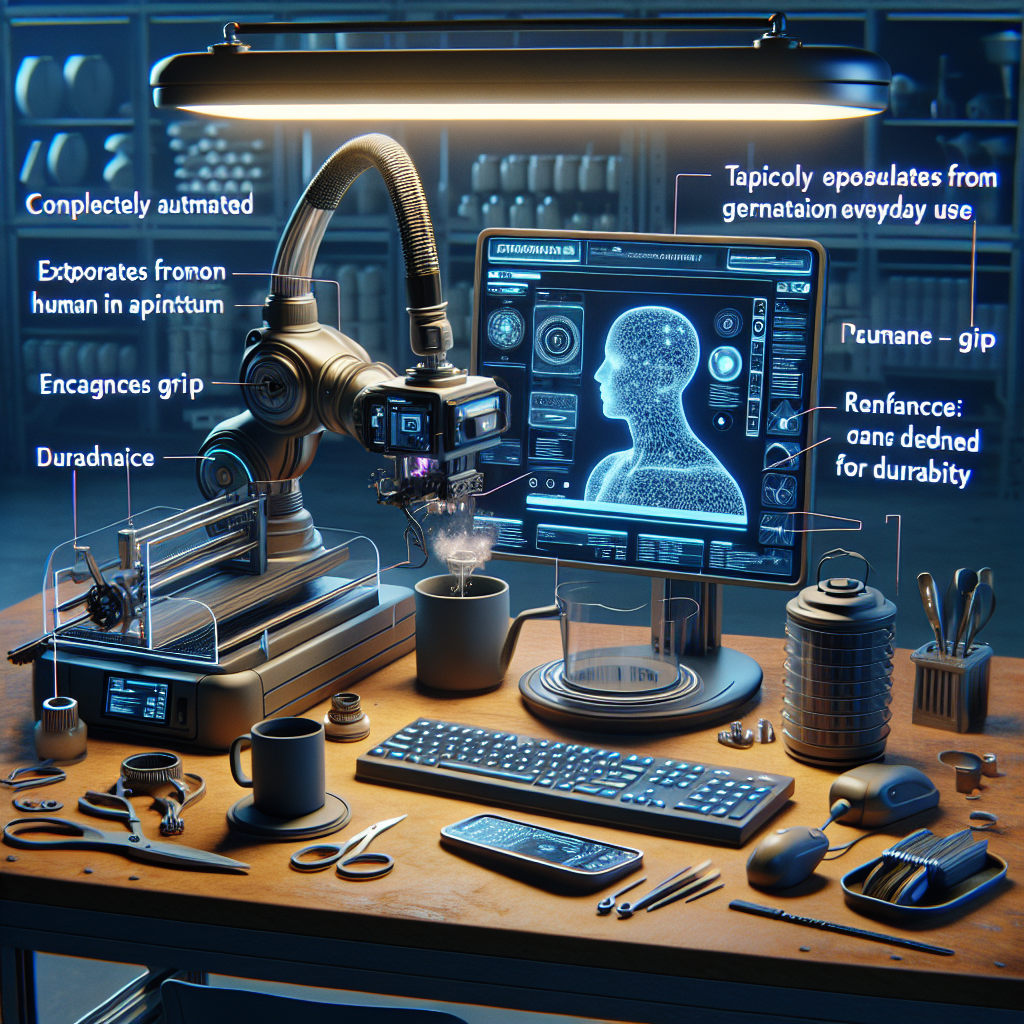
In recent years, generative AI has revolutionized digital content creation, but its expansion into the physical realm has lagged behind. A breakthrough has emerged from collaboration between researchers at Google, Stability AI, and Northeastern University, who have introduced a pioneering AI-powered system called “MechStyle.” This innovative tool allows users to create custom 3D printed objects that are not only aesthetically pleasing but also durable, ensuring that the final product can withstand daily use.
The process is as user-friendly as it is exciting. Users can either upload their own 3D models or select from preset assets like vases or wall hooks. By providing a prompt in the form of images or text, the MechStyle system modifies the 3D geometry of the model according to the user’s desires while maintaining its structural integrity. This dual function of creativity and compliance with physical properties is vital, as many existing systems struggle to balance artistic flair with functional safety.
Faraz Faruqi, a Ph.D. student at MIT’s Department of Electrical Engineering and Computer Science (EECS), has been at the forefront of this exploration. His work addresses a crucial challenge: ensuring that when generative AI alters a design for aesthetic appeal, it does not sacrifice functionality. This is particularly significant because previous attempts at generating personalized 3D models often led to structural failures—only about 26% of modified models remained viable for use in their intended form and material.
Imagine wanting a wall hook with a playful cactus design instead of the standard options. With MechStyle, users can choose a basic wall hook model, specify the material—like polylactic acid—and command the AI to morph it into something uniquely personal. The generative model collaborates with a simulation module that analyzes how the changes affect the object’s practical uses. This means the final product will not only look like a cactus but will also function seamlessly as a hook, sturdy enough to hang items like mugs and bags.
Key to the success of MechStyle is its advanced stylization process. Unlike traditional methods that often disregard the physics of 3D designs, this system intelligently adapts models based on user prompts while simultaneously assessing structural viability. By merging creativity with engineering, it serves a growing need for personalized items that reflect individual tastes without compromising on durability.
The implications of this technology extend beyond mere novelty. Consumers are increasingly seeking customizable products that resonate with their identities. From unique decorative items to practical household tools, the ability to 3D print personalized creations opens new avenues in markets focused on individual expression and personalization. As MechStyle becomes more widely adopted, it signals a shift towards more user-centric manufacturing processes.
There are vast commercial opportunities as the demand for personalized 3D printed items rises. Businesses in sectors ranging from home goods to fashion could leverage this technology to offer bespoke solutions, enhancing customer satisfaction and loyalty. As generative AI continues to evolve, integrating functionality and enjoyable design will likely become a standard expectation from consumers.
However, questions about the broader application of MechStyle remain, such as scalability, accessibility, and the range of materials that can be employed in the printing process. Can this technology be adapted for larger-scale production? How will it fit into existing manufacturing frameworks? The future is bright, but these considerations are critical as the technology matures.
In conclusion, the advent of the MechStyle system marks a significant moment in the intersection of generative AI and 3D printing. By bridging the gap between digital creativity and tangible production, it empowers users to create objects that are not only unique but also practical. As the technology continues to develop, it promises to redefine how we think about and engage with the potential of personalized manufacturing.
Leave a Reply