

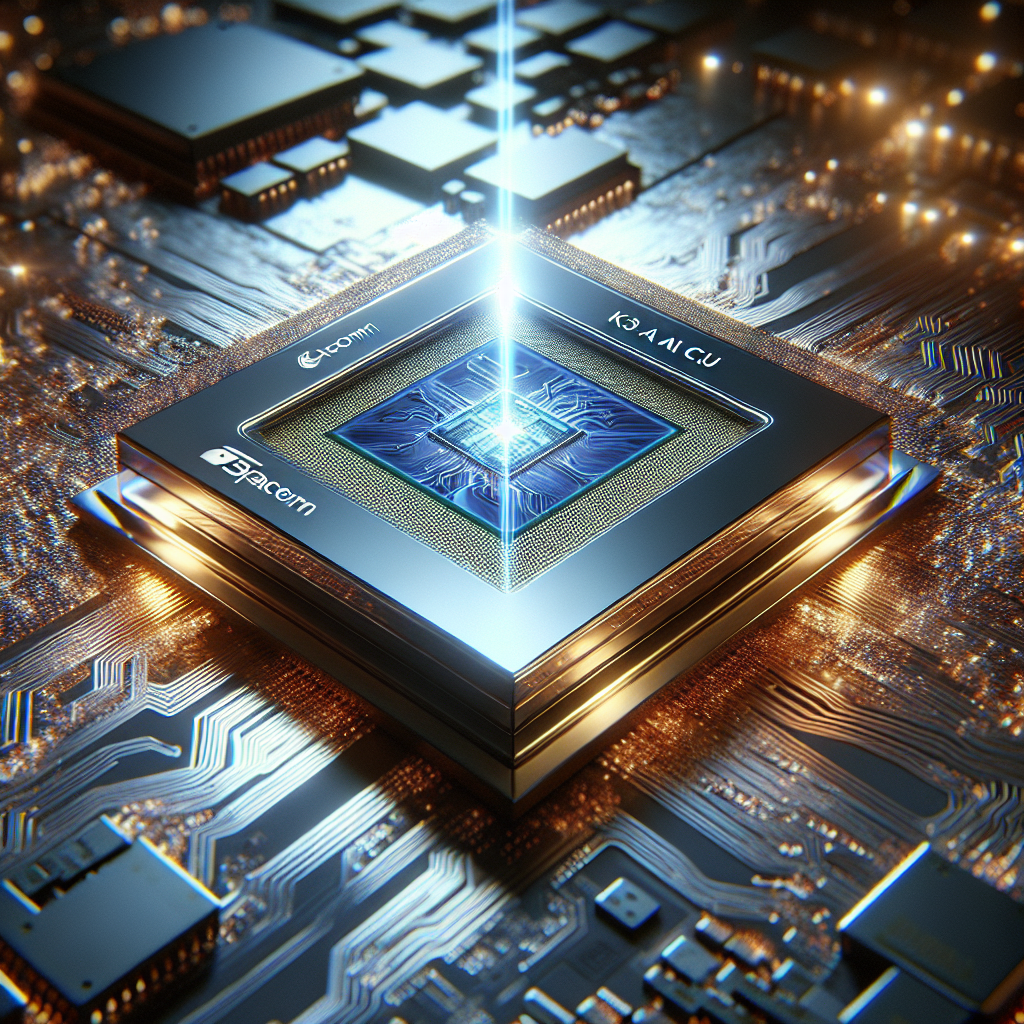
The technology landscape is rapidly evolving, especially in the realm of artificial intelligence and computing architectures. Chinese RISC-V chipmaker SpacemiT is at the forefront of this innovation, having recently unveiled their K3 AI CPU on January 29, 2026. This significant launch highlights both the rise of open-source hardware and the industry’s shift towards more flexible, powerful computing solutions tailored for intelligent devices.
The K3 AI CPU represents a convergence of high-performance computing and artificial intelligence, aiming to enhance how devices perform complex tasks. SpacemiT is leveraging the open RISC-V instruction set architecture, which is increasingly being recognized as a game changer for the next era of computing. For years, the market has been dominated by x86 and Arm architectures, but as AI workloads migrate from centralized cloud environments to local devices, the need for customizable and open computing platforms has soared. RISC-V stands out as an ideal foundation for these evolving ecosystems.
Founded in 2021 and situated in Hangzhou, SpacemiT is one of the few companies committed to a purely RISC-V strategy. This approach seeks to integrate general-purpose computing with specialized AI capabilities on a single chip, marking a departure from conventional designs. The K3 AI CPU, emerging from over 1,200 days of rigorous development, is among the first of its kind to be production-ready, adhering to the RVA23 specification.
Among its impressive specifications, the K3 features eight high-performance X100 RISC-V CPU cores, achieving a maximum clock speed of 2.4GHz. Performance wise, it’s designed to rival Arm’s Cortex-A76, making it a formidable presence in the semiconductor market. In terms of raw compute power, the K3 stands out by delivering up to 60 TOPS of AI performance, enabling it to handle substantial AI models locally. Notably, it caters to applications requiring medium-scale AI computations, supporting models with parameter counts ranging from 30 to 80 billion, all while maintaining a power consumption between 15 and 25 watts.
The K3 also embraces a co-design strategy, integrating hardware and software development to optimize user experience. It supports major AI frameworks and compilers, including Triton and TileLang, and works seamlessly with well-known open-source AI ecosystems and Linux distributions. This dual focus on hardware and software aims to dismantle barriers to deploying AI models on RISC-V, making the transition smoother for developers familiar with x86 and Arm environments.
Chen Zhijian, the founder and CEO of SpacemiT, articulated a compelling vision during the product launch, stating that the long-term trajectory of computing architectures is a shift from closed to open systems. In this context, RISC-V serves as a fully open instruction set compared to the highly closed nature of x86 and the semi-open structure of Arm. This strategic pivot towards open-source frameworks represents not just a technological evolution but also a cultural shift within the computing industry.
The implications of SpacemiT’s K3 unlock numerous possibilities for businesses leveraging AI and machine learning. When combined with its cost-effectiveness and energy efficiency, the K3 CPU could pave the way for smaller enterprises and startups to adopt advanced computational capabilities without incurring the high costs associated with traditional high-end processors. As industries from automotive to consumer electronics begin integrating more local AI functionalities, SpacemiT’s innovations could disrupt established norms and democratize access to powerful AI tools.
In summary, the launch of the K3 AI CPU from SpacemiT marks a crucial step in the evolution toward more open and adaptable computing architectures. This development not only reshapes competitive dynamics within the semiconductor industry but also propels advancements in intelligent computing solutions. It underscores the importance of open-source standards in fostering innovation and highlights the potential rewards awaiting businesses that embrace these new technologies.
Leave a Reply