

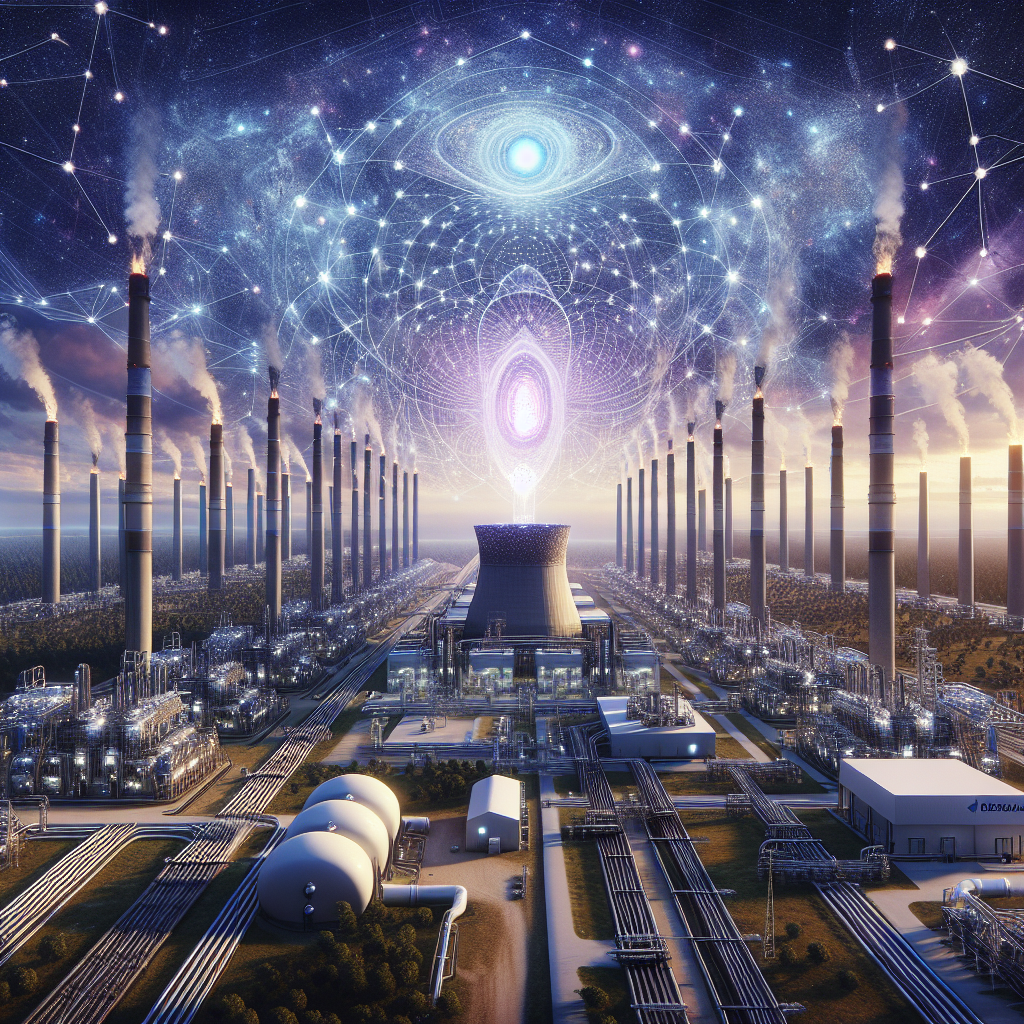
In a significant investment to bolster its artificial intelligence (AI) infrastructure, Meta has announced plans to fund the construction of seven new natural gas power plants in partnership with Entergy Corp. This initiative is poised to enhance the energy supply for Meta’s Hyperion data center located in Richland Parish, Louisiana, marking a substantial expansion in the fossil fuel infrastructure that supports the tech giant’s ambitious AI buildout.
The new power plants will generate an additional 5.2 gigawatts of electricity, bringing the total capacity for the Hyperion campus to over 7 gigawatts. It’s noteworthy that Entergy had previously secured regulatory approval to build three gas plants, which will produce approximately 2.3 gigawatts for Meta. This planned expansion represents a strategic move by Meta to handle its growing energy demands as data centers require massive amounts of power to facilitate ever-advancing AI capabilities.
The agreement between Meta and Entergy is not solely focused on power generation; it encompasses a broader commitment to a regional energy infrastructure enhancement. Meta’s investment will cover the construction of 240 miles of new transmission lines that connect South Louisiana to North Louisiana and Arkansas, in addition to including battery energy storage systems and upgrades to existing nuclear power facilities operated by Entergy. Such an extensive pledge suggests a deliberate shift in how Meta intends to structure and underpin its operations, potentially influencing the wider energy landscape in Louisiana.
The economics behind this deal are noteworthy, as Entergy stated that Meta will cover “its full cost of service.” The partnership is anticipated to yield more than $2 billion in savings for customers over the next two decades. Although Meta has refrained from disclosing the specific financial commitment for the gas plants and associated infrastructure, the strategic implications are clear, especially in light of the burgeoning energy needs of advanced AI deployments.
In parallel with this energy initiative, the broader political climate surrounding AI-driven electricity demands is intensifying. Recently, the discourse around energy costs in relation to tech giants has gained traction, with notable figures, including President Donald Trump, urging technology companies to take responsibility for their power expenses in order to avoid imposing additional costs on residential energy consumers. Meta’s engagement in this arena actively contributes to these discussions, especially as it seeks to balance its expanding energy footprint with existing climate goals.
Meta’s vice president of data centers, Rachel Peterson, highlighted that the Entergy framework aligns with the Ratepayer Protection Plans proposed by the White House, indicating a perceived alignment between governmental policy and corporate strategy within Louisiana’s pro-business regulatory environment. Despite these assurances, there remains an underlying challenge of reconciling the expansion of fossil fuel infrastructure with Meta’s professed commitment to sustainability.
In an effort to address environmental concerns, the agreement stipulates that Meta will contribute to the development of up to 2.5 gigawatts of new renewable energy resources, illustrating a dual approach that acknowledges both current energy demands while progressively working toward renewable solutions. Additionally, the two companies have entered a memorandum to explore future developments around nuclear energy, signalling a potential pivot in energy sourcing that could balance power generation needs with reduced carbon footprints.
This bold move by Meta is reflective of the broader trends in the tech industry, where the nexus between energy production and cutting-edge technology increasingly shapes the business landscape. As the demand for AI and advanced computational resources continues to soar, the implications of this agreement extend beyond Meta alone, serving as a critical case study for other companies grappling with similar energy challenges. Ultimately, balancing growth with sustainability will remain a complex but necessary journey for industry players, and Meta’s latest initiative could provide valuable insights going forward.
Leave a Reply