

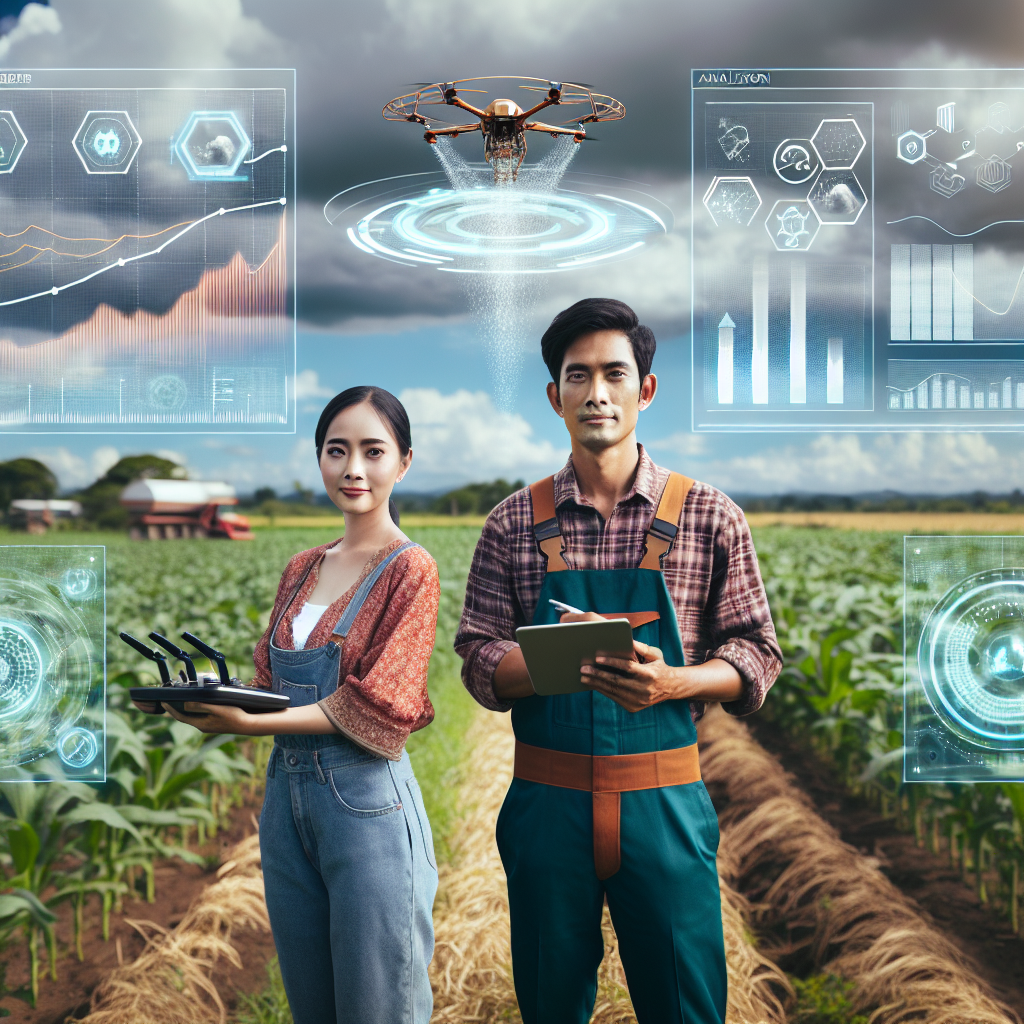
Agriculture is facing a remarkable transformation as it battles with the dual challenges of increasing demand for food and a dwindling workforce. This disconnect is not just a local issue but a global phenomenon, characterized by an aging farmer population and a shortage of younger individuals entering the sector. Notably, in the United States, farm employment has seen a significant decrease, totaling 2.184 million in February 2026, a drop of 22,000 jobs from five years prior. Compounding this issue, 38% of U.S. farmers are 65 years or older, highlighting a looming retirement crisis that leaves gaps in the skilled workforce.
Simultaneously, the demand for agricultural products is on an upward trajectory. The global agricultural market is projected to reach between $6.07 and $6.17 trillion in 2025, up from about $5.77 trillion in 2024. With forecasts estimating a further rise to $11.2 trillion by 2033, the pressure on agricultural producers to keep pace with this advancing demand is palpable. As these economic forces collide, the agricultural industry finds itself at a crossroads, necessitating a rethinking of traditional farming practices, food production processes, and distribution methodologies.
In this climate of rapid change, artificial intelligence (AI) and robotics have emerged as pivotal solutions to mitigate labor shortages. Instead of viewing these technologies as mere replacements for human workers, the industry is increasingly recognizing them as invaluable tools that can take on tedious, repetitive, and hazardous tasks. This shift enables human workers to transition into more complex and valuable roles within the agricultural landscape.
One notable example of this progressive mindset can be observed in Lincoln, Nebraska, home to The Combine, an agtech incubator that nurtures startups focusing on automation for the agricultural sector. The vision of The Combine is to propel agricultural innovations that can address challenges across the entire supply chain—ranging from grain storage to meat processing, and beyond.
Emerging from this incubator are several startups fundamentally reshaping agricultural operations. Grain Weevil, for instance, specializes in robotic systems designed to improve grain extraction processes, significantly reducing spoilage while enhancing overall safety. Similarly, Marble Technologies offers robotic solutions tailored for meat packing facilities, while Birdseye Robotics focuses on autonomous systems responsible for monitoring poultry barns. Additionally, Landoption provides AI-driven tools that assist farmers in discovering new revenue opportunities, particularly through conservation and land-use strategies.
As the director of The Combine, Brennan Costello shares insights into the progress these technologies are making—from conceptual stages to actual deployment. The conversation surrounding these innovations includes a critical examination of how agricultural robotics and AI could enhance productivity while simultaneously addressing the industry’s pressing labor and economic challenges. Costello’s reflections underscore a pivotal shift wherein technology does not threaten the existence of farmers but rather empowers them to thrive amidst adversity.
The conversation around the integration of AI in agriculture begs the question: where exactly do we stand in relation to the adoption of robots and automation in farming? The distinction between traditional methods and modern innovations is becoming increasingly blurred, as more farmers recognize the potential of automated systems to not only streamline their operations but also add tangible value to their businesses.
In summary, the evolution of agriculture through AI and automation signifies more than just a technological upgrade; it represents a fundamental shift in how food will continue to be produced, processed, and distributed in the face of a changing labor landscape. As the global demand for agricultural products accelerates, the role of technology becomes not only crucial but essential for the sustainability and growth of the agricultural sector.
This narrative is markedly important for business leaders, product developers, and investors interested in the future of agtech and the potential for growth in this field.
Leave a Reply