

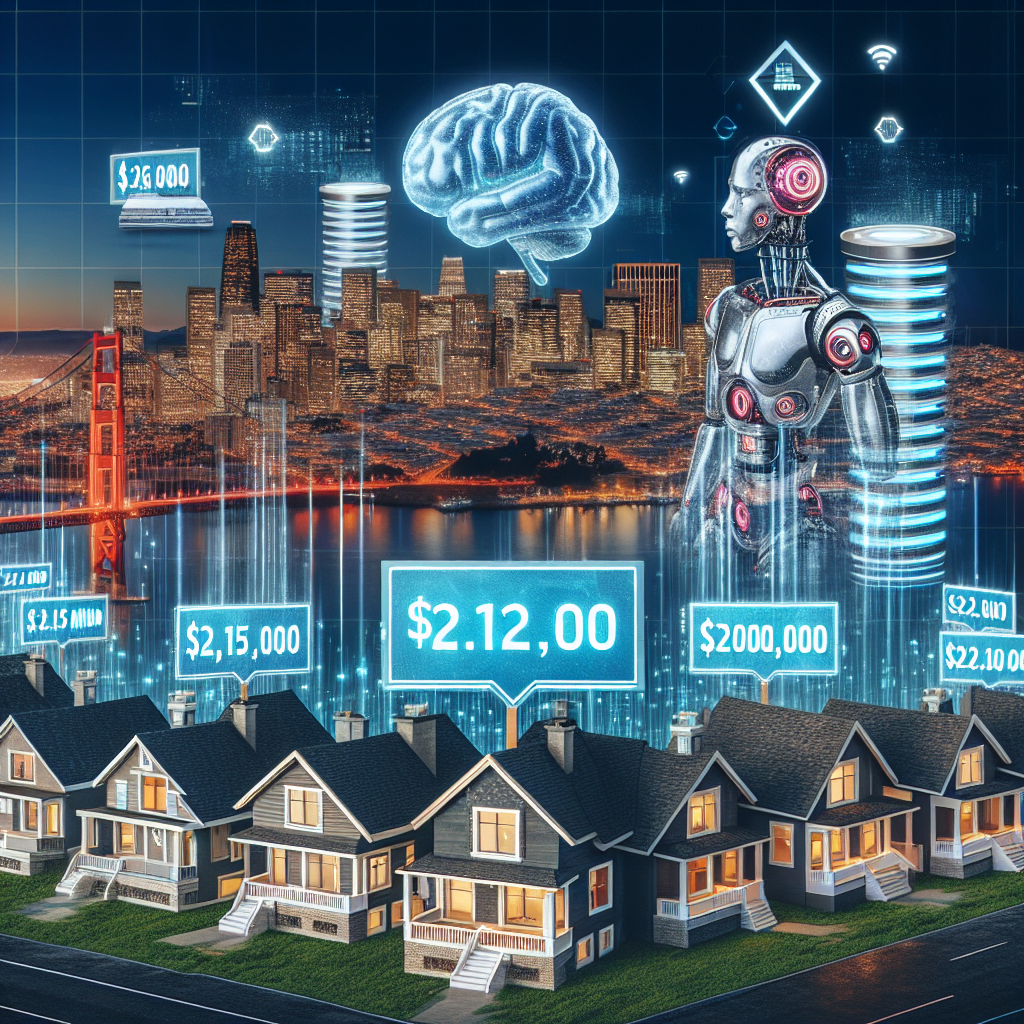
In a notable turn of events, San Francisco has witnessed a remarkable surge in house prices, hitting a record median of $2.15 million in March 2026. This 18% increase from the previous year is largely attributed to the booming artificial intelligence (AI) sector that has recently flooded the city with wealth, particularly from startups that have established themselves as significant players in the market.
According to brokerage Compass Inc., condo prices have also experienced a staggering rise, soaring by 27% to reach $1.36 million. This figure is strikingly close to the peak of $1.375 million recorded in April 2022, demonstrating a robust recovery and reinvigoration of the San Francisco real estate market. The contrasting dynamics between residential real estate in San Francisco and the broader national market underscore the unique impact the AI boom is having on local economic conditions.
Compass Chief Market Analyst Patrick Carlisle attributes this explosive growth in the housing market to the influx of wealth created by AI technology firms, including notable names such as OpenAI and Anthropic PBC. These companies have not only generated new employment opportunities but also a significant capital influx, which has catalyzed competition for property in a city that is already grappling with limited housing development opportunities.
Evidence of this heated market can be observed in the sales figures, which reveal that 22 homes sold for more than $5 million in March alone—setting a one-month record. Moreover, the trend doesn’t stop there, as an impressive 24 condo sales exceeded $3 million, marking an all-time high for monthly sales in this segment as well. Such statistics indicate a fervent demand that is pushing prices upwards and reshaping the landscape of San Francisco’s housing market.
This surge contrasts sharply with the national trend observed across the U.S., where home prices saw only a modest increase of 0.8% year-over-year, as per Zillow Group Inc. data. The divergence in market performance is noteworthy, and it reflects the local factors that are uniquely influencing San Francisco’s property market dynamics, particularly the demand driven by the AI sector.
The recent escalation in house prices also draws a parallel to previous market behaviors seen in 2022, when buyers frantically closed deals ahead of anticipated interest rate hikes. However, the recent price pressures appear less influenced by broader economic uncertainties, such as rising interest rates and volatility brought about by geopolitical tensions, like the Iran war. Instead, the narrative has shifted to a localized phenomenon centered around the prosperity engendered by AI innovation.
As the AI technology landscape continues to evolve, economies like San Francisco’s may remain resilient in the face of external economic pressures, highlighting the significant role that technological advancements play in shaping urban real estate markets. This shift in wealth dynamics not only benefits homeowners but also creates ripple effects throughout the local economy, potentially influencing everything from job creation to infrastructure development.
For business leaders and investors, these trends signal a promising avenue for exploration in communities cultivated by high-technology industries. As AI continues to infuse significant capital and innovative workforces into urban markets, it might become crucial to monitor how this impacts property values, consumer behavior, and even urban planning in the years to come.
The vibrant housing market in San Francisco, bolstered by AI wealth, serves as a case study that illustrates the profound implications of technological progress on daily life and economic structures. With both notable gains in property sales and ongoing demand, the real estate sector in San Francisco stands poised for continued evolution as it becomes intertwined with the wider advancements in artificial intelligence.
Leave a Reply