

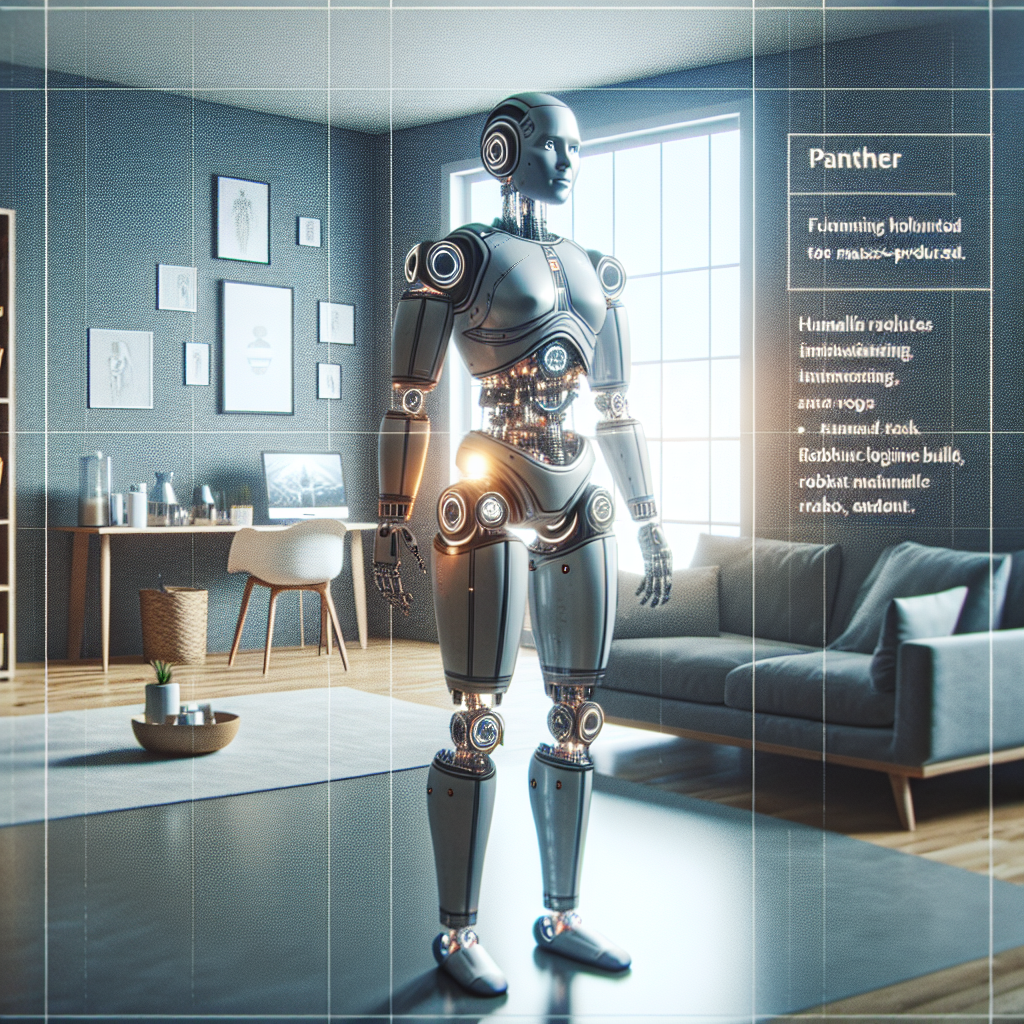
In a groundbreaking achievement for the field of robotics, UniX AI announced on April 11, 2026, the successful real-home deployment of its third-generation humanoid robot, Panther. This momentous occasion marks a significant shift in humanoid robotics, as Panther has completed comprehensive, continuous multi-task validation in real, unmodified household environments. Unlike prior demonstrations that were confined to laboratories or structured environments, Panther’s deployment signifies a departure from the traditional “demonstration era” of humanoid robotics, ushering in the “home commercialization era.” For the first time, a mass-produced humanoid robot is capable of executing meaningful domestic tasks in an everyday home setting.
The list of tasks executed by Panther is impressive and includes waking users, making beds, preparing breakfast, whole-home cleaning, and organizing various household items. This level of functionality underscores the robot’s ability to perform complex activities autonomously, overcoming decades-old hurdles in the robotics industry. UniX AI’s Panther stands out for being the world’s first commercially viable humanoid robot designed for home service, showcasing significant technological advancements in its algorithms, sensors, and overall design.
UniX AI identifies a critical distinction in the robotics industry: for years, two separate development paths have hampered progress towards effective household humanoid robots. The first focuses on achieving humanoid appearance and motion but is generally constrained to well-structured environments like labs and exhibitions, unable to handle unpredictable, real-world complexities. The second path has concentrated on making robots effective in industrial or warehouse settings, where consistency and stability are paramount, but these robots cannot adapt to the dynamic nature of a human-populated home.
The home environment is characterized as the ultimate “no-go zone” for robotics, presenting unique challenges such as narrow spaces, potential obstructions, human and pet interference, and the need for constant task switching. Overcoming these hurdles through robust real-world testing illustrates Panther’s capacity for adaptability and problem-solving, two requisite characteristics for household service robots.
CEO Fengyu Yang articulated this revolutionary milestone, stating, “The real challenge of humanoid robotics has never been making machines look human, but enabling them to reliably complete task execution in unpredictable real-world environments.” This assertion emphasizes the newly demonstrated ability of Panther to navigate complex domestic scenarios that have historically stumped robotic engineers.
Unquestionably, this development has garnered significant attention from investors and industry leaders alike. Founder Fred Yang’s recent keynote speech at the Morgan Stanley China Summit 2026, titled “Pathways to Commercialization of Embodied Intelligence,” served to further illuminate Panther’s achievements and future plans. During his presentation, he elaborated on the rigorous testing that led to Panther’s deployment in actual homes, marking an important step in the commercialization roadmap.
Fred Yang, who holds a Ph.D. from Yale University and a bachelor’s degree in Computer Science and Business from the University of Michigan, represents a new generation of entrepreneurs in the robotics sector. His insights and development strategies are setting the stage for the future of humanoid robots in everyday life, and interest in the project is likely to escalate as more households contemplate integrating robotic support into their daily routines.
As the world increasingly embraces automation and artificial intelligence, UniX AI’s Panther is positioned at the forefront, stepping out of the laboratory and into the real world. Businesses and consumers alike are now faced with the possibility of a new technological landscape, one where humanoid robots like Panther could become integral to home life. This scenario carries not only implications for daily convenience but also meaningful business opportunities, as the market for household robotic services is poised to grow exponentially.
In summary, the introduction of Panther not only signifies a leap forward for humanoid robotics in terms of functionality and adaptability but also marks a pivotal moment for the commercialization of robots. With the capability to operate in unpredictable environments, Panther represents a significant technological advancement, setting new standards for robotic service solutions in homes across the globe.
Leave a Reply