

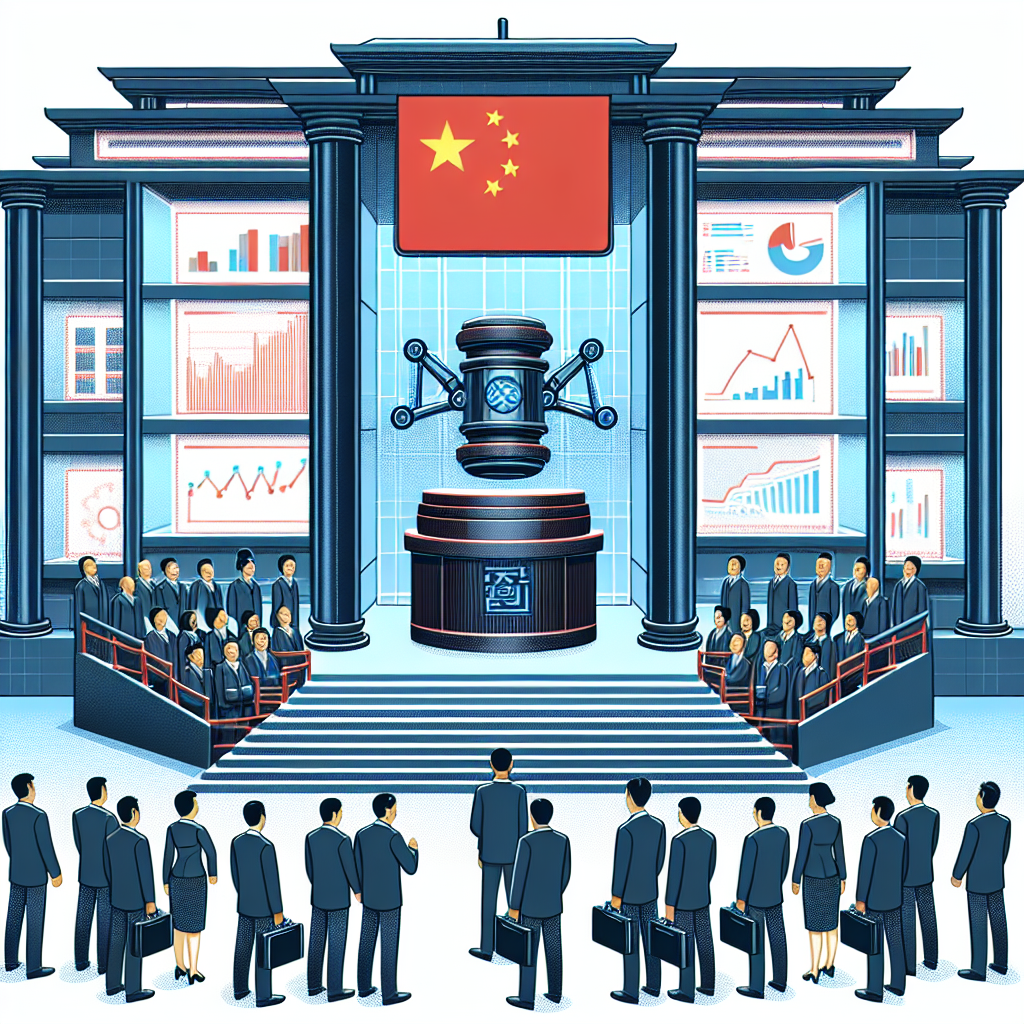
The increasing integration of artificial intelligence (AI) into business practices has raised profound questions about labor rights and the ethical implications of automation on employment. A recent ruling by the Hangzhou Intermediate People’s Court in China has set a significant precedent, establishing that companies cannot dismiss employees merely due to cost-effective AI alternatives. In a world where automation is rapidly transforming industries, this decision highlights the ongoing negotiation between technological advancement and worker protection.
This ruling emerged amidst a backdrop of numerous companies investing in AI technologies to enhance productivity and reduce costs. The particular case that prompted the ruling involved an employee, Zhou, who worked as a question quality inspector for an online tech company. Zhou’s responsibilities primarily included evaluating the interactions between users and AI models, ensuring the generated responses were accurate, and managing any content that could violate privacy norms.
In a troubling turn for Zhou, the company claimed that advancements in AI rendered his position redundant and attempted to reassign him to a lower-paying role, slashing his salary from 25,000 yuan (approximately $3,640) to 15,000 yuan (around $2,180). Zhou’s refusal to accept this demotion led to the termination of his employment contract, raising questions about whether such actions could be justified under China’s Labor Contract Law.
The court drastically countered the company’s argument by stating that the introduction of AI technology and the consequent organizational changes do not inherently nullify an employment contract. The judges noted that the pay reduction associated with Zhou’s new role was excessive and unjustifiable, deeming the termination unlawful.
Furthermore, the ruling pointed out the vital balance between fostering technological progression and upholding the rights of workers. The court emphasized that businesses must respect workers’ legitimate interests, highlighting the importance of retraining initiatives that can assist employees in transitioning towards roles that leverage human skills more effectively.
An analogous ruling in a separate case reaffirmed this stance. In that instance, a map data collection worker faced dismissal predicated on similar AI-driven transitions, which was also ruled unlawful. This consistency suggests a judicial commitment to ensuring that technological advancement does not come at the expense of workers’ livelihoods.
As companies continue to embrace AI technologies to stay competitive, the implications of this ruling could ripple throughout the business landscape. With labor laws acting as a boundary to protect workers from rapid technological changes, companies may need to reassess their strategies when implementing automation. The focus on retraining and employee reassignment strategies mentioned in the rulings can be seen as a necessary evolution in corporate policy, compelling organizations to invest in human capital development.
This court ruling underscores a vital conversation surrounding the ethics of automation. Worker rights and technological advancement must be reconciled rather than pitted against each other. As businesses experiment with AI and automation, the Chinese courts’ stance serves as a reminder of the social responsibilities companies hold towards their workforce.
In conclusion, the decision by the Hangzhou Intermediate People’s Court not only provides critical legal protection for employees but also encourages businesses to adopt a more compassionate and proactive approach towards workforce management amidst the ever-expanding realm of AI. As the global labor market increasingly grapples with digital transformation, such legal frameworks will be paramount in shaping a future where technology and humanity can coexist in the workforce harmoniously.
Leave a Reply