

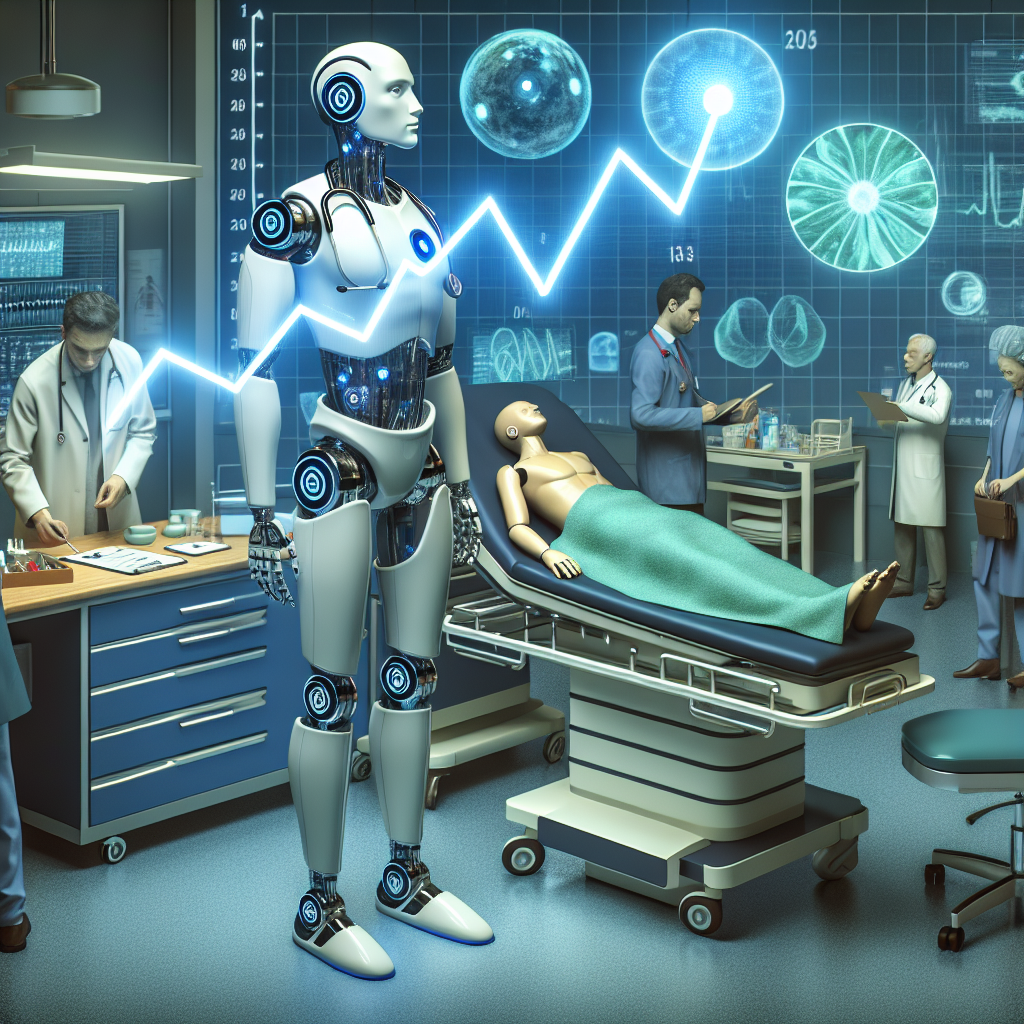
A recent study conducted by researchers at Harvard University has brought forth a groundbreaking revelation in the medical field: a large language model has achieved remarkable success by outperforming human doctors in emergency room diagnostics. This study not only underscores the potential of artificial intelligence (AI) in healthcare but also opens the door to transformative changes in how medical care is delivered, particularly in high-pressure environments.
At the heart of this research is the large language model, an advanced AI system designed to process and analyze vast amounts of medical information. By leveraging its extensive database and sophisticated algorithms, the AI was able to analyze patient data more quickly and accurately than the two human doctors it was compared against. This is particularly significant in emergency settings where time is of the essence, and the margin for error is minimal.
The implications of these findings are profound. Incorporating AI into emergency departments could lead to enhanced diagnostic accuracy, enabling healthcare professionals to make timely and better-informed decisions for their patients. With AI tools assisting in the diagnostic process, the potential for improved patient outcomes increases substantially, which is critical in emergency scenarios where every second counts.
This study emphasizes the growing reliance on AI in clinical settings, particularly as health systems around the world continue to face increasing demands and challenges. By implementing AI-driven diagnostics, it is possible to alleviate some of the pressure on healthcare professionals, allowing them to focus on providing care rather than sifting through mountains of data for diagnoses.
However, while the study presents an optimistic view of AI’s role in healthcare, it also raises questions about trust and the integration of technology in medicine. How can we ensure that AI complements the skills of human doctors rather than replacing them? What protocols must be established to ensure patient safety when AI tools are involved in diagnostic processes?
Nevertheless, the potential benefits of this technology are undeniable. As AI systems continue to evolve, it is likely that we will see more studies like this one demonstrating the effectiveness of AI in various medical disciplines. Already, AI is being explored for its applications in fields such as radiology, pathology, and even surgery. The integration of these technologies may redefine the boundaries of medical expertise and enhance the capabilities of existing healthcare systems.
As healthcare leaders consider embracing AI technology, this Harvard study serves as a compelling case for further exploration and investment in AI-assisted diagnostics. In an era where technological advancements are reshaping industries, the medical field must also adapt and innovate to meet the needs of patients effectively. The potential for AI to assist in diagnosing illnesses could ultimately save lives, reduce costs, and transform the patient experience in emergency settings.
Moving forward, collaboration between AI developers, healthcare professionals, and regulatory bodies will be crucial in navigating the integration of these technologies within medical practice. Establishing guidelines and protocols will be essential to ensure that AI is utilized safely and effectively, maintaining the critical human touch that is necessary in patient care.
Overall, this breakthrough highlights not only AI’s capabilities in specific diagnostic tasks but also its larger implications for the future of healthcare. By augmenting the skills of human providers and improving efficiency, AI has the potential to play a pivotal role in revolutionizing medical care, ultimately leading to better health outcomes for patients around the world.
Leave a Reply