

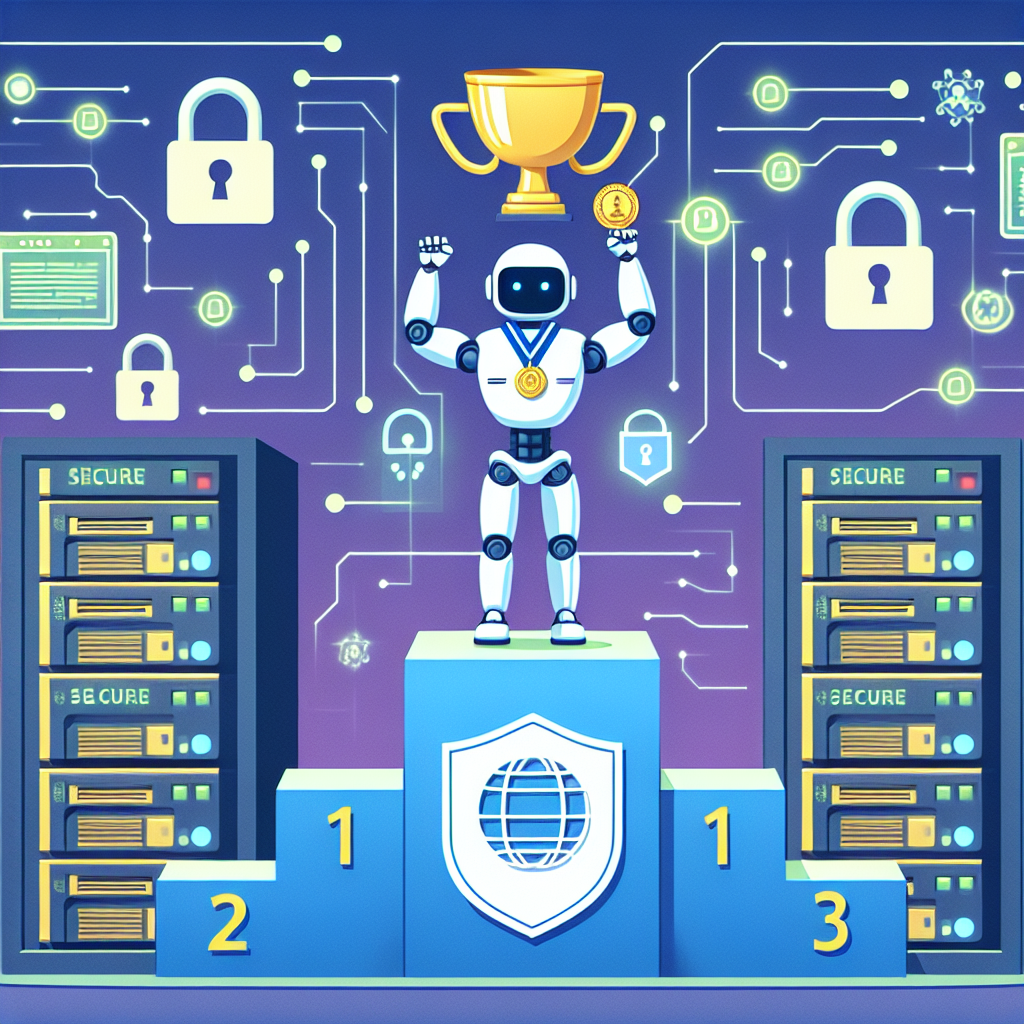
The Defense Advanced Research Projects Agency (DARPA) recently announced the outcome of its AI Cyber Challenge, designed to enhance cybersecurity in vital infrastructure systems through innovative AI applications. This two-year competition culminated during the renowned DEF CON hacker convention in Las Vegas, where it was revealed that Team Atlanta emerged victorious, showcasing the power and potential of AI-driven solutions in tackling cybersecurity challenges.
Team Atlanta, comprised of experts from prestigious institutions such as the Georgia Institute of Technology, Samsung Research, the Korea Advanced Institute of Science & Technology, and the Pohang University of Science and Technology, took first place in this challenge. The team’s success underscores a collaborative effort bridging academia and industry, which is crucial for addressing modern threats faced by critical infrastructure.
In second place was Trail of Bits, a small business based in New York City, which has carved a niche in providing cybersecurity consultancy and software services. The third position was secured by Theori, a group of AI researchers and security professionals from the U.S. and South Korea. The diverse blend of expertise among the finalists highlights the importance of multidisciplinary approaches in developing robust solutions to cybersecurity vulnerabilities.
One of the critical aspects of the AI Cyber Challenge was its objective of developing AI models that could automatically identify and patch vulnerabilities within open-source code. Open-source tools are widely used due to their accessibility, yet they are often susceptible to cyber exploitation. This challenge aimed to generate advanced solutions that would address these weaknesses in a scalable and efficient manner.
During the competition, seven finalist teams uncovered a staggering 70 synthetic vulnerabilities specifically created for the event. Additionally, they identified 18 previously unknown real-world flaws, which speaks to the effectiveness of their models. The average time taken for these models to patch flaws was an impressive 45 minutes, indicating significant progress in the use of AI for cybersecurity applications.
According to DARPA’s director Stephen Winchell, the need for effective cybersecurity solutions is urgent. He emphasized that many existing code bases are burdened with ‘huge technical debt,’ which complicates efforts to maintain security in an increasingly digital world. Winchell noted the challenge of overcoming this issue, suggesting that traditional methods may no longer be sufficient given the scale and complexity of the problem.
The application of large language models, similar to those powering popular generative AI tools, was a key driver of innovation during the competition. Notably, major tech firms like Anthropic and OpenAI contributed their model infrastructure, enabling teams to leverage advanced AI capabilities in their solutions. This collaboration between research institutions and tech companies highlights the potential for future advancements in the field.
As a result of the competition, four AI models have already been released for public use, with three more on the horizon. These advancements have the potential to significantly improve the security posture of critical infrastructure systems, protecting vital services from potential cyber threats.
Open-source projects form the backbone of many software systems in use today, making the outcomes of the AI Cyber Challenge particularly relevant. Discovering and efficiently addressing vulnerabilities in these publicly available code bases is essential to ensure public safety and health. As we continue to rely on digital systems, the methodologies developed during this challenge could pave the way for a more secure future.
In summary, DARPA’s AI Cyber Challenge has not only highlighted the incredible potential of AI in addressing cybersecurity vulnerabilities but has also fostered collaboration across various sectors. The contributions made by the winning teams could lead to significant advancements in how critical infrastructure systems are protected in an increasingly interconnected world, underscoring the importance of innovation in combatting cyber threats.
Leave a Reply