

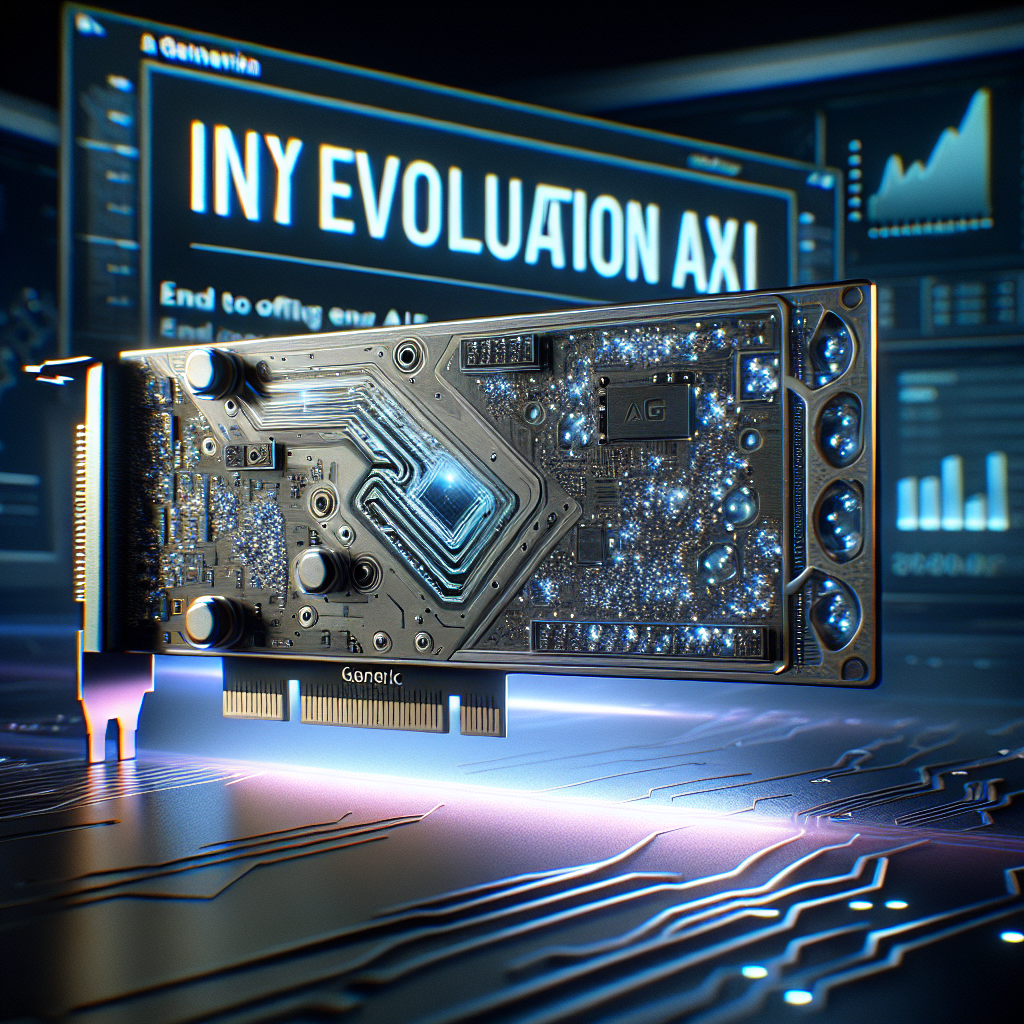
In a rapidly evolving technological landscape, XConn Technologies is gearing up to make waves with its latest innovation: a fully integrated, end-to-end PCIe Gen 6.2 and CXL 3.1 solution. Set to be unveiled at the anticipated Future of Memory and Storage (FMS25) event, this breakthrough promises to push the envelope on bandwidth limits, which is crucial for handling the ever-growing demands of AI and data center workloads.
The centerpiece of this announcement is XConn’s Apollo 2 switch, which is being marketed as the first hybrid chip supporting both PCIe Gen 6.2 and CXL 3.1 within a single design. This innovation aims to simplify interconnect designs significantly, enhancing scalability and offering theoretical flexibility that could redefine data center architectures. As explained by Gerry Fan, CEO of XConn Technologies, the company is focused on enabling its customers with best-in-class solutions that meet the performance needs of the future.
One of the most significant implications of this technology is its potential to reduce complexity in data centers while simultaneously promoting broader architectural flexibility. However, as exciting as these advancements are, they come with caveats. The real-world effectiveness and reliability of these solutions remain speculative until thoroughly tested under actual production workloads. Upcoming demonstrations at FMS25 will showcase low-latency, high-bandwidth switching capabilities, positioning the technology as ready for applications such as AI/ML model training and cloud computing.
The collaboration with Intel further amplifies the importance of the Apollo 2 switch. Intel Senior Fellow Ronak Singhal articulated the potential benefits of this partnership, stating that it aims to ensure seamless interaction between hardware and software components, thereby delivering robust end-to-end solutions. This collaboration is crucial as the integration of different technologies like PCIe and CXL is often fraught with challenges; however, this endeavor seeks to foster an interoperable environment, paving the way for more efficient systems.
Despite all the promise, historical context reminds us that the journey from demonstration to reliable, scalable solutions can be lengthy. Past experiences in the tech industry have shown that validation cycles often require multiple iterations before real-world effectiveness can be guaranteed. Thus, while the prospects of higher bandwidth and seamless integration are enticing, the industry will need to remain cautiously optimistic until definitive benchmarks are released, allowing for a comparison against existing PCIe Gen 5 deployments.
Furthermore, XConn’s partnership with ScaleFlux aims to enhance CXL 3.1 interoperability, specifically for AI and cloud infrastructure. This collaboration is indicative of the momentum behind XConn’s technology, although it still does not confirm how well these new systems will perform under the specific loads typical of AI applications.
In summary, the forthcoming reveal at FMS25 by XConn Technologies highlights a significant step forward in the quest for improved AI power and data center efficiency. With its novel Apollo 2 switch, the company is not just showcasing technological prowess but also setting a stage for future integrations that could reshape how businesses manage and optimize their workloads. As leaders and innovators in the tech industry, both end-users and manufacturers will be watching closely to see how these developments unfold and translate into practical applications.
Leave a Reply