

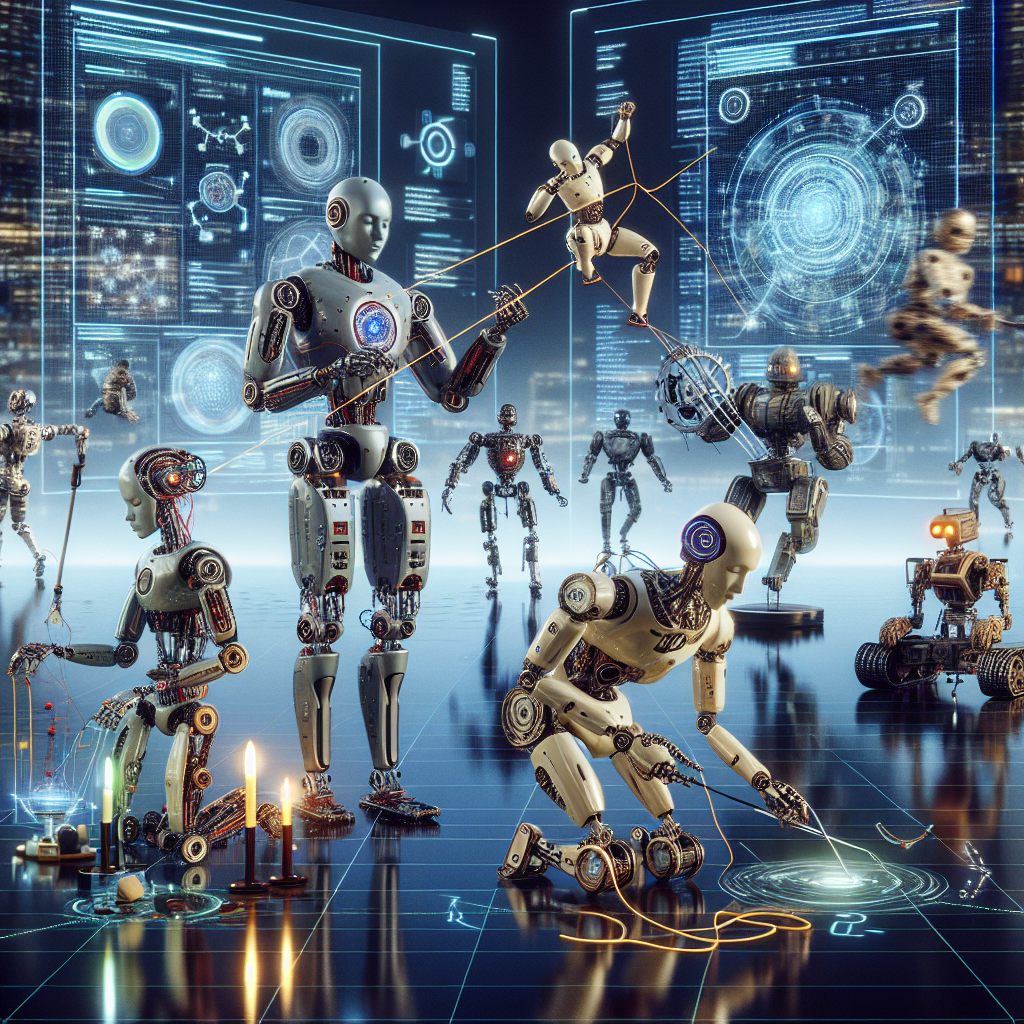
In a groundbreaking initiative, researchers at Yale have leveraged advanced artificial intelligence techniques to enhance the capabilities of robots, enabling them to learn and perform complex tasks with precision. The core of this innovation lies in the application of hybrid control theory, a sophisticated mathematical approach that guides robots in executing movements efficiently.
Hybrid control theory is pivotal in determining when an autonomous robot should switch between various control modes to successfully accomplish tasks. This approach synthesizes various learning methodologies, enabling robots to adapt and learn in a manner akin to human skill acquisition.
According to the lead researcher, Abraham, the process mirrors how humans learn new skills or engage in sports. Initially, we consciously observe and predict our physical movements. Over time, these actions become second nature through practice and muscle memory— a transition that this technology aims to replicate in robotic systems.
One prominent application of this research involved training a dog-like robot that could successfully balance itself and execute a flip. Innovative AI methods were employed to develop challenging motor skills that require precise coordination across the robot’s entire body.
As part of this training, hybrid control theory was expertly utilized to schedule and integrate the diverse mechanisms through which robots learn motor skills. The outcome is not merely a robot capable of simple tasks; instead, it becomes capable of exhibiting complex, compounded behaviors that evolve as it learns from its environment.
This development holds promising implications for various industries where robots could operate effectively in dynamic, unstructured environments such as homes, service sectors, and even healthcare facilities. The utilization of AI in facilitating such advanced capabilities marks a significant leap towards more intelligent, adaptable robotic systems.
Hybriding AI learning methods allows robots to enhance their skill sets, progressing from basic tasks to more sophisticated maneuvers that require high precision. This evolution is critical, particularly in fields where fine motor skills are paramount. As robotic capabilities grow, their practical applications can potentially expand into everyday life, providing assistance in tasks that were once thought too complex for machines.
Moreover, the research underscores a vital aspect of robotics— the interplay between theoretical frameworks like hybrid control and the practical realities of robotic function. This dual focus is essential in fostering robots that are not only intelligent but also capable of translating that intelligence into tangible actions.
In conclusion, the integration of hybrid control theory with AI solutions represents a remarkable fusion of disciplines that promises to redefine the capabilities of robots in the near future. As these machines learn to navigate the nuances of complex tasks, they open doors to new opportunities in various sectors, heralding a new era of robotics that is equipped to perform in environments we once deemed too unpredictable or intricate for autonomous systems. This innovative trajectory could lead to a transformation in industries reliant on automation, showcasing the endless possibilities that lie ahead in the realm of AI and robotics.
Leave a Reply