

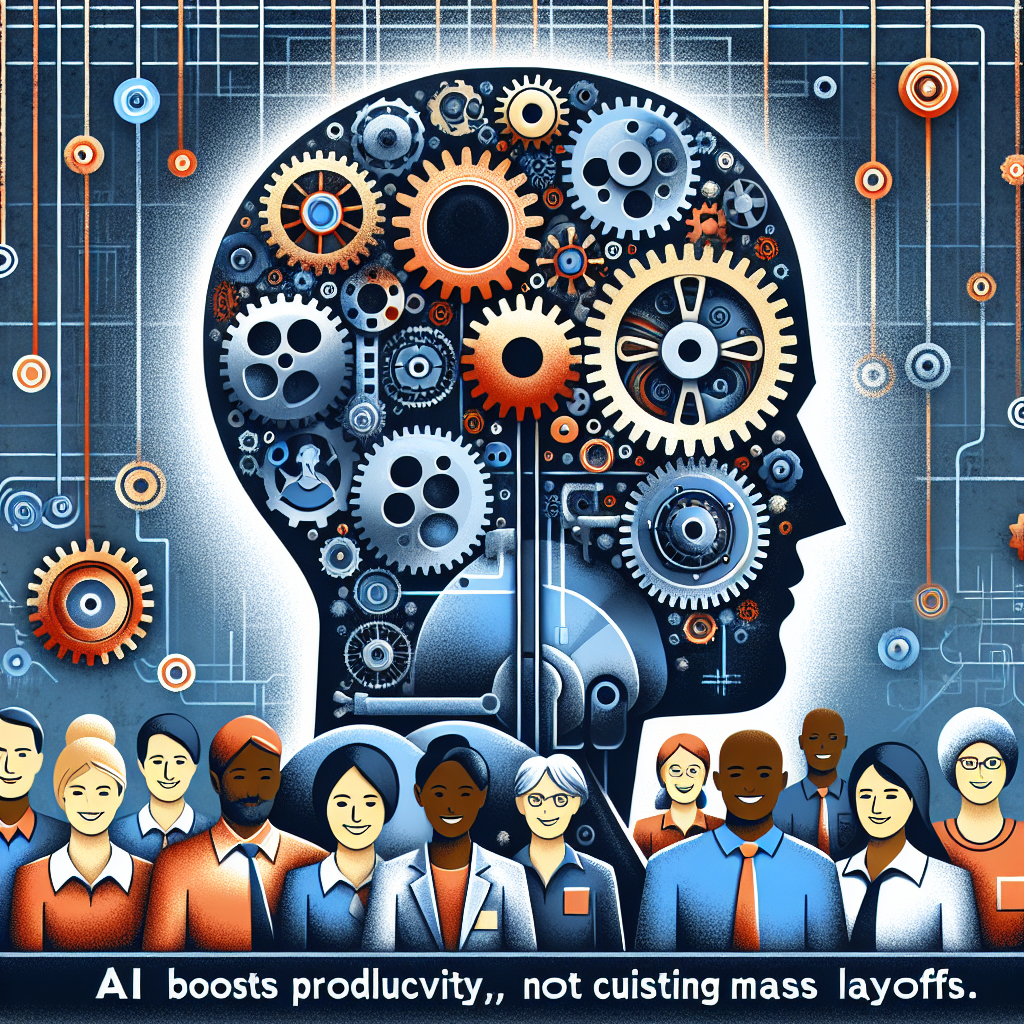
A collaborative study conducted by the Indian Council for Research on International Economic Relations (ICRIER) and OpenAI challenges the alarming narrative surrounding Artificial Intelligence’s impact on employment. The report, titled ‘AI and Jobs: This time is no different’, suggests that while generative AI is transforming workplaces, it is not leading to widespread job losses. Instead, it is enhancing productivity and reshaping roles within organizations, particularly in the IT sector.
Spanning a comprehensive survey of 650 IT firms across ten cities in India, conducted between November 2025 and January 2026, the study aims to analyze the evolving hiring patterns, occupational demands, productivity outcomes, and workforce skilling amidst the rise of AI technologies. This timely investigation aims to shed light on whether fears of mass layoffs due to AI are well-founded or exaggerated.
Key insights from the study indicate that AI is more an ally than a replacement for human talent. According to Ronnie Chatterji, Chief Economist at OpenAI, the data collected reflects a significant shift in work organization, where AI tools complement and enhance human capabilities rather than displace them. Chatterji emphasizes the data reveals a “transition underway in India,” suggesting a future where AI enhances the skill set of the workforce rather than threatens its stability.
Despite reports of a modest slowdown in hiring—primarily at entry-level positions—the stability observed at mid and senior levels paints a picture of resilience within the industry. Researchers propose that this moderation correlates more with post-pandemic trends rather than being solely attributable to AI’s impact. Interestingly, roles often perceived as vulnerable to automation, such as software developers and database administrators, are noted as experiencing substantial growth in demand.
During a critical moment for India’s workforce, the study conveys that a mere 4 percent of firms have trained more than half their workforce in AI, revealing a pressing opportunity for skills development. Shekhar Aiyar, Director and Chief Executive of ICRIER, stressed that while opinions on AI’s impact may vary, this study presents factual evidence. In-depth interviews with leaders in the Indian IT sector supplement survey findings to paint a clearer picture of generative AI’s real implications.
Aiyar also warned that while the Indian IT industry appears to be managing AI adoption reasonably well, the potential for disruption remains. Many firms are inadequately prepared for the next phase of AI integration. This concern beckons the necessity for policymakers to monitor advancements and facilitate necessary training for employees to embrace the changes ahead.
The findings of the ICRIER-OpenAI report provide a critical perspective for business leaders, product builders, and investors navigating the future of work in a world increasingly influenced by AI. The study emphasizes the need for a balanced view regarding AI’s role in the labor market—recognizing its capability to augment productivity while fostering new job opportunities rather than exacerbating unemployment fears.
In summary, this report brings forth a nuanced understanding, providing stakeholders with evidence-based insights that could serve as a foundation for strategic planning in the face of AI advancements. By steering the conversation away from panic and towards proactive training and skill development, there is potential to harness the power of AI in ways that bolster, rather than undermine, the workforce.
Leave a Reply