

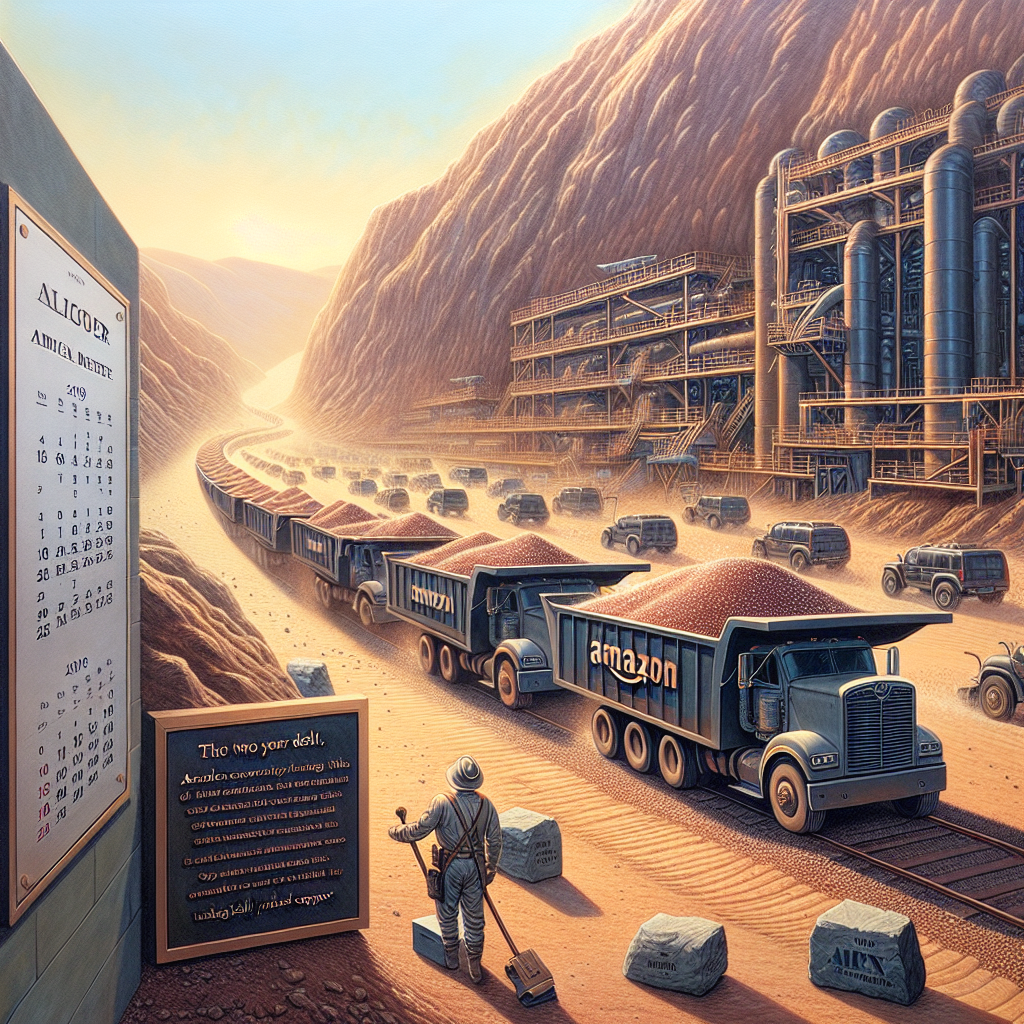
In a significant move, Amazon has secured a groundbreaking agreement to purchase the first copper mined in the United States in over ten years, aimed at fueling its artificial intelligence (AI) data centers across the country. This deal, established with Rio Tinto, marks a strategic initiative that ties closely into Amazon’s growth in AI technology. The arrangement will source copper from the Johnson Camp mine in Arizona, a site that has recently been revitalized and serves as a testing ground for Rio Tinto’s innovative Nuton Technology.
The adoption of Nuton Technology represents a transformative advancement in copper extraction processes. This method dramatically decreases the mine-to-market supply chain and is expected to produce 99.99% pure copper cathodes directly at the mine gate. By eliminating the need for traditional concentrators, smelters, and refineries, this technology presents a significant evolution in copper mining, with benefits in terms of resource conservation and reduced environmental impact.
The urgency for copper has been highlighted by recent reports outlining growing demand driven by the rapid expansion of AI technologies. Industry analysts predict that, unless interventions occur, only 70% of the forecasted demand for copper by 2035 could be met. Therefore, Amazon’s move into American mining is not only timely but necessary to secure essential materials for its operations.
Despite the promising aspects of this deal, it is noteworthy that the volume of copper being sourced will only satisfy a fraction of Amazon’s substantial needs. Each of Amazon’s massive data centers requires tens of thousands of tons of copper, and the output from the Arizona facility is projected at about 14,000 metric tons over the next four years—far from enough for a single facility’s requirements. To bridge this gap, an additional 16,000 tonnes will be provided from conventional mine leaching processes.
Amid these developments, Amazon’s Chief Sustainability Officer, Kara Hurst, emphasized the company’s commitment to the Climate Pledge, which aims for net-zero carbon emissions by 2040. She stated, “This collaboration with Nuton Technology represents exactly the kind of breakthrough we need—a fundamentally different approach to copper production that helps reduce carbon emissions and water use.” This sentiment highlights Amazon’s intention to innovate across all operational aspects, especially as they relate to sustainability and supply chain resilience.
On a broader scale, the implications of this agreement extend beyond Amazon. It signifies a shift in how major corporations in technology, like Amazon, are approaching resource acquisition—specifically, a trend toward securing lower-carbon materials produced domestically. This initiative not only enhances supply chain security but could also serve as a model for responsibility in corporate procurement practices in the tech industry.
Rio Tinto’s new method of copper production could potentially redefine the entire mining landscape, focusing on reducing ecological footprints and employing methods that use significantly less water and generate fewer carbon emissions compared to traditional mining processes. Industries that rely on copper for various technologies, particularly those in renewable and digital sectors, may follow suit, leading to broader acceptance of such innovative extraction methods.
As such, this deal is not just a logistical arrangement, but a vital step forward in initiating a new era of responsible sourcing within the tech industry. With the increased scrutiny around sustainability practices and environmental impacts, it serves as an example of a hopeful transition toward a greener future in resource management.
As businesses continue to grow in the fast-paced AI landscape, securing sustainable resources will become increasingly essential. The partnership between Amazon and Rio Tinto is a proactive measure that addresses future demands and positions Amazon as a leader in both technology and sustainable practices.
Leave a Reply