

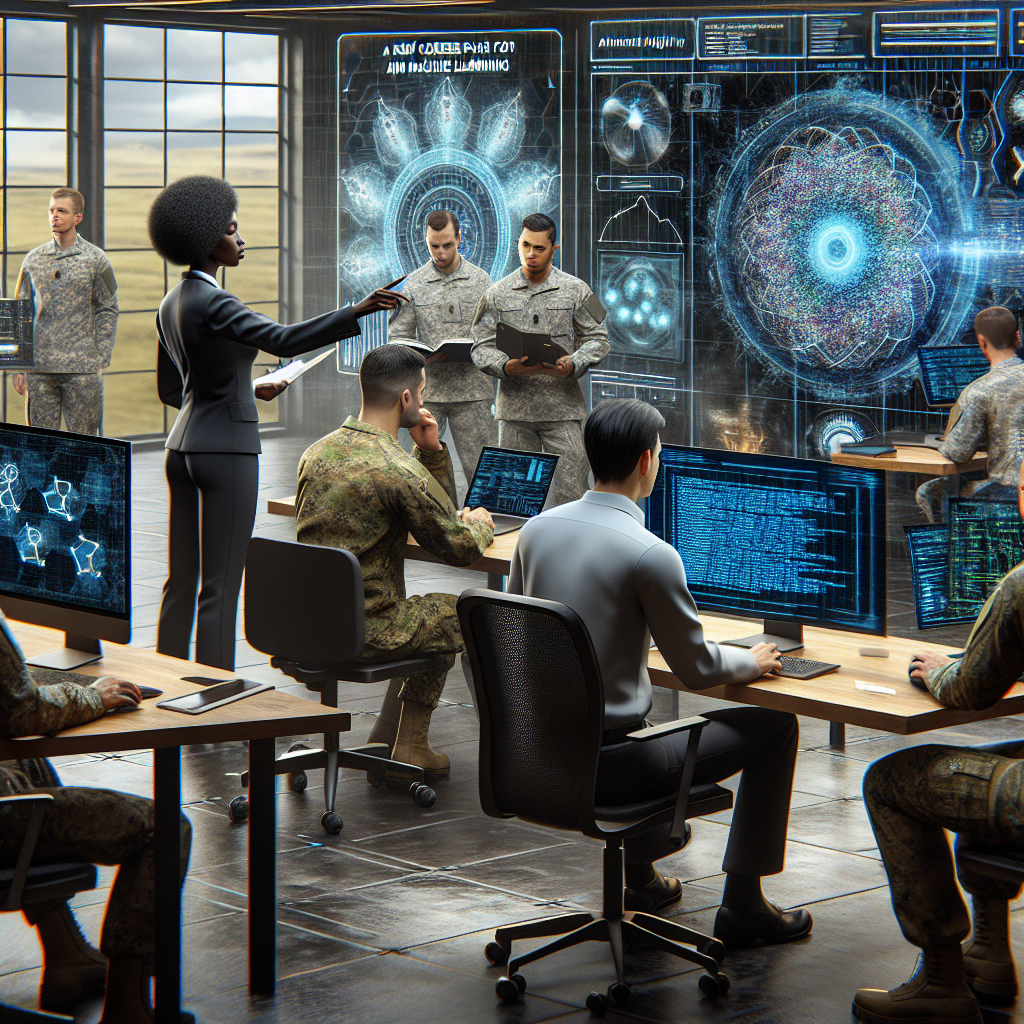
The U.S. Army is embarking on a significant transformation aimed at integrating advanced technologies by establishing a new career pathway specifically for officers in the fields of artificial intelligence (AI) and machine learning (ML). This initiative, designating the 49B AI/ML Officer as an official area of concentration, represents a vital step in the Army’s evolution towards becoming a more data-centric and AI-enabled force.
As part of this strategic initiative, the Army plans for full implementation of the new career field to unfold over time, with the initial selection of officers slated to begin through the Volunteer Transfer Incentive Program (VTIP) in January 2026. Current officers will be reclassified into this crucial role by the end of the fiscal year 2026, ensuring that specialized personnel are in place to integrate new technologies effectively.
According to U.S. Army spokesperson Lt. Col. Orlandon Howard, this specialization is not only a response to technology advancements but also a proactive measure to meet future operational demands. He stated, “We’re building a dedicated cadre of in-house experts who will be at the forefront of integrating AI and machine learning across our warfighting functions.” This vision is centered on creating a core expertise that is vital for enhancing military effectiveness.
The new 49B AOC will initially be open to officers eligible for the VTIP, particularly those boasting advanced technical competencies and academic backgrounds relevant to AI/ML. The Army has indicated that it may eventually expand this specialized career path to warrant officers, thereby broadening the pool of talent available for critical AI roles.
Officers who are selected for the 49B AOC will undergo a robust training regimen. This program will include graduate-level coursework alongside practical experience in the development, deployment, and maintenance of cutting-edge AI systems. These officers will play a pivotal role in operationalizing advanced capabilities and ensuring seamless integration across various military operations, enhancing overall effectiveness and responsiveness.
The strategic importance of this new Military Occupational Specialty (MOS) lies in its focus on creating a group of experts capable of accelerating the Army’s adoption of AI and ML technologies. These specialists will tackle a multitude of challenges, including:
- Accelerating Battlefield Decision-Making: Officers in this role will be key to enabling commanders to deliver swift and informed decisions within complex operational theaters, streamlining responses to dynamic challenges.
- Streamlining Logistics: AI/ML will optimize supply chain management and maintenance operations, ensuring that resources are effectively allocated and utilized.
- Supporting Robotics and Autonomous Systems: The emphasis will also be on fielding and managing advanced robotics, marking a new era in automated battlefield capabilities.
As stated by Lt. Col. Howard, the establishment of the 49B AI/ML career path is a significant strategic investment for the U.S. Army, aimed at maintaining the Army’s tactical edge against potential adversaries. “Ultimately, it’s about building a force that can outthink, outpace, and outmaneuver any adversary,” he noted, emphasizing the critical nature of staying ahead in an era rapidly defined by technological advancement.
This initiative reflects a broader trend within military organizations worldwide, focusing on harnessing the power of AI and automation to enhance operational effectiveness. By fostering expertise in AI and ML from within its ranks, the U.S. Army is positioning itself to take full advantage of these advanced technologies.
The link between technological evolution and military preparedness is ever more crucial as combat environments become increasingly complex and data-driven. The introduction of dedicated roles within the Army for AI and ML proficiency signals a transformative commitment to ensure that personnel are equipped not just with traditional military skills, but also with forward-thinking technological expertise that can lead the charge into the next generation of warfare.
In conclusion, the establishment of the 49B AI/ML career path represents a landmark development in the U.S. Army’s campaign to integrate sophisticated technologies into its operations, laying the groundwork for a future-ready military force. As further details emerge about the selection process and training protocols, industry stakeholders and military analysts alike will be watching closely to gauge the implications of this strategic move.
Leave a Reply