

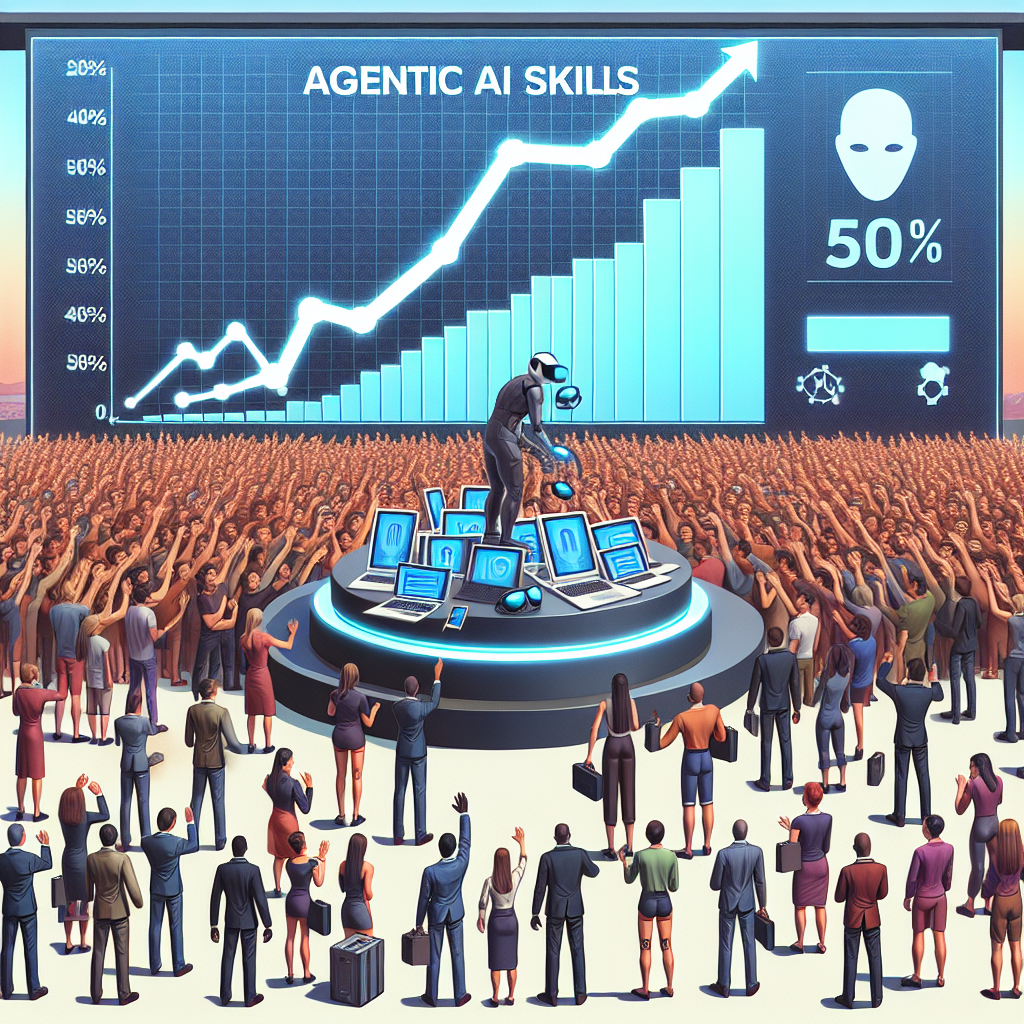
In the ever-evolving landscape of artificial intelligence, a recent report highlights a significant imbalance between the demand and supply of Agentic AI skills. Agentic AI, an advanced form of artificial intelligence, is characterized by its ability to make autonomous decisions and execute actions independently. As companies increasingly seek to integrate autonomous workflows into their operations, the necessity for skilled professionals in this area has skyrocketed.
The report is based on an analysis of over 28,000 job postings, underscoring that Agentic AI roles are now a critical component of enterprise hiring strategies. This shift from pilot projects utilizing Generative AI (GenAI) to full-scale production-grade autonomous systems marks a pivotal transition in how organizations approach AI technology. Businesses are no longer merely testing AI capabilities; they are now fully embracing the potential of Agentic AI to drive efficiency, innovation, and competitiveness.
One of the striking findings of the report is that while demand for these specialized skills has surged, the supply falls short by more than 50%. This substantial gap presents a significant challenge for businesses looking to harness the power of Agentic AI. With companies racing to implement AI-driven solutions that can streamline decision-making processes and enhance operational efficiency, the need for qualified professionals with expertise in this area is becoming increasingly urgent.
The capabilities of Agentic AI go beyond traditional machine learning models. It encompasses systems that can not only analyze data but also act upon it in real time, making decisions that were previously reliant on human intervention. For instance, in industries such as finance, logistics, and healthcare, Agentic AI can optimize workflows, reduce costs, and enhance service delivery by automating complex processes that require rapid decision-making.
As organizations invest in technology, the lack of available talent poses a risk to their strategic objectives. Companies striving to implement robust AI solutions may find themselves at a competitive disadvantage without access to the necessary skills. Organizations may need to reconsider their hiring strategies, focusing not only on attracting tech-savvy talent but also on cultivating existing employees through training and development programs tailored to meet the demands of Agentic AI.
Interestingly, educational institutions and online learning platforms have begun to take note of this burgeoning demand. There is an opportunity for universities and technical schools to develop curriculum and courses focused specifically on Agentic AI skills, including programming, ethical decision-making, and the operational implications of autonomous systems. This proactive approach could help bridge the skills gap and ensure that the workforce is prepared for the challenges and opportunities presented by the future of AI.
Furthermore, companies could benefit from engaging with academia to create partnerships that foster research and innovation in Agentic AI. Collaborative projects between businesses and universities can yield practical insights and create pathways for students to gain hands-on experience, making them more attractive candidates in a competitive job market.
In conclusion, the surge in demand for Agentic AI skills reflects the growing recognition of the technology’s potential to transform enterprises. As the supply of qualified professionals lags significantly behind this demand, businesses face a critical juncture. The success of future AI initiatives may well depend on the ability to attract, retain, and develop talent with the necessary skills to drive autonomous decision-making processes. By investing in education and partnerships, companies can help shape the next generation of AI leaders while positioning themselves at the forefront of technological advancement.
Leave a Reply