

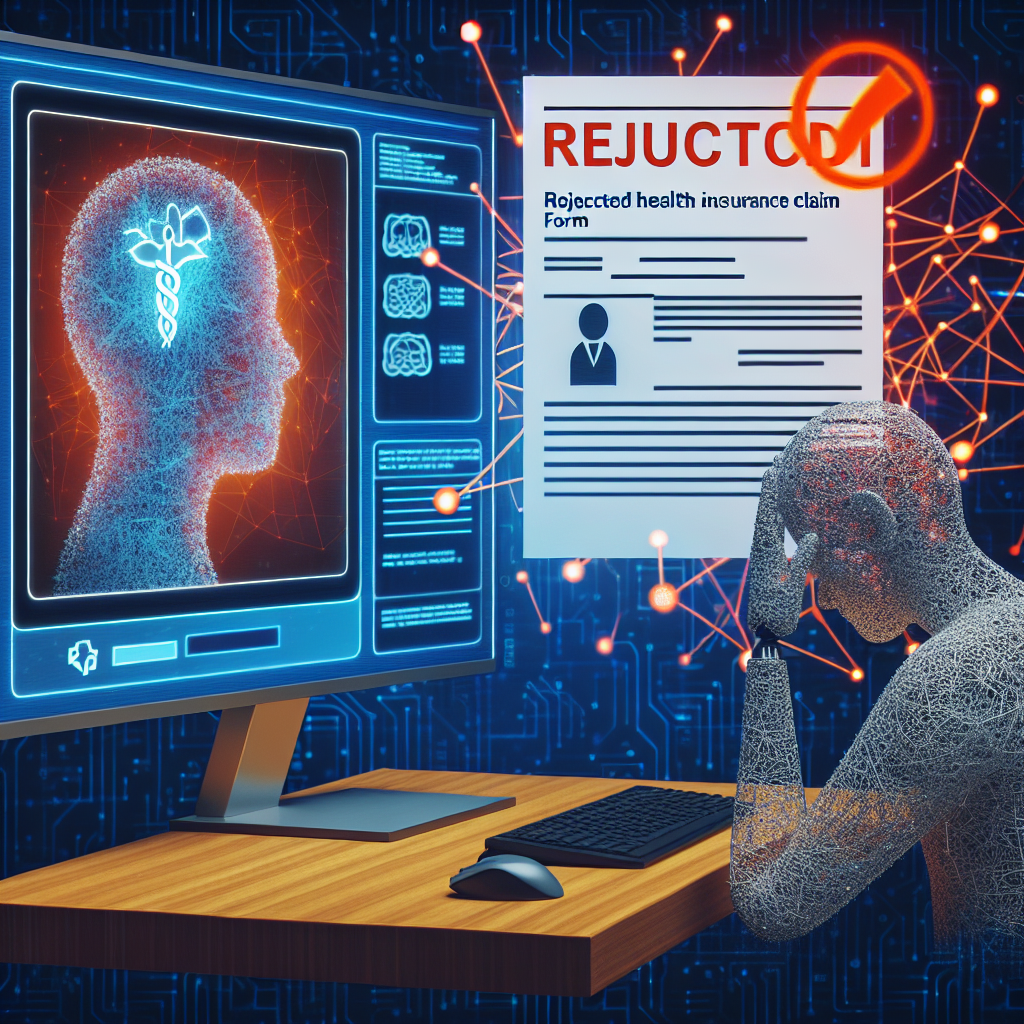
The increasing complexity of health insurance claims and the overwhelming number of denials is a growing concern among patients across the United States. For many, these denials can lead to the feeling of being lost in a labyrinth of paperwork and regulations. This sentiment was strikingly captured by Neal Shah, whose own experiences during his wife’s cancer treatment proved just how convoluted health insurance can be. Faced with an onslaught of bills and denial letters, he recognized that navigating the health insurance system could sometimes feel more burdensome than the medical issues themselves.
Shah’s journey began with bewilderment, leading him deep into research. He found himself asking pertinent questions about the reasons behind the high rate of claim denials and how pervasive the issue really was. Through his endeavors, he discovered a common thread: millions of Americans were grappling with similar frustrations, feeling as though they were drowning in the waves of denial letters from insurance companies.
From this realization, Shah founded CareYaya, a company tailored to connect college students in healthcare with families needing affordable caregiving. However, his passion for addressing the broader problem of insurance claim denials did not stop there. Last year marked the launch of Counterforce Health, a pioneering startup that aims to alleviate the stress associated with insurance claim denials by providing a free platform to streamline the appeals process.
Counterforce Health’s platform stands out in its ability to quickly generate customized insurance appeal letters. Users simply upload denial letters alongside pertinent medical records. The platform employs artificial intelligence to analyze these documents against insurance policies and medical literature, crafting a draft appeal letter. This innovative approach not only simplifies the task for individuals but also enhances the chances of having denied claims overturned.
Turning the tables on the challenges posed by AI, which health insurers increasingly leverage to deny claims, Counterforce is flipping the narrative. Instead of using AI to limit patient access to care, this platform utilizes technology to empower patients and ensure they receive the coverage they deserve. Essentially, this is a case of AI fighting AI, with technology now acting as an ally rather than an obstacle.
The timing of Counterforce Health’s emergence could not be more critical. Recent trends indicate a substantial rise in health insurance denials. Reports from KFF highlighted that approximately 20% of claims under Affordable Care Act (ACA) marketplace plans faced denial in 2023, impacting millions of Americans. This growing statistic represents more than just numbers; it symbolizes the distress and financial burden placed upon everyday individuals, desperately seeking necessary medical treatment.
The platform’s ability to provide a clear and user-friendly appeal process not only simplifies matters for patients but also serves as a testament to how advancements in AI can shift towards benefitting consumers rather than corporations. Among various solutions, Counterforce Health presents a tangible solution that directly addresses a critical pain point — the overwhelming maze of insurance claim denials.
Another noteworthy aspect of Counterforce Health is its commitment to transparency and accessibility. In a world where many services are often shrouded in complexity, Shah’s platform aims to demystify the appeals process and give power back to patients. By leveraging historical data and successful appeal formats, the platform reduces the cognitive load on users, allowing families to focus on what truly matters — the health and well-being of their loved ones.
As the healthcare landscape continues to evolve, with AI playing an increasingly central role, it is essential to embrace innovations that prioritize patient empowerment. Counterforce Health exemplifies this shift, showcasing a future where AI can dampen the challenges posed by bureaucracy in the health insurance sector. For many, such advancements may very well mean the difference between receiving necessary treatment and facing a denied claim.
Leave a Reply