

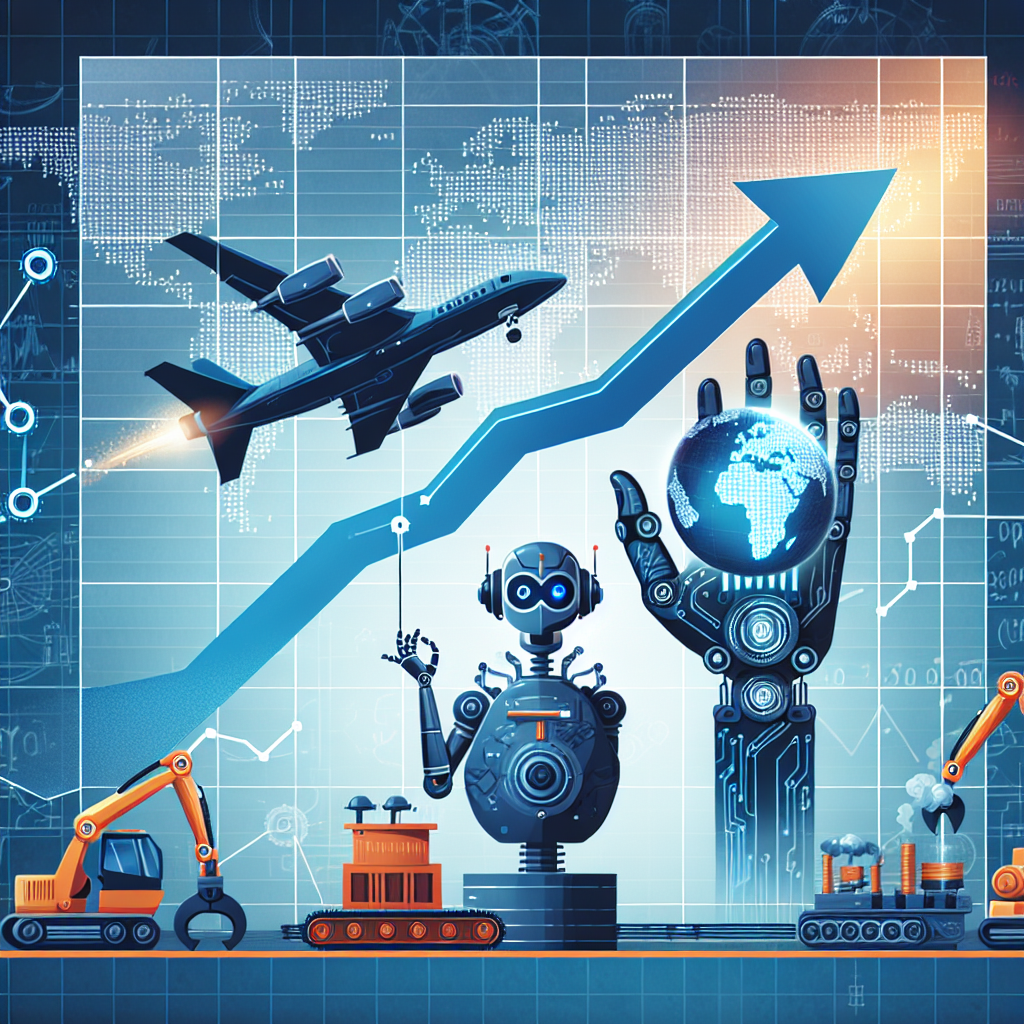
In an era where artificial intelligence (AI) is revolutionizing industries, GE Aerospace stands at the forefront, transitioning AI from experimental projects to core operational strategies that significantly enhance efficiency and productivity. As the Executive Director of Data Science and AI, Dinakar Deshmukh, points out, the company has witnessed substantial improvements, including a remarkable 50% reduction in false positives and over a 60% decrease in lead times, thanks to machine learning-driven engine monitoring systems.
This cutting-edge technology employs complex algorithms to detect anomalies in commercial engines, anomalies that often elude human observation. Deshmukh emphasizes the considerable impact of these advancements on engine monitoring, remarking that they directly influence the reliability and safety of their products—a critical factor in the aviation industry.
Generative AI, while still evolving, is slowly but surely making its mark within the company’s operations. Deshmukh acknowledges that although they haven’t completely mastered generative AI, the applications currently in production are already yielding tangible business outcomes. In areas such as software development, they are observing productivity gains ranging from 20% to 25%. This level of improvement underscores the potential of AI in optimizing not just operations, but also enhancing overall performance.
Notably, GE Aerospace has strategically centralized its AI capabilities in India, where more than half of its AI team operates from Bengaluru. This decision aligns with a broader trend within major global companies to tap into India’s vast talent pool, particularly in technology and data science. With approximately 2,500 employees in India, the emphasis on AI development signifies GE’s commitment to fostering innovation in a growing market.
While the company is rapidly adopting AI, Deshmukh emphasizes a disciplined approach to its deployment. Rather than broadly applying AI across all departments, GE Aerospace focuses on operations critical to its business performance. Identifying complex areas where efficiency gains are most achievable allows the company to target its AI initiatives more effectively. This calculated strategy ensures that investments in AI lead to profound impacts on the production processes while minimizing resource waste.
In response to the mounting interest and demand for AI, GE Aerospace has ramped up its investments significantly, increasing its AI expenditures by 2.5 to 3 times over the past two and a half years. Such a commitment illustrates the company’s recognition of AI as a vital component of its business strategy, especially in an industry where innovation and efficiency are paramount.
However, scaling these AI solutions from proof of concept to full production poses its own challenges. Deshmukh candidly notes that this transition remains one of the most difficult aspects of integrating AI into the company’s operational fabric. To navigate this complexity, GE Aerospace integrates lean operating principles with AI, enhancing the scalability of their solutions. This synergy between lean methodology and AI ensures that the systems put in place not only scale effectively but also respond dynamically to the varying needs of their operations.
GE Aerospace’s approach to problem-solving sets it apart from typical methodologies; Deshmukh asserts, “Our approach is to let the problem define the model, not the other way around.” This philosophy reflects a stark shift in how businesses might approach AI—a move away from one-size-fits-all models towards tailored solutions that respond directly to specific challenges.
In conclusion, GE Aerospace exemplifies how companies can effectively harness the potential of AI, transforming challenges into opportunities for significant operational enhancements. As AI technology continues to evolve, the strategic applications and thought leadership demonstrated by GE Aerospace will likely serve as a benchmark for other organizations looking to successfully navigate the complex landscape of AI implementation.
Leave a Reply