

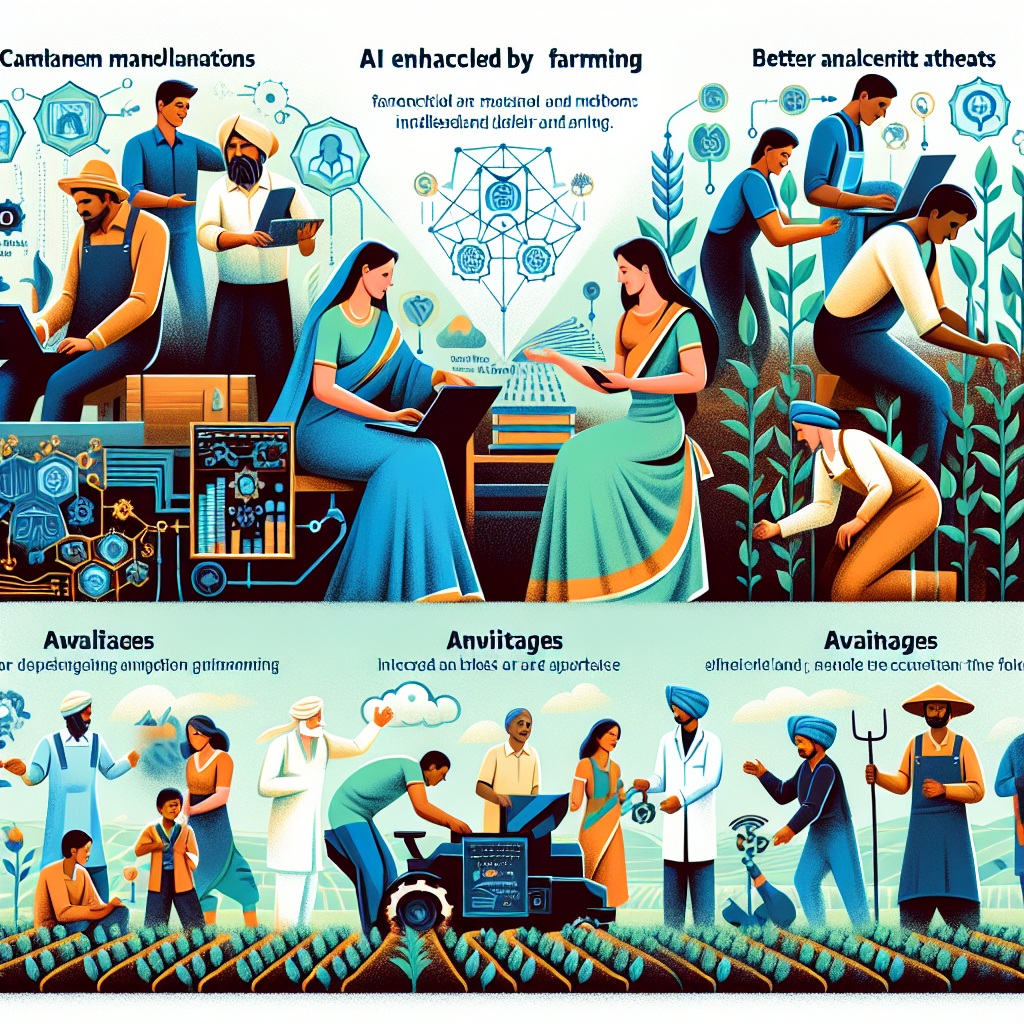
India’s agriculture sector plays a vital role in the country’s economy, employing nearly half of its workforce and serving as a backbone for food security and rural livelihoods. In recent years, the rapid adoption of artificial intelligence (AI) technology has begun to reshape this extensive ecosystem, illustrating its potential for driving profound changes in agricultural practices and productivity.
What once seemed like experimental pilot projects are now becoming integral components of mainstream agricultural policy and practice. Initiatives such as the Digital Agriculture Mission and AgriStack, as well as the National Strategy for AI developed by NITI Aayog, showcase the shift of AI from a peripheral concept to a foundational element within Indian agriculture. This transformation highlights the importance of AI in mitigating uncertainty in farming—a sector deeply impacted by fluctuating monsoon patterns, fragmented landholdings, and unpredictable market prices.
AI works at its core to reduce uncertainty by gathering vast amounts of data from various sources, including satellite imagery, soil health records, historical yield trends, and weather patterns. By analyzing this data, AI systems can provide actionable insights that previously remained out of reach for smallholder farmers. This significant transition from intuition-driven practices to data-driven decision-making has the potential to enhance agricultural productivity and resilience across the nation.
Emerging Opportunities from AI Adoption
Among the most noticeable advancements in AI application within agriculture is precision farming. Technologies like drones, remote sensing, and AI-enabled machinery empower farmers to apply resources such as water, fertilizers, and pesticides in precise amounts. This not only increases input efficiency but also lowers overall costs and minimizes environmental impact.
Pilot programs in states like Punjab and Tamil Nadu have demonstrated that AI-driven, sensor-based irrigation and crop monitoring can lead to remarkable improvements in yields while conserving essential water resources. Likewise, AI’s impact is extending into climate intelligence, a crucial area as climate change escalates weather unpredictability. AI-driven forecasting tools are becoming indispensable for farmers, providing insights into rainfall variations, pest threats, and other extreme weather events through real-time meteorological and satellite data.
According to reports from government sources and global assessments from organizations like the World Bank, AI-enabled advisory systems are now reaching millions of Indian farmers. These tools assist producers in adjusting their sowing schedules and optimizing crop management practices, ultimately boosting their productivity.
Additionally, AI is playing a transformative role in improving market access for farmers. By analyzing extensive datasets obtained from platforms such as e-NAM and local mandis, predictive analytics can uncover price movements and demand trends. Farmers can leverage this knowledge to make more informed choices around their crop selection and the timing of sales.
Furthermore, AI-powered chatbots and digital assistants, including those supported by governmental initiatives, are enhancing access to crucial information on credit, crop insurance, and government schemes. By reducing information asymmetry, these platforms are empowering smallholders who have historically faced disadvantages in the agricultural marketplace.
Addressing Risks and Structural Challenges
Despite its substantial promise, the widespread adoption of AI in agriculture is not without its challenges and risks. One major concern revolves around data governance. AI systems rely heavily on the collection of sensitive data, including land ownership details, crop patterns, and farming practices. However, questions about data privacy, ownership, and the potential misuse of information arise.
The integration of AI in India’s agricultural sector represents both an opportunity for innovation and a challenge that necessitates careful management of data governance and ethical considerations. Establishing robust ethical frameworks will be critical as farmers fully embrace these technologies, ensuring that the benefits of AI can be realized while protecting their rights and privacy.
In conclusion, AI adoption is poised to revolutionize India’s agri sector, providing opportunities for increased efficiency, greater yields, and improved market dynamics. However, it will require both the private and public sectors to collaborate effectively, addressing potential risks while reaping the multitude of benefits that AI has to offer.
Leave a Reply