

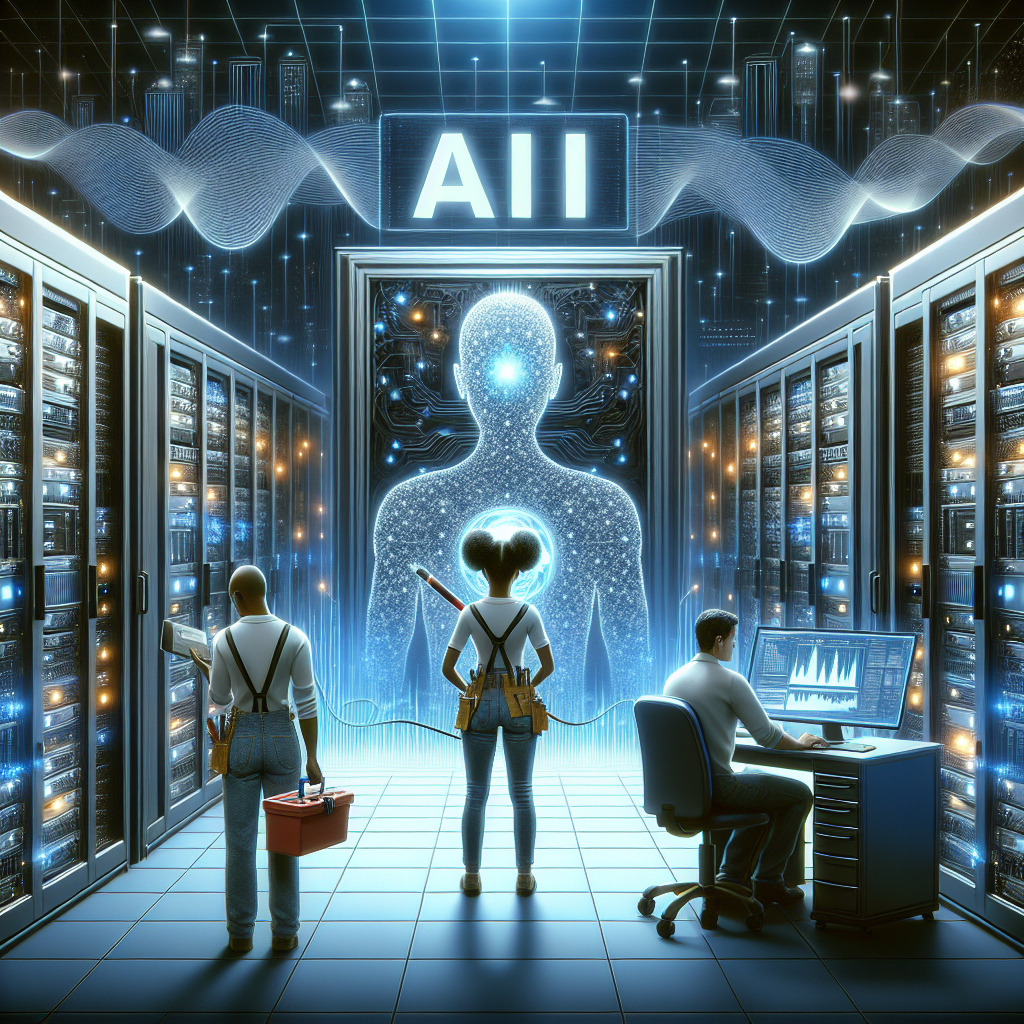
The rapid expansion of artificial intelligence is generating a significant demand for data centers, which serve as the backbone of AI infrastructure. An astounding commitment from major tech players such as Alphabet, Microsoft, Meta, and Amazon, totaling nearly $700 billion in capital expenditure for 2026, highlights the urgency and scale of this demand. As these companies focus on creating specialized facilities, they require a skilled workforce to build and maintain them, presenting substantial career opportunities for trade workers.
For instance, Amazon announced its plan to invest $12 billion in a new AI data center located in Louisiana. This project is expected to create 540 full-time positions directly at the site, along with approximately 1,700 additional roles spanning electricians, technicians, and security specialists. Similarly, Meta’s $27 billion investment in a joint venture to develop a massive Hyperion data center in Louisiana illustrates the scale at which Big Tech is investing in this infrastructure, with projections indicating it will consume more electricity than the city of New Orleans.
Despite widespread concerns about AI displacing white-collar jobs, the burgeoning data center sector reveals a contrasting story: it is generating a heightened demand for skilled trades. According to Sander van’t Noordende, CEO of Randstad, one of the world’s largest recruitment firms, the physical requirements of the digital transformation necessitate a workforce equipped with specialized skills. He emphasizes that the real limitation on technological growth is not merely a lack of microchips or capital but a critical shortage of the skilled labor needed to construct these facilities.
Recent data from Randstad indicates an impressive increase in the demand for various skilled trades in this emerging market. From 2022 to 2026, job postings for robotic technicians are anticipated to rise by 107%. Demand for HVAC system engineers is expected to grow by 67%, while openings for industrial automation technicians will escalate by 51%. Traditional skilled trades – including construction workers and electricians – are also projected to see a 27% increase in job listings. This illustrates a paradigm shift in job creation as the digital landscape evolves.
As the conversation surrounding AI’s impact on employment continues, it often highlights the potential disruption to white-collar roles. However, as Noordende points out, a crucial aspect frequently overlooked is that AI technologies cannot autonomously construct the data centers essential to their functionality. Presently, there are approximately 12,000 data centers globally, and the forecasted exponential growth to accommodate high-performance AI capabilities calls for a reevaluation and upgrade of existing mechanical, electrical, and plumbing systems every four to six years.
Illustrating this dynamic, Mike Mathews, digital infrastructure leader at Marsh, emphasizes the significant labor growth opportunities necessitated by retrofitting efforts. Workers in specialized roles, including network engineers, electricians, and mechanical engineers, are urgently needed to implement new systems, such as advanced liquid cooling solutions to maintain the immense power demands of these data centers. Mathews refers to these emerging roles as “new-collar” jobs, representing a blend of traditional blue-collar and white-collar positions steadily rising in value as they collaborate in this evolving workspace.
The evolution of the data center job landscape presents a promising horizon for individuals willing to embrace the required technical training while simultaneously bridging the gap between traditional job classifications. As AI innovation accelerates, the demand for specialized trade workers in building and managing these vital infrastructures will only grow. Therefore, business leaders, investors, and aspiring professionals must recognize this trend as a critical opportunity to drive economic growth and innovation within the technology sector.
Leave a Reply