

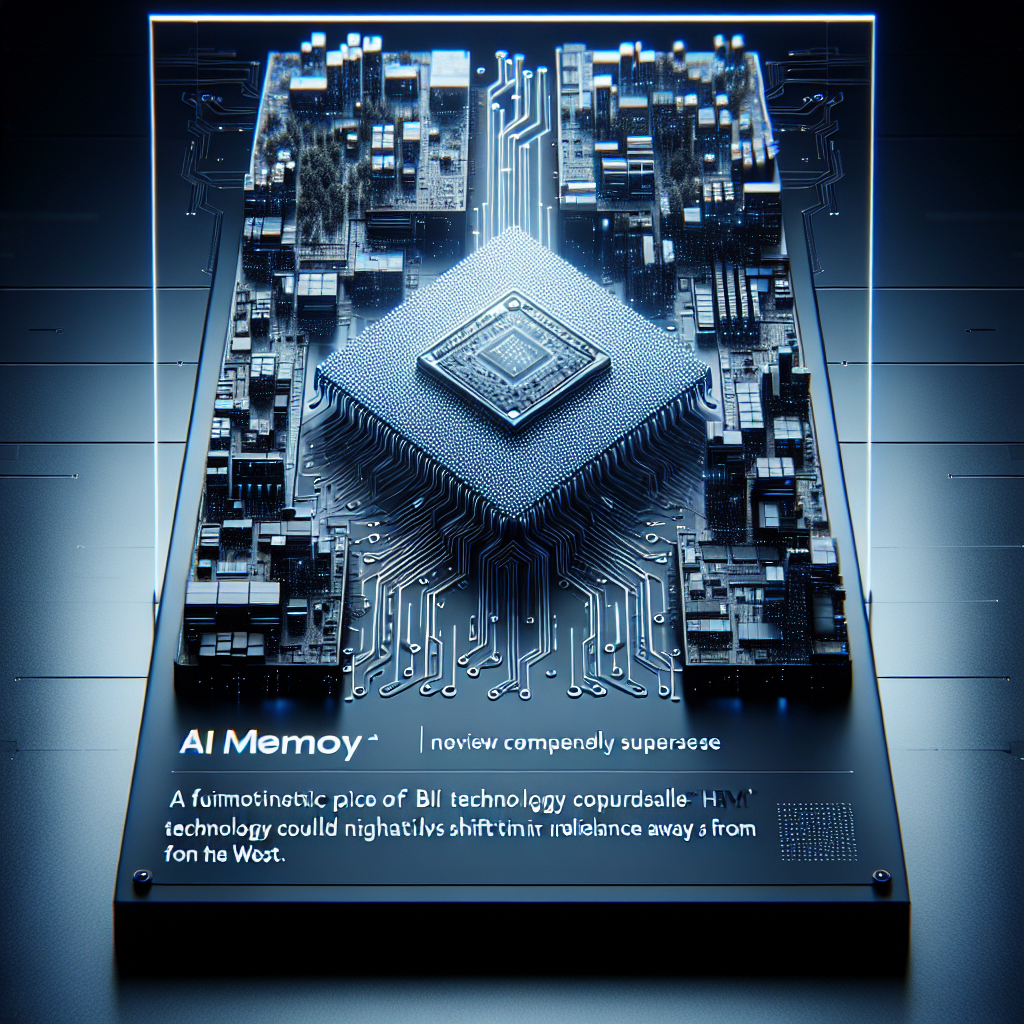
Huawei is reportedly embarking on a revolutionary journey within the realm of artificial intelligence (AI) hardware solutions by developing a memory product specifically engineered for AI-centric workloads. This new technology could potentially substitute High Bandwidth Memory (HBM), which has been a significant limitation for many companies in China seeking to advance in AI applications.
The technology in question is purportedly a solid-state drive tailored for data centers. As the pressures of geopolitical conflicts limit access to established Western innovations, Chinese companies like Huawei are under immense pressure to innovate independently. The significance of this initiative cannot be understated, as Huawei’s proposed AI SSD could eliminate traditional capacity restrictions that hinder performance and scalability in AI tasks.
High Bandwidth Memory has long been considered the gold standard for memory solutions, particularly for complex AI workloads that demand speed and efficiency. However, this high-performance memory relies heavily on specific supply chains that are currently restricted due to ongoing geopolitical factors. Huawei’s reported development of AI memory solutions is a strategic move to lessen this dependency, heralding a new era of self-reliance in AI hardware for Chinese tech firms.
Despite the exciting prospects, it is essential to note that the technical specifics of Huawei’s AI memory solution remain largely under wraps. The company has not disclosed detailed metrics or methodologies to substantiate these claims, which leads to a natural caution about the practicality and effectiveness of the proposed technology.
In tandem with the new AI SSD, Huawei has also introduced a Unified Cache Manager (UCM) software suite designed to optimize the training processes of large language models (LLMs). This innovation allows for better memory utilization across various architectures, including HBM, standard DRAM, and conventional SSDs, serving not just as an interim fix but as a strategic enhancement to speed up AI workloads without necessarily relying on cutting-edge hardware.
The UCM software demonstrates Huawei’s flexibility and resourcefulness in navigating the complexities of the current tech environment. By developing solutions that maximize the potential of existing technologies, the company is paving the way for enhancing its competitive edge while coping with the restrictions imposed by international trade issues.
Furthermore, Huawei’s efforts in the AI domain are not occurring in isolation. The company has rapidly expanded its AI compute capabilities for both training and inferencing, striving to close the gap with industry giants like NVIDIA. This alignment towards developing proprietary solutions illustrates Huawei’s commitment to maintaining its global relevance in the technological landscape amid escalating pressures.
While Huawei is still regarded as trailing behind the advanced hardware capabilities provided by Western entities, the aggressive pace of its innovation signifies a concerted effort to shift the landscape of AI memory and storage solutions. The proposed AI SSD could be pivotal in addressing the operational bottlenecks that many AI-related organizations face in China and could mark a key turning point for the parent company.
In essence, Huawei’s prospective developments in AI memory solutions reflect a broader trend of companies seeking autonomy in technology and innovation, particularly under challenging geopolitical circumstances. As such, business leaders, product builders, and investors should closely monitor this evolving landscape, as these advancements may dramatically influence operational capabilities and competitive dynamics in the global AI arena.
Leave a Reply