

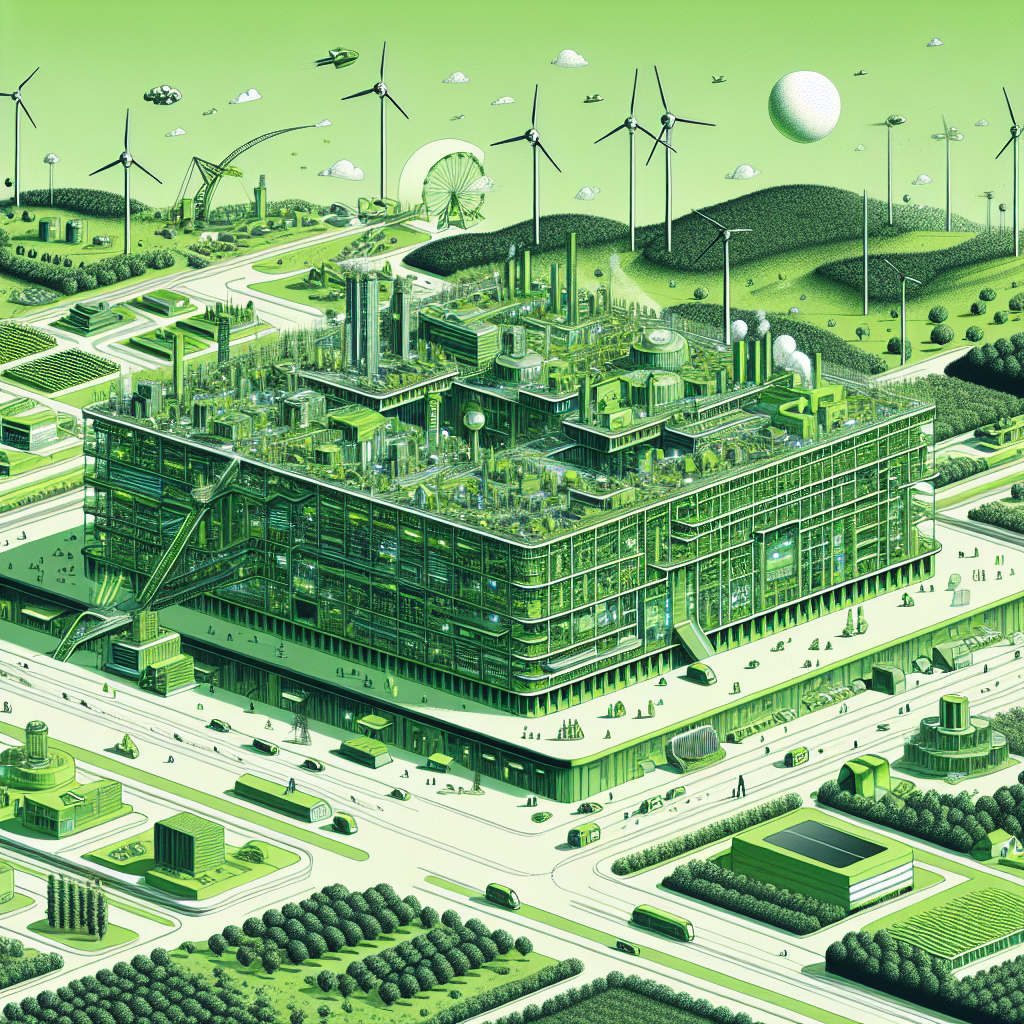
The landscape of AI infrastructure is rapidly evolving, especially in Europe, where initiatives like Stargate Norway are redefining the potential of renewable energy in driving major technological advancements. Launched by OpenAI, Stargate Norway marks a significant investment aimed at establishing a 230MW AI campus powered entirely by Norwegian hydroelectricity. This bold step reflects OpenAI’s visionary objective to leverage AI technology as a foundational driver for economic growth and productivity improvements across the continent.
With the growing importance of AI in modern economies, Stargate Norway is not just another data center project; it represents an ambitious effort to foster a robust ecosystem conducive to innovation. The facility is designed to deliver a staggering 100,000 NVIDIA GPUs by the end of 2026, alongside plans for future expansion to reach an additional 290MW of capability. This large-scale computing power is expected to support developers, researchers, and startups, thereby significantly enhancing the AI landscape in Norway and beyond.
Norway’s unique advantages—its abundant hydropower, low energy costs, and natural cooling attributes—position it as an ideal site for such an extensive AI operation. The facility’s commitment to sustainability is paramount; it will harness renewable resources and integrate advanced cooling technologies. Notably, the initiative promises to support low-carbon enterprises by utilizing waste heat from the GPU systems, offering a holistic approach to energy consumption in the tech industry.
Despite these promising developments, the energy landscape in Norway is currently facing challenges that may cast a shadow on the Stargate initiative. Recent political unrest linked to E.U. green energy laws has raised concerns over the country’s long-term ability to maintain stable energy exports. Following the collapse of the Norwegian government, fears have emerged regarding the country’s energy exports, which play a crucial role in regional stability. This situation highlights the delicate balance between ambitious technological investments and the political and environmental realities that can impact their viability.
The dependence on Norwegian hydroelectricity for powering large-scale AI infrastructures is being scrutinized amid concerns of future energy shortages. As highlighted by recent developments in UK energy policy, a potential shift toward greater reliance on imported electricity amplifies the urgency of ensuring a sustainable and adequate energy supply. If Europe is to capitalize on the benefits of such AI investments, it must navigate these geopolitical and energy supply challenges with prudence.
Looking forward, Stargate Norway embodies a hopeful vision for the intersection of AI and renewable energy, emphasizing a commitment to sustainability while striving for technological excellence. It reflects the growing recognition of AI’s transformative potential, capable of reshaping industries and driving economic resilience. As enterprises and investors observe these developments, the project will serve as a case study for the viability of AI infrastructure powered by renewable energy—an increasingly important consideration in our tech-driven world.
In conclusion, while Stargate Norway signals an exciting step forward for AI development in Europe, its future hinges on the ability to secure stable and sustainable energy sources. Stakeholders must remain vigilant and responsive to the changing political and environmental landscapes that could impact the long-term success of such monumental investments. The journey toward a green and technologically advanced future is fraught with complexities, but with initiatives like Stargate Norway at its forefront, it is a path filled with promise and potential.
Leave a Reply