

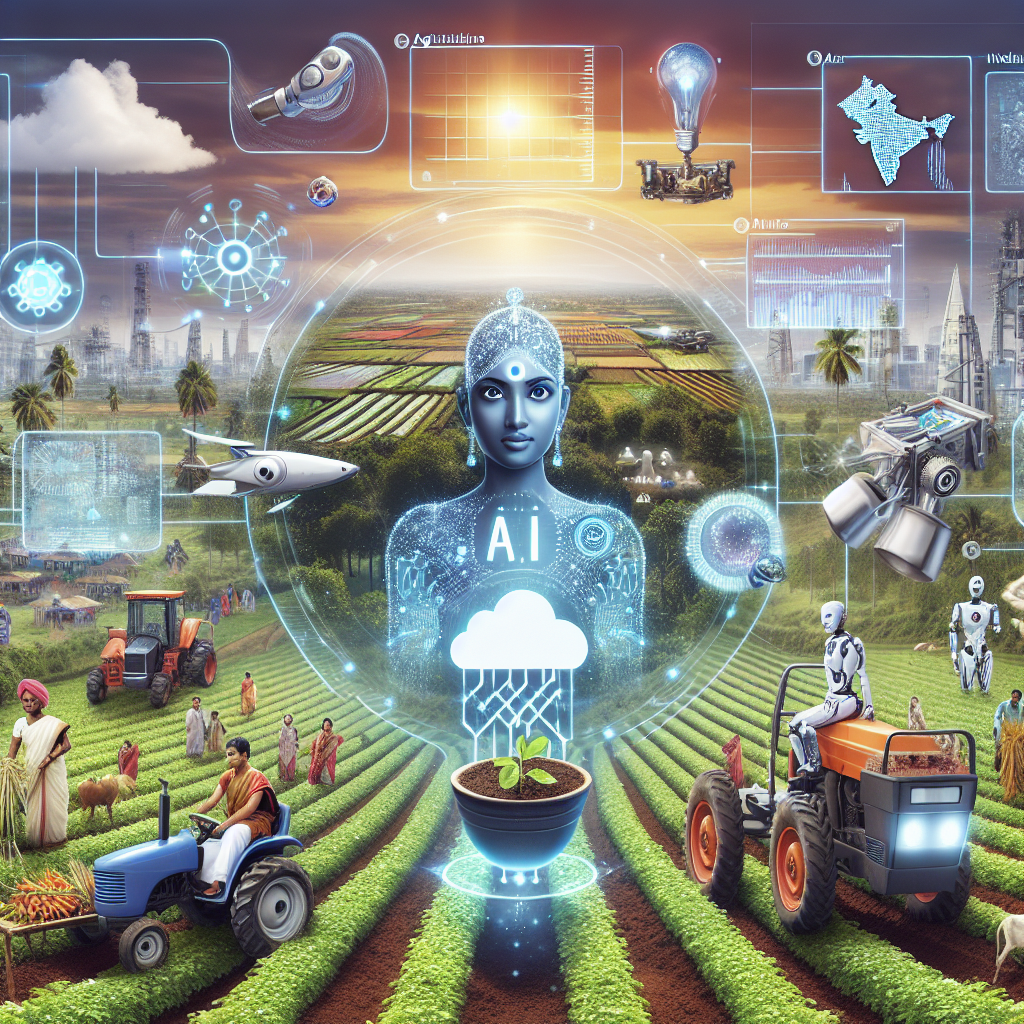
India’s agricultural sector is on the brink of transformation as it increasingly integrates artificial intelligence (AI) into its core operations. By 2026, the focus of AI in agriculture is anticipated to evolve from isolated experiments to a more integrated approach that prioritizes reliability and scalability across various institutions and value chains.
This shift is not driven by groundbreaking technological advancements but rather highlights the importance of embedding digital tools within the existing agricultural frameworks. Over the past ten years, a diverse range of AI applications has emerged, covering functionalities from crop advisory services to pest detection and yield estimation. While these innovations have paved the way for experimentation, their impacts have been inconsistent, revealing that technology alone cannot assure effective outcomes. The crux of success lies in the intelligent integration of AI within structures that define agricultural decision-making, such as government initiatives, financial systems, and cooperative networks.
A critical factor in this transition is the gradual enhancement of digital infrastructures within the agricultural ecosystem. Initiatives such as establishing farmer registries, conducting comprehensive crop surveys, developing decision-support systems, and creating robust data-sharing platforms are essential to improve the reliability and accessibility of agricultural information. These advancements contribute to an environment where AI can enhance institutional decision-making rather than solely functioning through individual applications.
As the landscape evolves, solutions aligned with these cooperative frameworks are poised to gain greater acceptance, pushing past the barriers of isolated technologies. This transition is also marked by a strengthening of institutional capacities within academia and public research organizations. Institutions like the Indian Institute of Technology Ropar, which has established a Centre of Excellence in Agriculture, reflect a distributed approach to capability building in this sector.
This interdisciplinary strategy embraces not only advanced technology but also addresses pressing issues concerning productivity, sustainability, and risk management—moving away from a singular, centralized model. In this broader context, the areas where AI can deliver significant value are becoming clearer. For instance, while farmer-facing advisory roles remain relevant, they have historically struggled to achieve scalable sustainability, especially in scenarios where guidance is challenging to validate or where incentives are weak.
Conversely, growing momentum is noted in nearby sectors where the impact of AI can be more explicitly evaluated. These areas include yield forecasting for procurement decision-making, risk assessments for rural credit systems, facilitated processing of insurance claims, quality grading in food processing, and demand forecasting across supply chains for perishable goods.
In such instances, even slight enhancements in accuracy and timeliness can yield substantial economic and operational advantages. On the technical side, agricultural AI is progressively adopting multimodal strategies that leverage various data sources. Decisions in agriculture are often influenced by external factors such as weather conditions, soil quality, and market dynamics. Integrating these diverse data points allows for more precise and informed decision-making that can significantly enhance farming practices.
The anticipated advances in AI within the Indian agricultural sector signal a pivotal moment for stakeholders, including business leaders, product developers, and investors. With the gradual establishment of a comprehensive digital ecosystem, the potential for AI to optimize agricultural processes is vast. As institutions and farmers collaborate to incorporate these technologies effectively, the future of agriculture in India looks promising, paving the way for enhanced productivity, improved sustainability, and a more resilient agricultural economy.
Leave a Reply