

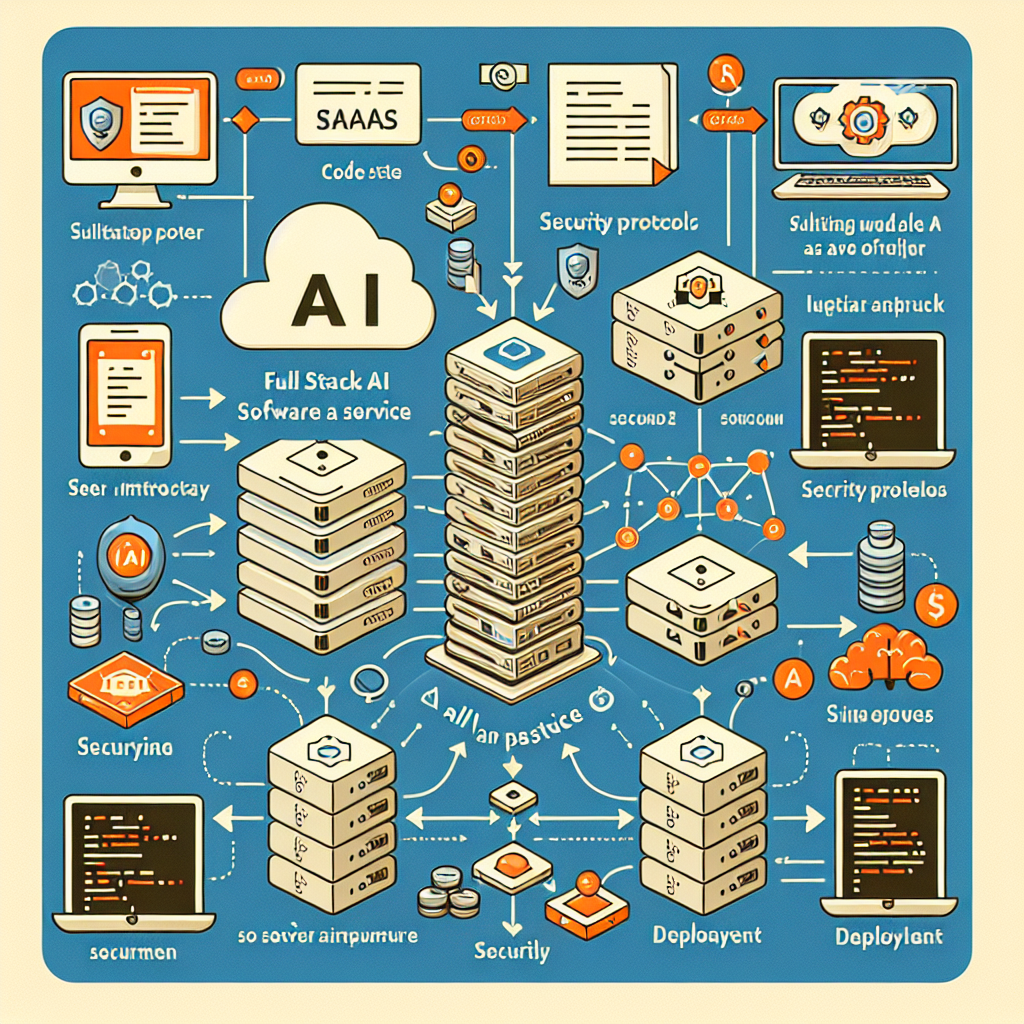
In today’s rapidly evolving tech landscape, the potential of Artificial Intelligence Software as a Service (AI SaaS) applications is limitless, allowing innovators to transform their ideas into reality with unprecedented efficacy. Building and deploying an AI-powered application can seem daunting, especially for those who may not have extensive programming knowledge. However, David Ondrej’s structured framework serves as a beacon of clarity in this complex journey, enabling both aspiring and seasoned developers to navigate through the intricacies of development.
The process of creating a functional AI SaaS application often resembles a labyrinth, filled with various tools, frameworks, and methodologies. Ondrej’s approach is refreshing as it simplifies this journey into manageable steps. His comprehensive guide illustrates effectively how developers can set up a development environment, implement cutting-edge technology, and ultimately deploy their application on a Virtual Private Server (VPS). This roadmap not only demystifies technical aspects but also emphasizes building user-centric solutions, ensuring that the applications developed do indeed address real-world problems.
One notable highlight of this guide is the emphasis on utilizing AI-powered coding assistants such as Claude Code and Gemini 3 Pro. These tools are transformative; they streamline coding processes, reduce human error, and enable developers to focus on higher-level design and functionality. Ondrej underscores that leveraging these assistants can enhance productivity in your development cycle, allowing you to allocate more time to refining your application’s unique features.
Once your development environment is set up, Ondrej encourages developers to define a clear use case for their AI SaaS application. This critical step guides the selection of a compatible tech stack tailored to fulfilling your application’s purpose. Whether you envision a predictive analytics solution or a novel AI-driven marketplace, pinpointing your application’s objective streamlines the subsequent development phases.
Efficient database management is another pivotal component of the guide. Ondrej introduces Prisma ORM and PostgreSQL to simplify schema definitions, migrations, and database operations. Integrating these tools ensures that applications not only function seamlessly but also operate at optimal performance. Developers are reminded to focus on reducing errors and boosting efficiency, a paramount factor in maintaining a competitive edge.
Deployment, often perceived as a daunting task, is simplified through the use of a Virtual Private Server (VPS) in Ondrej’s guide. This choice provides developers with cost predictability, full control over the environment, and scalability for their applications. With tools like Dockploy facilitating automated deployment workflows, the pathway from development to live application is made smoother than ever.
Beneath the technical jargon lies a wealth of insight on adopting best practices that are vital for the longevity and success of any SaaS application. Ondrej emphasizes the importance of defining the project scope to stay aligned with core objectives, consistently utilizing mainstream technologies, protecting sensitive user information, and focusing on continuous debugging and optimization. These principles create a foundational environment conducive to long-term growth.
Moreover, Ondrej’s guide emphasizes the human aspect of technology with the understanding that creating meaningful applications goes beyond mere functionality. The mindset and strategy necessary for thriving in the competitive AI SaaS marketplace are extensively covered, equipping developers with the tools needed to think critically about their project’s direction.
In summary, David Ondrej’s structured roadmap for building and deploying a full-stack AI SaaS application is essential reading for anyone eager to innovate in the AI space. This guide empowers developers, elucidating a pathway from concept to completion while instilling confidence in the application of AI technologies. By the conclusion, you’ll not only grasp the technical intricacies but also adopt the strategic mindset required to succeed in the dynamic world of AI SaaS.
Leave a Reply