

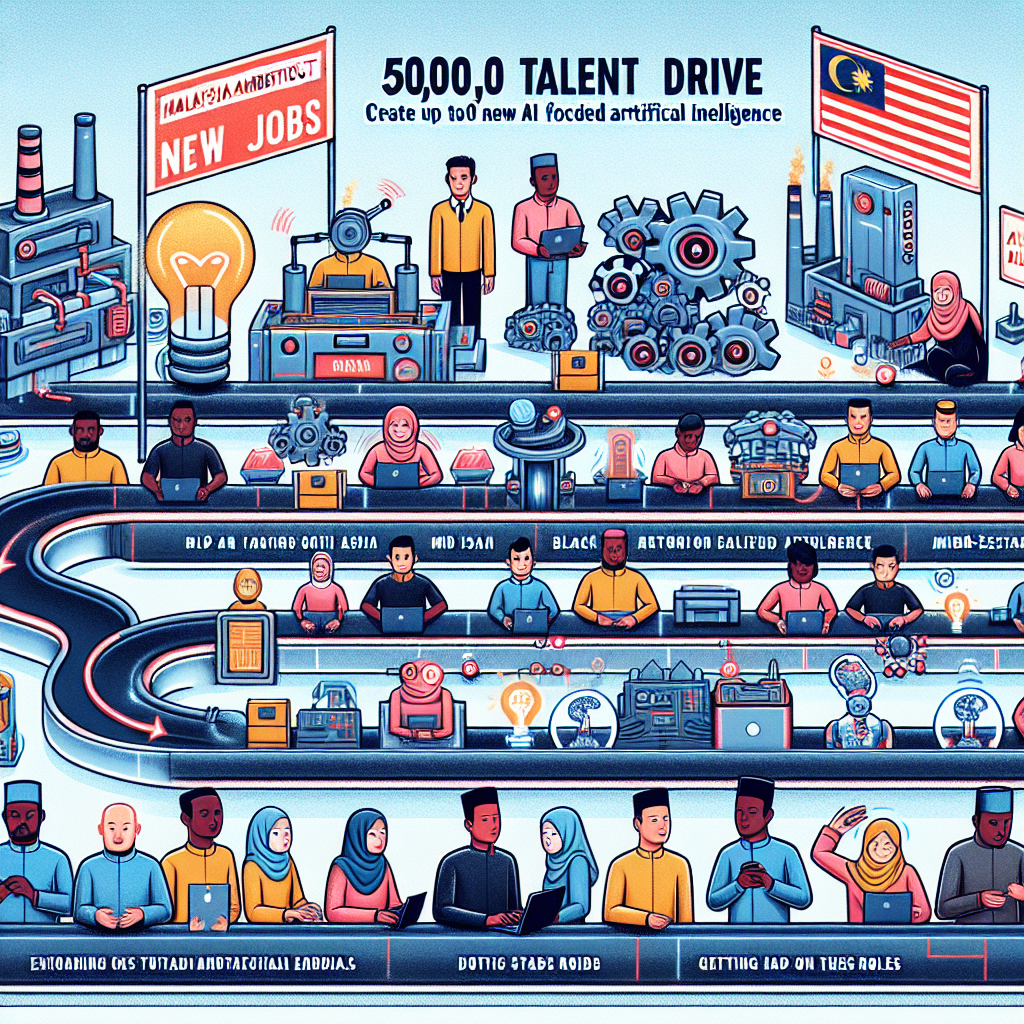
In an ambitious move to solidify its position as a regional leader in technology, Malaysia has announced a target aimed at creating between 300,000 and 500,000 new jobs focused on enhancing its artificial intelligence (AI) talent ecosystem. This initiative is a cornerstone of the National AI Action Plan 2030, a strategic framework currently being developed by the Digital Ministry, which underscores Malaysia’s aspiration to transform itself into an “AI Nation” within the next five years.
The Deputy Human Resources Minister, Datuk Seri Abdul Rahman Mohamad, outlined this transformative plan during a recent session in the Dewan Rakyat. He emphasized that the creation of these jobs is essential for aligning with the objectives set forth in the 13th Malaysia Plan, specifically focusing on the advancement of talent development across vital economic sectors. This move is not just about job creation; it represents a significant commitment to cultivating a skilled workforce that can thrive in an increasingly digital and automated world.
To facilitate this growth, several targeted strategies are being implemented to boost the skills of the workforce and retain local talent in AI-related fields. Among these initiatives is the establishment of the MyMahir National AI Council for Industry (MyMahir-NAICI). This body seeks to foster collaboration amongst key players, including TalentCorp, the National AI Office, and MyDigital. Backed by a substantial RM3 billion reskilling fund, this council aims to dovetail workforce transformation with the ongoing development of national AI talent.
An integral part of this initiative is the MyMahir.my platform, which is designed to provide a plethora of information for job roles, required skills, and relevant training programs to equip Malaysians for future workforce demands. The platform is accessible to a broad audience, including students as young as 15, job seekers, educational institutions, and employers. By democratizing access to information, Malaysia ensures that its citizens are not only prepared for the jobs of tomorrow but also empowered to seek careers in burgeoning sectors like AI and green technology.
Moreover, the interface features the AI Readiness Index (Airi), allowing businesses to assess their preparedness for AI integration. This tool identifies capability gaps and aids in formulating plans for digital transformation, ensuring organizations can keep pace with technological advancements.
On a larger scale, the partnership between the National AI Office and Microsoft under the “AI for MY Future” initiative aims to provide training modules and guided learning experiences, expected to benefit around 800,000 Malaysians. This program exemplifies the commitment to enhancing workforce skills while also aligning educational outputs with market needs.
Underpinning these efforts is the vision from Malaysian Prime Minister Datuk Seri Anwar Ibrahim, who aspires for the country to rank among the world’s top 20 AI economies by 2030. This ambitious goal reflects a strategic understanding that the future of the economy lies in embracing AI and digital technologies. Ensuring a smooth transition toward these advancements is critical, and the Human Resources Ministry is dedicated to making sure that the shift toward AI and sustainable technology does not displace existing jobs. Instead, the focus is on improving job quality and creating high-skilled positions that will uplift the workforce.
This comprehensive, strategic approach aims to enable Malaysia’s workforce to transition effectively into future occupational landscapes, ensuring that local talent remains relevant. By aligning government initiatives with educational frameworks and private-sector collaborations, Malaysia is setting a precedent for how developing nations can harness technology to drive economic growth. The implications of this plan extend beyond the immediate job creation targets; they signal a proactive approach to workforce management in the face of rapid technological change.
As Malaysia embarks on this journey towards becoming a preeminent AI economy, the steps being taken today will likely shape the landscape of work and opportunity for generations to come. These measures not only aim to transform the labor market but also indicate a broader commitment to economic resilience and sustainability in the age of AI.
Leave a Reply