

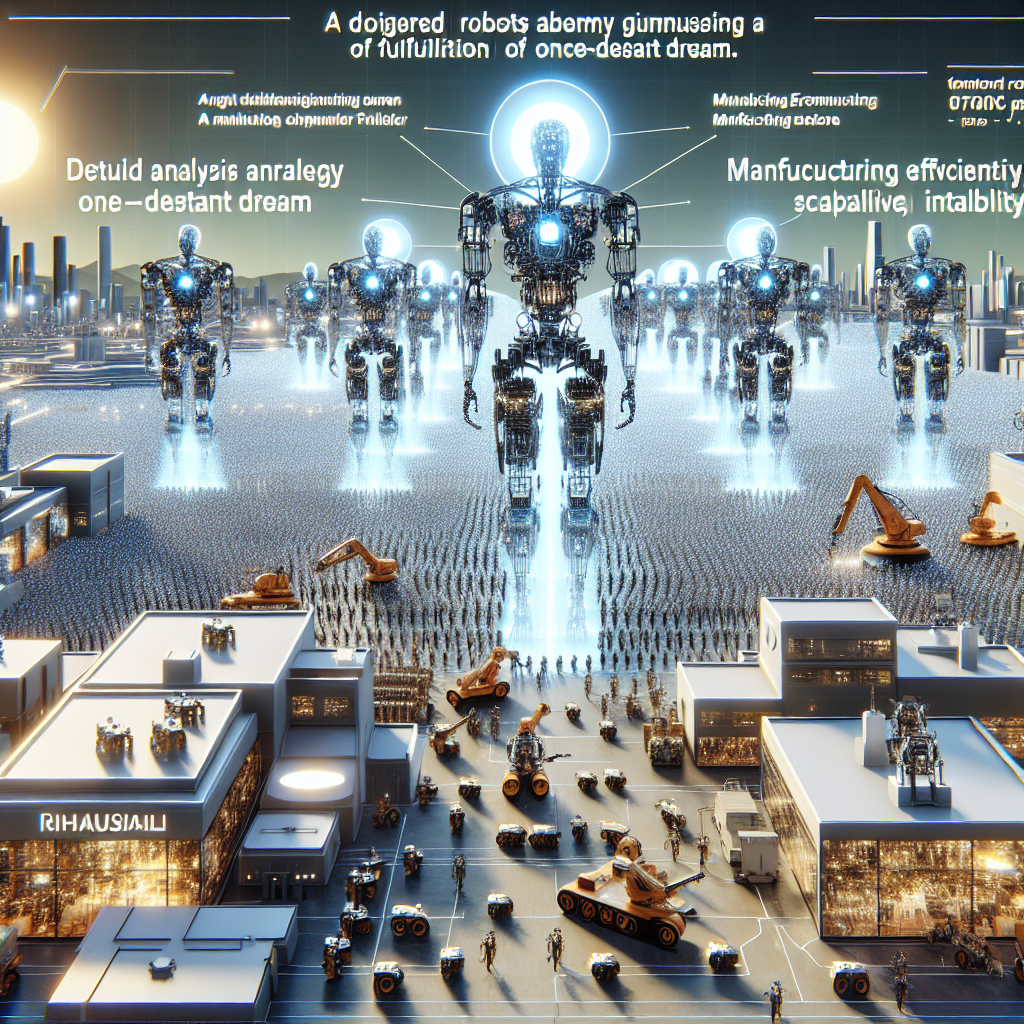
In the rapidly evolving landscape of artificial intelligence and robotics, Foxconn is emerging as a formidable player aiming to revolutionize manufacturing through a strategic focus on automation. Recently, TSMC chairman C.C. Wei highlighted that major US tech companies foresee the economic impact of humanoid robots to surpass that of electric vehicles by a staggering tenfold. This revelation underscores the mounting anticipation surrounding the AI robot era and raises the question: who will seize the lucrative opportunities that lie ahead?
In response to escalating labor costs and a global shift towards localized production, Foxconn is aggressively investing in its robotics division with a vision to build an army of one million robots. This ambition is coupled with a multifaceted strategy that emphasizes the integration of technology, artificial intelligence, and practical application scenarios. By aligning its efforts across these three pillars, Foxconn is not just chasing the numbers but is fundamentally redefining how robots can enhance productivity and operational efficiency.
A core component of Foxconn’s approach includes mastering the key design and manufacturing elements of robotic systems and integrating AI technologies via its proprietary platform, known as FoxBrain. Collaborations with industry leaders like UBtech Robotics serve as a testament to Foxconn’s commitment to deploying robots across various sectors effectively. This synergy between advanced technology expertise and real-world application is facilitating Foxconn’s rapid construction of its “robot legion.”
Foxconn’s forward-thinking mindset is evident as the company recognizes that reliance on demographic advantages alone will not sustain long-term growth. In fact, its investment in robotics dates back over a decade, long before the current surge in interest. As part of its comprehensive 3+3+3 strategic plan, robotics remains a fundamental focus, representing one of the three critical industries shaping Foxconn’s future.
Industry experts have noted that Foxconn’s ambitions extend beyond merely producing operational machinery; the company’s goal is to elevate industrial value. By leveraging its strengths in precision assembly, opto-mechatronics integration, and other advanced engineering feats, Foxconn is creating a robust foundation for its robotics initiatives. The company’s strategy includes an extensive array of technologies such as servo drives, power amplifier controllers, position feedback mechanisms, and sophisticated AI control systems—all intertwined within the larger framework of its global operations.
However, the effective deployment of robots in production environments necessitates an evolution from traditional programming methods. Recognizing this challenge, Foxconn has constructed its own computational infrastructure and developed an advanced Traditional Chinese AI large language model (LLM), FoxBrain. Utilizing reinforcement learning strategies, FoxBrain is continually trained with data sourced from veteran workers, operational parameters, and academic research. This dynamic training process enables robots equipped with FoxBrain technology to seamlessly integrate into production lines, assisting with various tasks such as inspection and monitoring.
What distinctly positions Foxconn ahead of its competitors in the robotics sphere is its vast and diverse network of factories around the globe. This extensive operational footprint not only enriches the training datasets for FoxBrain but also allows for rapid identification and remediation of defects observed in real-time production. As a result, Foxconn is not just enhancing its operational capabilities but is also setting a benchmark for productivity and efficiency in the manufacturing sector.
As Foxconn continues to advance its three-pronged robotics strategy, the implications for the industry are profound. The integration of AI-driven robots represents a significant competitive edge, positioning Foxconn for success in a market poised for exponential growth. The path forward is clear; as this manufacturing giant marches toward its goal of a million-strong robot army, it holds the potential to disrupt traditional production methods and pave the way for an era where automation becomes synonymous with efficiency and innovation in the industrial landscape.
Leave a Reply