
-
UAE announces $1 billion initiative to expand AI in Africa

The United Arab Emirates (UAE) has made a transformative move by announcing a $1 billion initiative aimed at expanding artificial intelligence (AI) infrastructure and services across the African continent. This significant investment was revealed during the G20 leaders’ summit held in Johannesburg, where UAE Minister of State Saeed Bin Mubarak Al Hajeri emphasized the initiative’s role in helping nations meet their development priorities.
The “AI for Development Initiative,” as described by Al Hajeri, aims to embed AI technology across various sectors including education, healthcare, and climate adaptation. The minister articulated a visionary perspective on AI, stating, “We consider AI not just as a future industry but a cornerstone of humanity’s future.” This underscores the UAE’s commitment to fostering responsible and inclusive AI that serves as a catalyst for global economic advancement.
Al Hajeri further expressed the UAE’s dedication to innovation, highlighting the country’s strategic objective of enhancing productivity. The investment comes amidst the UAE’s position as one of the largest investors in Africa, signifying a reinforcing of ties and economic relations between the two regions. In 2024, bilateral trade between the UAE and Africa was reported to have reached an impressive $107 billion, marking a 28% increase from the previous year. Furthermore, the total investments made by the UAE in Africa exceeded $118 billion from 2020 to 2024, demonstrating a longstanding commitment to the African continent.
The initiatives within this sizable investment will likely focus on building robust digital infrastructure and providing AI solutions that tackle critical challenges faced by African nations. As Al Hajeri noted, the goal is not singularly about economic growth but also about empowering communities through technology that addresses societal issues, thereby enhancing the quality of life.
Moreover, the UAE’s heavy investment in AI technologies is illustrated by its plan to build one of the world’s largest data-center hubs, which will collaborate with US-based technology firms to bolster its AI capabilities. This ambition signals the intention to position the UAE as a leading player in the global AI landscape, while simultaneously providing African countries with access to cutting-edge technological advancements.
Despite the UAE not being a member of the G20, its invitation to participate in the summit reflects its growing influence and recognition on the world stage. The UAE is leveraging platforms like the G20 to articulate its vision for AI and development, reinforcing its role as a key partner in fostering international collaboration.
As nations around the globe seek pathways to innovate and grow, the UAE’s proactive investment strategy can serve as a model for other nations looking to tap into the potential of AI. The launch of the “AI for Development Initiative” in Africa is just one of many ways the UAE is actively working to ensure technology serves as a bridge for sustainable development, addressing challenges while promoting economic synergy.
The implications of this initiative extend beyond immediate investments, potentially facilitating job creation in technology sectors across African nations, enhancing educational opportunities, and advancing healthcare services. With a clear focus on climate adaptation, the initiative may also contribute to building resilience against climate change impacts, a growing concern for many African countries.
In summary, the UAE’s $1 billion initiative to expand AI capabilities in Africa represents a significant investment in technology and development that can potentially reshape economies and improve social outcomes. By embracing AI as a crucial tool for the future, the UAE is positioning itself at the forefront of international efforts to utilize technology for global good, while fostering strong partnerships that prioritize sustainable development.
-
Nexla Launches Express: A Conversational Platform for AI Data Engineering

Nexla has recently unveiled Express, a groundbreaking conversational data engineering platform aimed at reducing the complexity of constructing data pipelines specifically for AI applications. This innovative platform empowers users to engage with data in a natural language format, allowing for commands like: “pull customer data from Salesforce, merge it with Google Analytics, and create a data product.” Express then takes over, automatically discovering, connecting, and transforming the needed data sources into secure and production-ready pipelines.
At the core of Express is Nexla’s agentic AI framework, which intuitively understands user intent, quickly locates the appropriate data, and executes data transformation processes without the need for manual coding. This capability is a game changer, enabling developers, analysts, and even non-technical business users to self-serve their data requirements in mere minutes. Consequently, Express eliminates the common delays and complexities that are frequently associated with traditional data engineering practices.
The platform is available immediately as a standalone product through a usage-based pricing model, which makes it particularly accessible for individuals and small teams. Nexla positions Express as a compliment to its broader data integration platform, streamlining the onboarding process for new users and enhancing adoption rates. Saket Saurabh, Nexla’s CEO and co-founder, articulated that the launch signifies a shift where “data engineering transformed into context engineering.” He emphasizes that the platform enables users who comprehend their desired outcomes to work with data in a conversational and reliable manner within a matter of minutes.
Express’s architecture builds upon Nexla’s existing metadata-driven integration technologies, which have now been enhanced with conversational capabilities. Earlier this year, Nexla expanded its AI foundation by deeply integrating no-code GenAI tools with a retrieval-augmented generation (RAG) pipeline architecture. This evolution showcases Nexla’s commitment to facilitating effortless data interaction and pipeline creation.
While Nexla’s Express presents a robust solution in the data engineering landscape, it’s noteworthy to compare it with other industry players. For instance, Databricks has introduced its own conversational tool called Databricks Assistant. This assistant also supports conversational queries over data, assisting users in generating SQL or Python code, clarifying intricate queries, and rectifying code errors—all within an environment catered to users already familiar with Databricks. However, it is crucial to note that Databricks Assistant functions primarily as a code-generation and support mechanism rather than as a comprehensive no-code workflow builder like Express.
Snowflake is another robust contender in this space with its Snowflake Intelligence. They are creating conversational agents atop their data platform. Innovations such as Cortex Agents facilitate reasoning over both structured and unstructured data while Cortex Analyst enables users to translate natural language requests into SQL queries. These advancements, including Cortex Search, position Snowflake as a formidable competitor aiming to democratize data access across different user expertise levels.
Nexla’s Express is ripe with transformative potential, making advanced data engineering capabilities accessible to a broader audience. Users need not possess programming expertise to navigate the intricacies of data correlation and transformation. With its natural language interface, Express not only accelerates productivity for users across varied sectors—including business analysts, AI engineers, and marketing professionals—but also strategically aligns with growing trends towards democratizing data access and fostering self-service capabilities in organizations.
Ultimately, as companies aim to leverage data-driven insights more effectively than ever, platforms like Nexla’s Express will likely occupy a central role. By breaking down traditional barriers to data access and manipulation, this innovative solution is set to empower what could very well be a new era of data-centric decision-making across industries.
-
BMIC.ai: A convergence of AI, blockchain, and quantum computing

In a world where technology continues to evolve at a breakneck speed, the convergence of Artificial Intelligence (AI), blockchain, and quantum computing has opened up a realm of possibilities. BMIC.ai, or Blockchain Micro-Ion Compute, is at the forefront of this technological revolution, presenting an ecosystem designed to secure digital assets while integrating three core pillars: AI, blockchain, and quantum computing. This innovative platform addresses the increasing complexities and pain points across these domains, paving the way for a new standard in security and efficiency.
The significance of BMIC is underscored by the growing need for secure transactions and identity protection in our digital landscape. As AI workloads grow more complex, there is a pressing demand for quantum systems that can facilitate faster training and optimization capabilities. Conversely, machine learning can enhance quantum hardware performance, offering improved qubit stability and error correction, essentially creating a symbiotic relationship between these advanced technologies.
BMIC.ai’s offerings include the world’s first quantum-resistant wallet and a comprehensive Quantum security-as-a-service (QSaaS) platform. Utilizing micro-ion compute modeling and advanced cryptographic research, the project aims to build a robust infrastructure tailored to safeguard users’ digital assets. As we transition into what can be termed the ‘quantum era,’ securing these assets becomes vital. The digital security landscape is changing rapidly, and conventional methods may no longer suffice. BMIC.ai aims to address these challenges through cutting-edge technology.
Understanding the Core Features of BMIC.ai
One of the standout components of BMIC.ai is its BMIC token, which serves as the ecosystem’s economic engine. It plays several roles within the platform, not only enabling features like unlocking wallet capabilities and enterprise services but also supporting compute workloads. Its functioning extends beyond facilitation, as it contributes to enhancing network reliability and security while rewarding participants. Notably, BMIC tokens can be burned to generate BMIC Compute Credits to be used for quantum workloads, demonstrating a practical use case that ties economic incentives to technological execution.
The architecture behind the BMIC tokenomics is as robust as its intended applications. With a total supply of 1.5 billion tokens, careful allocation allows for scalability and sustainability. A significant portion, 50%, is allocated for presale to attract early investors. Furthermore, allocations for rewards and staking, private sales, liquidity and exchanges, and ecosystem reserves ensure a structured approach to managing the ecosystem’s financial health.
Roadmap and Future Prospects
BMIC is entering a pivotal phase of its development, initiating the presale and validating its quantum-resistant wallet architecture. This step is critical for onboarding early validators into the decentralized quantum cloud network, alongside advancing its micro-ion compute engine that supports the QSaaS offering. The journey ahead also includes strategic initiatives for expanding engineering capabilities, fulfilling patent-level cryptographic research, and establishing partnerships within the DeFi and Web3 ecosystems.
The implications of BMIC.ai are profound, especially in a landscape where digital security is increasingly at risk from cyber threats and vulnerabilities. As the platform unfolds its roadmap and engages with the community during presale, it sets the stage for a new paradigm in how digital assets are secured and managed. The focus on quantum-resistant solutions reflects an understanding of the imminent technological shifts poised to reshape our reality.
Final Thoughts
BMIC.ai is not just a technological endeavor; it’s a vision for a secure digital future—one that recognizes the interplay of AI, blockchain, and quantum computing as the keys to navigating the challenges of tomorrow. Through its innovative approach, it addresses critical pain points and offers tangible solutions that resonate with business leaders and product builders aiming to leverage the latest advancements in technology. As it stands on the precipice of its presale, the excitement generated by BMIC.ai underscores the vital role of innovative ecosystems in shaping the future landscape of technology.
-
Robots learn complex tasks with help from AI

In a groundbreaking initiative, researchers at Yale have leveraged advanced artificial intelligence techniques to enhance the capabilities of robots, enabling them to learn and perform complex tasks with precision. The core of this innovation lies in the application of hybrid control theory, a sophisticated mathematical approach that guides robots in executing movements efficiently.
Hybrid control theory is pivotal in determining when an autonomous robot should switch between various control modes to successfully accomplish tasks. This approach synthesizes various learning methodologies, enabling robots to adapt and learn in a manner akin to human skill acquisition.
According to the lead researcher, Abraham, the process mirrors how humans learn new skills or engage in sports. Initially, we consciously observe and predict our physical movements. Over time, these actions become second nature through practice and muscle memory— a transition that this technology aims to replicate in robotic systems.
One prominent application of this research involved training a dog-like robot that could successfully balance itself and execute a flip. Innovative AI methods were employed to develop challenging motor skills that require precise coordination across the robot’s entire body.
As part of this training, hybrid control theory was expertly utilized to schedule and integrate the diverse mechanisms through which robots learn motor skills. The outcome is not merely a robot capable of simple tasks; instead, it becomes capable of exhibiting complex, compounded behaviors that evolve as it learns from its environment.
This development holds promising implications for various industries where robots could operate effectively in dynamic, unstructured environments such as homes, service sectors, and even healthcare facilities. The utilization of AI in facilitating such advanced capabilities marks a significant leap towards more intelligent, adaptable robotic systems.
Hybriding AI learning methods allows robots to enhance their skill sets, progressing from basic tasks to more sophisticated maneuvers that require high precision. This evolution is critical, particularly in fields where fine motor skills are paramount. As robotic capabilities grow, their practical applications can potentially expand into everyday life, providing assistance in tasks that were once thought too complex for machines.
Moreover, the research underscores a vital aspect of robotics— the interplay between theoretical frameworks like hybrid control and the practical realities of robotic function. This dual focus is essential in fostering robots that are not only intelligent but also capable of translating that intelligence into tangible actions.
In conclusion, the integration of hybrid control theory with AI solutions represents a remarkable fusion of disciplines that promises to redefine the capabilities of robots in the near future. As these machines learn to navigate the nuances of complex tasks, they open doors to new opportunities in various sectors, heralding a new era of robotics that is equipped to perform in environments we once deemed too unpredictable or intricate for autonomous systems. This innovative trajectory could lead to a transformation in industries reliant on automation, showcasing the endless possibilities that lie ahead in the realm of AI and robotics.
-
Core AI Launches New AI-Powered Digital Marketing Business to Accelerate Global Growth

In a bold move to expand its reach and capitalize on emerging market opportunities, Core AI Holdings, Inc. has announced the formation of Core Digital, a new wholly-owned subsidiary focused on the rapidly evolving digital marketing sector. Officially made public on November 21, 2025, this initiative marks a significant shift for the company as it leverages its existing artificial intelligence capabilities to enter one of the highest growth areas in technology.
Aitan Zacharin, the CEO of Core AI, emphasized the transformative nature of this development, stating, “Core Digital enables us to take our AI capabilities beyond gaming into one of the world’s fastest growing technology markets.” With a strategic focus on integrating proprietary content intelligence with advanced operational frameworks in digital marketing, Core AI aims to create a robust engine for AI-driven content optimization and global advertising.
By utilizing its proprietary machine learning and media analytics platform, Core Digital is set to build a next-generation ecosystem dedicated to AI-powered digital marketing. This integration will enhance tech-enabled interactions and enable effective advertising delivery, generating new value not only for advertisers but also for content creators and audiences globally.
This move is also a pivotal component of Core AI’s broader strategy, which includes:
- Extending its AI-driven content technology into new, high-growth digital media segments.
- Establishing a foothold in Asia, known as one of the fastest-scaling digital content markets today.
- Identifying new revenue streams across various sectors, including advertising and creator technologies.
- Leveraging co-development opportunities that combine the company’s technical expertise with innovative marketing strategies.
Core Digital is projected to commence operations by the first quarter of 2026, positioning itself strategically to take advantage of the surging demand for digital marketing solutions that leverage AI capabilities. The anticipation surrounding this initiative underscores the company’s commitment to not just remain competitive but to take a leadership role in the rapidly evolving digital landscape.
Core AI, headquartered in Miami, has established itself as a significant player in the gaming industry, with a portfolio that includes over 2,200 games and more than 800 million downloads globally. This extensive experience will undoubtedly inform and enhance the capabilities of Core Digital as they move forward.
The formation of Core Digital represents Core AI’s proactive approach to diversifying its business model and tapping into the lucrative realms of AI-driven advertising and digital content. With digital marketing continuing to grow at a staggering rate, this new venture is anticipated to generate substantial long-term revenue growth for the parent company.
The digital marketing sector has witnessed rapid transformation driven by technological advancements and shifts in consumer behavior. Companies like Core AI that adapt swiftly are likely to secure significant advantages. By integrating advanced AI solutions into marketing strategies, Core Digital plans to offer advertisers unprecedented insights and optimization capabilities in reaching their target demographics.
As this market continues to evolve, Core Digital’s entry signifies not just a growth opportunity for Core AI but also reflects broader industry trends of convergence between technology and marketing. The fusion of AI and digital marketing is set to redefine how content is created, optimized, and delivered.
For investors and business leaders, Core Digital represents a gateway into a high-potential sector, poised to capitalize on the convergence of AI and digital marketing. With an expected operational launch in early 2026, stakeholders are encouraged to keep a close watch on Core AI’s developments as they navigate this exciting venture.
In conclusion, Core AI’s new digital marketing subsidiary is a strategic and timely initiative that not only taps into a booming market but also integrates the company’s advanced technological capabilities, setting the stage for substantial growth and innovation in AI-driven marketing.
-
OpenAI and Taiwan’s Foxconn to partner in AI hardware design and manufacturing in the US

OpenAI has made a significant move in the AI landscape by announcing a partnership with Taiwan’s Foxconn, a global leader in electronics manufacturing. This collaboration will focus on designing and manufacturing equipment specifically for artificial intelligence data centers located in the United States.
Foxconn, widely recognized for its assembly of Apple products such as the iPhone and its production of servers for companies like Nvidia, will work alongside OpenAI to co-design AI data center racks. The aim of this partnership is to bolster the infrastructure necessary for AI advancements in the U.S.
The partnership comes at a crucial time when the demand for robust AI infrastructure is skyrocketing. Known for its extensive manufacturing capabilities, Foxconn will produce various components including cabling, networking, and power systems for these data centers within its U.S. facilities, located in states such as Ohio and Texas. This initiative signals a robust investment in localizing AI hardware production, ensuring that the technological backbone of the AI era is built domestically.
According to statements from both companies, this agreement does not impose immediate financial obligations or purchasing commitments, indicating a flexible approach to the partnership as it develops. However, OpenAI will benefit from “early access” to evaluate the manufactured products, potentially allowing them to make decisions about procurement based on performance and integration with their existing systems.
Sam Altman, CEO of OpenAI, expressed optimism regarding the partnership, stating, “This partnership is a step toward ensuring the core technologies of the AI era are built here. We believe this work will strengthen U.S. leadership and help ensure the benefits of AI are widely shared.” His remarks underscore the ambition behind this partnership, which aims to make significant contributions to the local economy and the larger AI ecosystem.
As part of its broader strategy, OpenAI has earmarked an astounding $1.4 trillion to develop the necessary AI infrastructure. This ambitious financial commitment follows their recent multi-billion dollar partnerships with technology giants Nvidia and AMD, aimed at enhancing the computing power vital for supporting OpenAI’s advanced models and services. Additionally, they are collaborating with U.S. chipmaker Broadcom to design and manufacture proprietary AI chips, reflecting a proactive approach to hardware development in conjunction with their software capabilities.
However, the extensive financial commitments have evoked mixed sentiments among investors. Concerns about OpenAI’s ability to recover its investments have been raised, prompting a closer examination of the sustainability and profitability of these ambitious plans. The partnership with Foxconn represents a strategic move to address these concerns by localizing production and potentially reducing costs related to overseas manufacturing.
This collaboration is not only about optimizing operations but also about positioning OpenAI at the forefront of the rapidly evolving AI landscape. By working closely with a major manufacturer like Foxconn, OpenAI enhances its ability to innovate and scale its offerings significantly.
In conclusion, the partnership between OpenAI and Foxconn highlights a critical convergence of AI software and hardware expertise. As both companies move forward with this venture, the implications for the U.S. tech ecosystem could be profound, fostering a more resilient and capable AI infrastructure that supports current and future technological advancements. With the commitments made and the strategic nature of this partnership, it will be crucial to monitor how this initiative unfolds and contributes to America’s position in the global AI market.
-
AI hedge fund Numerai wins backing from top university endowments, token soars

The financial landscape is undergoing a significant transformation, and one of the most striking examples of this evolution is Numerai, a hedge fund that leverages artificial intelligence and blockchain technology to redefine investment approaches. Recently, Numerai successfully raised $30 million in a Series C funding round, which was led by an impressive coalition of top university endowments. This substantial investment has propelled the company’s valuation to a remarkable $500 million, marking a fivefold increase since 2023.
In the wake of this announcement, the Numeraire (NMR) token, which serves as the backbone of Numerai’s operations, experienced a surge of over 40%, reflecting the growing confidence in the firm’s innovative model. The participation in this funding round was not limited to new investors; existing supporters, including notable names like Shine Capital, Union Square Ventures, and Paul Tudor Jones, reaffirmed their commitment to Numerai, highlighting the potential they see in this forward-thinking hedge fund.
Numerai was founded in 2015 in San Francisco and has carved a niche for itself by crowdsourcing machine learning models from thousands of anonymous data scientists around the globe. This unique approach not only democratizes the investment process but also enables the fund to harness diverse insights and expertise. The platform’s native token, NMR, plays a critical role by allowing data scientists to stake on their predictions. Successful models yield NMR tokens as rewards, while underperforming ones result in losses, creating an innovative incentive structure for high-quality predictions.
As of now, Numerai has significantly expanded its assets under management (AUM) to $550 million from approximately $60 million over the past three years, with around $100 million of that amount coming in just the last month. Impressively, its Meta Model achieved a net return of 25.45% in 2024, with only one month showing a downturn, further validating its approach and strategies.
This latest funding comes on the heels of a $500 million commitment that Numerai secured from JPMorgan Asset Management in August, which is set to be deployed over the next year. This substantial backing from a major financial institution underscores the increasing relevance of AI and blockchain in investment management and the confidence traditional finance players are placing in these technologies.
The rise of AI-driven models is not just a trend but a significant shift in how investments are approached. The integration of AI into cryptocurrency and investment frameworks is creating a new frontier of autonomous trading systems. AI agents are emerging as key players in this evolution, capable of monitoring market fluctuations, processing extensive data, and executing blockchain actions independently.
Thought leaders in the industry are beginning to highlight the potential impact of AI agents. For instance, Paxos Labs co-founder Bhau Kotecha remarked that these agents could become the critical “X-factor” in the growing landscape of stablecoins. He posited that rather than relying solely on human decision-making for market dynamics, these autonomous systems could efficiently route liquidity to the best issuers, thus turning the current fragmentation of the market into a competitive advantage.
Supporting this vision, tech firms like Cloudflare are innovating robust technologies to facilitate immediate transactions by AI agents. In September, they announced their plans for a stablecoin called NET dollar, designed specifically to accommodate rapid transactions executed by AI. Moreover, Coinbase has been keen on exploring AI capabilities; its x402 protocol, introduced in May, allows AI-driven agents to perform transactions in stablecoins without human intervention. This protocol exhibited a staggering increase in transactions, soaring by more than 10,000% from October 14 to October 20, demonstrating a real hunger in the market for such autonomous solutions.
Numerai’s trajectory speaks volumes about the shifting paradigms in finance, technology, and investment ethics. As the firm solidifies its position as a pioneer in blockchain-based hedge funds, it provides invaluable insight into the future of capital markets where AI’s influence is expected to expand dramatically. Investors, product builders, and business leaders should keep a keen eye on Numerai’s journey and its implications for the broader fintech ecosystem.
-
PeopleSeeFree.AI Launches — Share Your Eye Data with AI Companies in Exchange for Free Prescription Glasses and Contact Lenses
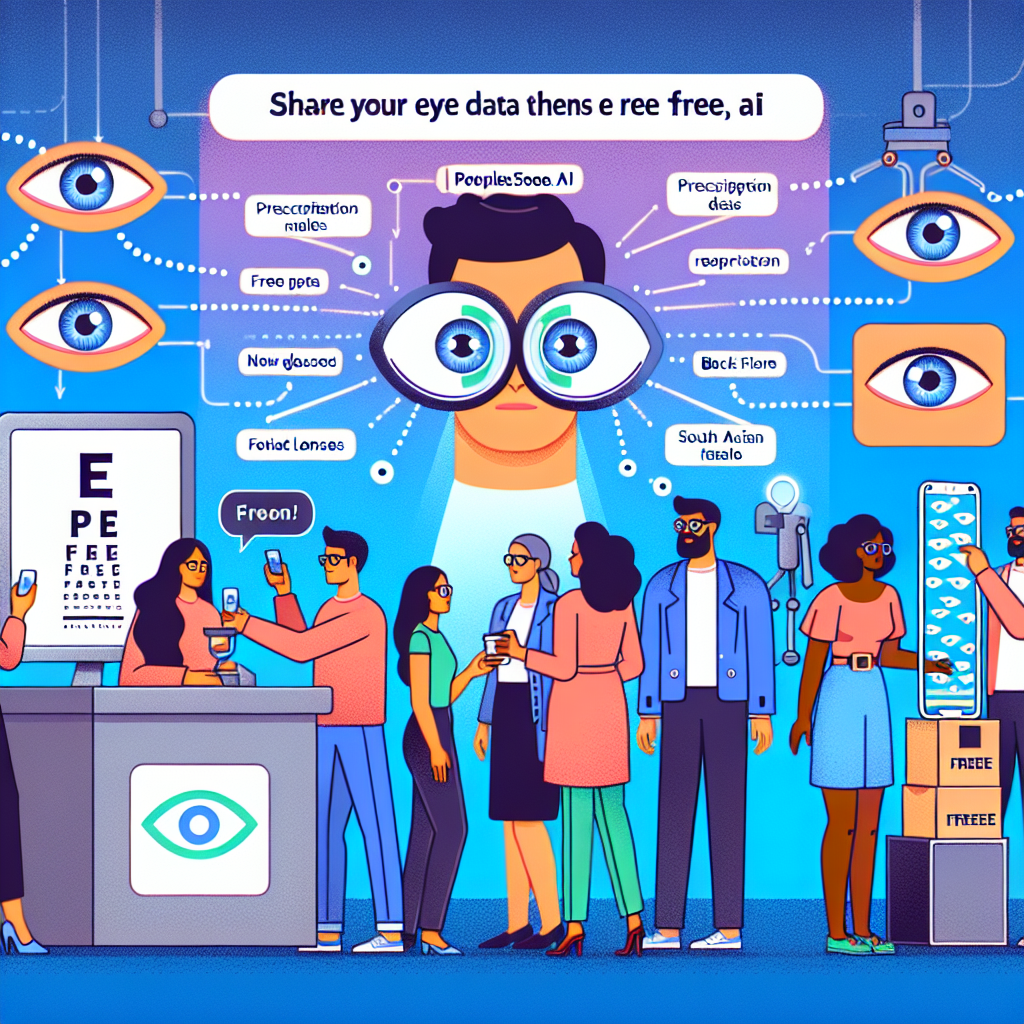
The landscape of vision care is witnessing a revolutionary shift with the launch of PeopleSeeFree.AI by InWith Corporation. This innovative program aims to provide free prescription glasses and contact lenses to millions, offering a compelling opportunity for individuals to participate in the advancement of artificial intelligence while receiving necessary vision correction without financial burden. Starting in 2026, the initiative invites eligible participants to consent to share their anonymized ophthalmic data in exchange for high-quality eyewear, setting the stage for a unique interplay between healthcare and AI technology.
InWith Corporation, an authority in smart vision technology, is spearheading this initiative as part of their commitment to democratizing access to vision care. The program allows users to contribute valuable data—such as refractive error patterns and ocular health metrics—into secure artificial intelligence datasets. Dr. David Markus, the President and Chief Technology Officer of the company, emphasized the dual-purpose nature of the initiative, stressing that it not only addresses a pressing need for vision correction but also significantly contributes to advancements in health and technology.
The potential implications of this data-sharing initiative are vast. By aggregating millions of data points from diverse participants, AI systems can be trained to identify early signs of diseases like diabetic retinopathy or glaucoma—conditions that might remain unnoticed until significant damage has been done. This early detection could drastically change the prognosis for affected individuals, illustrating a proactive approach to healthcare that transitions from reactive treatments to preventive measures.
Moreover, the introduction of real-time smart contact lenses opens avenues for personalized vision optimization. Through dynamic adjustments of prescriptions based on immediate visual demands, the program could not only enhance the quality of life for users but also reduce common discomforts associated with prolonged screen time, a necessity in today’s digital-first world.
The public health benefits extend even further. By analyzing data trends, researchers could better understand and potentially mitigate vision-related issues prevalent in aging populations or among occupational groups exposed to devices for extended periods. The implications for public health strategies and resource allocation are profound, highlighting the program’s promise as a case study for the effective convergence of personal health data and societal health management.
Additionally, the initiative recognizes the intersection of vision data and neurological health. By monitoring ocular movements and pupil responses, AI could potentially signal early indicators of conditions like Parkinson’s disease or traumatic brain injuries, providing healthcare professionals with invaluable early warning signals.
In compliance with global privacy standards, including GDPR and HIPAA, the program assures participants that all data will be fully anonymized and ethically utilized. This commitment to privacy is crucial in an age where data sensitivity is paramount, and it fosters greater trust among potential users wary of sharing personal health information.
Individuals interested in participating can enroll at www.peopleseefree.ai, gaining priority access to free vision assessments and personalized corrective lenses upon the program’s launch. This initiative positions itself not just as a product offering but as a movement towards ensuring clear vision becomes a universal right, supported by the collective contributions of shared data.
As InWith Corporation strives toward a healthier tomorrow, PeopleSeeFree.AI stands as a paradigm of innovative thinking, blending advanced AI applications with compassionate healthcare solutions. By participating in this program, individuals are not only improving their vision but also playing a crucial role in accelerating medical advancements that could redefine preventive healthcare for future generations.
-
Qualcomm and Humain launch AI engineering centre in Riyadh

Saudi Arabia is taking significant strides in becoming a global leader in artificial intelligence (AI) with the launch of the Qualcomm AI Engineering Centre at Humain in Riyadh. This strategic initiative aims to establish a robust foundation for AI development in the kingdom, with an ambitious plan to roll out 200MW of AI datacentre capacity supported by Qualcomm’s advanced Cloud AI solutions, set to begin in 2026.
The announcement was made during a pivotal moment for Saudi Arabia as Crown Prince Mohammed bin Salman highlighted the nation’s commitment to technology and innovation during his recent visit to the United States. This development is not just about infrastructure; it reflects Saudi Arabia’s larger ambition to transform into a global hub for intelligent computing.
Unveiled ahead of the ninth edition of the Future Investment Initiative in Riyadh, the Qualcomm AI Engineering Centre is a collaboration that promises to leverage Qualcomm’s powerful technology to enhance various sectors, from healthcare to finance, under the banner of a diversified economy. The initiative will utilize Qualcomm’s AI200 and AI250 rack services, which will enable Saudi Arabia to execute AI inferencing on a large scale.
Tareq Amin, CEO of Humain, emphasized the strategic nature of this partnership: “This collaboration unites Humain’s deep regional insight and full AI stack capabilities with Qualcomm’s unmatched semiconductor technology and product leadership.” These statements underscore the intention behind the initiative—to position Saudi Arabia as a leader in the next wave of global AI and semiconductor innovation.
This initiative is a foundational stone in meeting the objectives outlined in Saudi Vision 2030, the nation’s roadmap to diversify its economy, bolster digital independence, and diminish its reliance on oil revenues. Hosting a network of AI datacentres on Saudi soil allows the country to cultivate local expertise, attract global technology investments, and build a robust platform for AI-driven applications that can serve not only local enterprises but also international markets.
The Qualcomm AI Engineering Centre isn’t just another technical hub; it’s envisioned as a strategic centre for collaboration and technological development. It will focus on the creation of edge-to-cloud services, assist in the onboarding of AI models, and foster a comprehensive technology ecosystem where local talent collaborates with global experts. In conjunction with infrastructure enhancements, Humain is also strengthening its partnership with Adobe to merge AI infrastructure with culturally-aware generative models aimed at serving over 400 million Arabic speakers worldwide.
This initiative stands as a continuation of goals set out during the US-Saudi Investment Forum, where Humain and Qualcomm highlighted their commitment to accelerating AI deployment in the region. The establishment of this centre represents a tangible step toward fostering an environment ripe for AI research, development, and deployment, allowing Saudi Arabia to actively participate in global AI innovation while also nurturing its own sovereign capabilities.
The Humain initiative signifies a notable pivot toward a knowledge-based economy for the kingdom. It seeks not only to provide computational power but also to cultivate local expertise, develop AI models, and enable a platform for international collaboration. The synergy of Qualcomm’s infrastructure capabilities with Humain’s regional insights positions Saudi Arabia at the forefront of the AI revolution, illustrating the nation’s commitment to leveraging technology as a cornerstone for economic growth.
-
Amazon Prime Video Adds AI-Generated Video Recaps

In an exciting development for streaming enthusiasts, Amazon Prime Video has taken a significant step toward integrating advanced technology into viewer experiences by introducing AI-generated video recaps for selected TV shows. This innovative feature aims to enhance the way audiences recapitulate storylines and prepare for upcoming seasons, offering a fresh and engaging way to revisit crucial plot points. Currently available for popular titles such as Fallout, Tom Clancy’s Jack Ryan, Upload, Bosch, and The Rig, these recaps are being rolled out exclusively on living room devices and in English.
This new offering from Amazon follows the previous success of X-Ray Recaps, also powered by AI and designed to provide spoiler-free textual summaries of episodes or entire seasons. While X-Ray Recaps deliver information through written text, the new video recaps add a layer of multimedia engagement, incorporating voice narration, character dialogues, and musical scores to create a dynamic recap experience. The results are intended to resonate more profoundly with viewers, capturing the essence of captivating moments that define a series and enhancing the lead-up to new content.
Amazon describes the operation of its Video Recaps as a complex but effective use of generative AI technology. This technology analyzes key plot points and character arcs, identifying the most crucial moments that impact viewers as they transition to the next season of a show. Subsequently, the AI sifts through a library of footage to select the most engaging video clips and combines them with audio effects, notable dialogues, and carefully curated music, all culminating in a high-quality visual and auditory summary. The overarching AI-generated voiceover then stitches these elements together, crafting a theatrical-style recap.
While traditional TV shows often host recaps at the beginning of new episodes to refresh audience memory, the potential of generative AI could revolutionize this practice by automating and enhancing the recap process. By allowing AI technology to curate and assemble content, streaming platforms can deliver content that is not only informative but also entertaining, effectively eliminating the need for producers to create standard recaps from scratch.
Despite exciting possibilities, it is noteworthy that the Video Recaps will currently only be available at the start of new seasons for selected shows, working in conjunction with the existing text-based X-Ray Recaps. This provides a dual system where viewers can choose their preferred format for backstories and series overviews. X-Ray Recaps may summarize critical cliffhangers or plot points, offering flexibility and depth in viewer understanding.
This development bears considerable implications for the realm of video streaming and content consumption. As the industry increasingly incorporates AI technologies into its operations, the quality and accessibility of media experiences could reach new heights. The ability to effortlessly draw from existing visual material allows for broader and more personalized viewer interactions, potentially changing how producers craft narratives for their audiences.
Moreover, this feature could also influence competitive dynamics within the streaming landscape. With giants like Amazon constantly innovating and enhancing user experience, other platforms may feel pressure to adapt and pioneer features that keep pace with their audience’s evolving expectations. This advancement in AI-generated content echoes a broader trend within entertainment and media, where technologies are being developed to create more tailored and engaging experiences.
In conclusion, the launch of AI-generated video recaps on Amazon Prime Video signifies a notable step toward the future of viewer engagement in the streaming sector. By leveraging generative AI to craft unique recaps, Amazon not only augments the way audiences consume stories but also signifies the growing trend of AI integration into everyday entertainment. As more viewers transition to using this innovative feature, it will set new standards for storytelling and recap methodologies across the industry.