
-
Reliance, Meta launch enterprise AI JV with Rs 855 crore investment: Here’s all you need to know

In a significant move poised to transform the landscape of artificial intelligence in India, Reliance Industries Limited (RIL) and Meta have announced the launch of a joint venture named Reliance Enterprise Intelligence Ltd (REIL). This collaboration sees Reliance Intelligence Ltd, a subsidiary of RIL, holding a substantial 70% stake, while Meta’s Facebook Overseas, Inc. retains the remaining 30%. This enterprise aims to harness cutting-edge AI technologies through Meta’s open-source Llama models, coupled with Reliance’s expansive enterprise network to position itself as a formidable player in the AI sector.
REIL is the culmination of both companies’ recognition of the growing significance of AI across various industries, serving as a crucial step in integrating advanced technologies into business operations. The Rs 855 crore investment not only reflects the commitment of both organizations to innovating their AI capabilities but also underscores the strategic importance of AI within the global market. This collaboration is particularly exciting given the increasing demand for AI solutions in enterprise applications, a sector that is anticipated to continue witnessing high growth trajectories.
Reliance’s extensive enterprise network provides a significant advantage, offering access to a broad array of potential clients across varied sectors. With a rich portfolio encompassing telecommunications, retail, and digital services, Reliance is in a unique position to implement AI-driven solutions that can optimize operations, enhance customer experiences, and drive efficiency. The combination of Reliance’s industry expertise and the innovative capabilities of Meta’s AI models will allow REIL to develop products that cater specifically to Indian enterprises looking to digitize and modernize their operations.
The choice of leveraging Meta’s open-source Llama models is an astute one, as these models are known for their robustness in natural language processing tasks. By utilizing these technologies, REIL can develop solutions that enhance communication and understanding between businesses and their customers, thereby fostering better engagement. Moreover, the deployment of such advanced models can streamline processes by automating routine tasks, leading to increased productivity.
Furthermore, the establishment of REIL marks a noteworthy maturation in India’s startup ecosystem as well. With several startups already leveraging AI in various domains, this joint venture paves the way for further innovation and competition in the market. The collaboration entails not only the sharing of financial resources but also expertise in developing cutting-edge technologies that can redefine business operations in India. Such initiatives are crucial for the overall growth of the technology sector, particularly in AI, which is viewed as the next frontier in technological advancement.
In terms of market implications, the joint venture between Reliance and Meta signals a strong commitment to pushing the boundaries of what is possible with AI in the Indian context. With various sectors, including healthcare, finance, and logistics, increasingly adopting AI technologies, REIL’s establishment is timely. The potential for AI to resolve real-world problems, enhance decision-making, and drive efficiency cannot be overstated. As businesses seek to stay competitive in an increasingly digital landscape, the tools and services developed by REIL could serve as a catalyst for organizational transformation.
The integration of advanced AI solutions into business workflows is not just a trend; it is rapidly becoming a necessity. By launching this venture, Reliance and Meta are positioning themselves at the forefront of this transition, aiming to support organizations in harnessing artificial intelligence effectively. This joint approach not only creates a synergistic partnership but also fosters a greater innovation ecosystem in India.
As we look forward to the developments emerging from this partnership, it will be fascinating to see how REIL curates its offerings and responds to the evolving needs of businesses. The collaboration hints at an exciting future for AI in India, one that promises enhanced productivity, improved operational efficiencies, and ultimately, a significant impact on the nation’s economic landscape.
-
BEYOND Introduces the First AI Training Contracts in the World -The Next Round of Value Creation

In a groundbreaking announcement, BEYOND has unveiled the world’s first AI training contracts, a significant evolution that promises to reshape the digital economy. This innovation, formulated in response to the historic volatility and speculation of the cryptocurrency market, offers a more stable and tangible economic opportunity. The introduction of AI training contracts is set to democratize participation in the AI sector, enabling users across the globe to engage in valuable AI training activities and earn consistent daily returns, thus altering the landscape of both artificial intelligence and cryptocurrency ecosystems.
The traditional view of AI and cryptocurrency often revolves around financial speculation. However, with the new AI training contracts from BEYOND, users can participate in genuine AI computations that underpin advanced machine learning systems, such as natural language processing and image generation. This model isn’t just about making profits; it emphasizes real economic engagement in the construction and deployment of AI technologies.
At the heart of the BEYOND platform lies a vision of transparency, reliability, and sustainability in crypto asset management. By enabling users to contribute computing resources for AI model training processes, this system facilitates quantifiable, stable returns daily, correlating with the performance of the tasks they support. This innovative approach eliminates the requirement for costly hardware or technical expertise, paving the way for anyone to join and reap the benefits of the growing AI economy simply by signing up and initiating a contract.
The significance of BEYOND’s AI training contracts can be seen in their unique features designed to enhance accessibility and user experience. The platform breaks down traditional barriers to entry, allowing users to engage without having to invest in expensive GPUs or manage complex systems. With a user-friendly, cloud-based interface, participants can join with a single click, making it accessible to a wider audience.
Transparency is a cornerstone of the BEYOND system. Each AI training job is meticulously logged by a real-time computing resource scheduling system, ensuring accountability and authenticity. This level of oversight limits potential virtualization and adds a layer of security for users. Furthermore, the structure offers adaptable terms and assured remuneration, with varied contract lengths and investment options that guarantee daily profits and the return of the principal amount upon contract expiry.
Key to BEYOND’s approach is its low-risk, high-transparency model, which tailors contract management according to risk assessments and expected outcomes. This ensures that both inexperienced and experienced users can navigate the platform with relative ease, regardless of their financial background.
One of the most revolutionary aspects of these contracts is their capacity to introduce AI training to a previously exclusive marketplace, enabling small investors and individuals to participate in an industry once dominated by tech giants. Now, individuals can engage with the same economic processes that foster technological advancements, offering participation options ranging from modest $15 daily contracts to substantial $15,000 investments in premium 48-day plans.
BEYOND’s contract options exemplify flexibility and yield potential—for example, users can invest in a $15 contract for a day, earning a profit of $0.75 daily. Alternatively, the tiered structure allows for various entry points, making it possible for users of all financial capabilities to find an appropriate option. This inclusivity is poised to transform the AI training landscape, allowing broader access to financial opportunities tied to the burgeoning field of artificial intelligence.
In summary, BEYOND’s introduction of AI training contracts marks a pivotal moment in the intersection of artificial intelligence and cryptocurrency. By dismantling traditional barriers, enhancing transparency, and fostering inclusivity, BEYOND is paving the way for a more democratized approach to AI participation. As this model takes hold, it could very well be the catalyst for significant changes in the business landscape, offering new avenues for investment, innovation, and economic growth in the years to come.
-
AI Demand Is Fueling the Rise of Neoclouds

The demand for artificial intelligence (AI) is skyrocketing, creating significant pressures in the tech infrastructure landscape. Traditional cloud service giants such as Amazon Web Services, Microsoft Azure, and Google Cloud are feel the strain as the capacity for AI training models becomes increasingly limited. In response to this burgeoning demand, a new segment of providers known as “neoclouds” is emerging, positioning themselves as vital players in the future of AI development.
Neoclouds represent a shift in how AI computing resources are delivered. Unlike major cloud platforms that offer comprehensive software solutions, these smaller infrastructure firms specialize in leasing clusters of graphics processing units (GPUs) tailored for AI developers and enterprises. The business model revolves around providing rapid access to high-performance computing resources, crucial for enterprises that require immediate support for their AI initiatives.
The increasing complexity and size of modern AI models necessitate high levels of computing power, far exceeding what traditional data centers were initially designed to accommodate. This situation presents a challenge, as GPUs consume substantial amounts of electricity and generate considerable heat, requiring sophisticated cooling systems to maintain optimal performance. Indeed, most existing data centers are not optimized for the high-density workloads demanded by AI applications.
A recent analysis by KPMG highlights a striking trend: investment in GPUs and related hardware is currently growing at a rate approximately five times faster than that of new data-center construction. In further research, JLL indicates that neoclouds have a distinct advantage, capable of deploying high-density GPU infrastructures within months, a far cry from the lengthy multiyear build-out times associated with hyperscale data centers. The efficiency and speed at which neoclouds can mobilize resources present a significant opportunity for organizations in need of expedited AI development.
Neoclouds operate on a smaller scale, focusing exclusively on compute capabilities. This specialty allows them to set up rapidly and to configure high-density GPU clusters efficiently, providing flexible leasing arrangements that cater to the fluctuating requirements of their clients. Many neoclouds offer their services on an hourly or monthly basis, allowing AI startups, research institutions, and other businesses to respond quickly to their computing needs without long-term financial commitments.
This model serves as a valuable resource for companies that typically utilize major cloud providers for deployment but require temporary bursts of capacity for model training. The flexibility that neoclouds provide mirrors strategies employed in sectors such as logistics and energy, where short-term capacity contracts become critical in times of heightened demand.
The growth of the neocloud segment has been impressive, reflecting the heightened urgency for AI resources amidst scarcity. JLL’s data reveals that this segment has expanded at a compound annual growth rate of 82% since 2021, significantly surpassing the overall investment trends in the data center market.
The neocloud sector has already attracted major clients and investors, further validating its potential. CoreWeave secured a $22.4 billion contract with OpenAI to furnish dedicated GPU clusters, a telling indicator of the demand for specialized computing power. Additionally, Nebius recently raised $3.75 billion following a compute supply agreement with Microsoft, underscoring the strategic nature of these partnerships in advancing AI capabilities. Reports indicate that Nvidia has plans to invest up to $100 billion in data centers linked to OpenAI, signaling the importance of the compute landscape in supply planning for AI firms.
As AI continues to evolve, the role of neoclouds in providing critical computing resources will become increasingly important. By bridging the existing capacity gaps in traditional cloud offerings, these providers are not only supporting the acceleration of AI innovations but also redefining the infrastructure landscape to accommodate the future demands of artificial intelligence.
-
Electronic Arts Reveals Stability AI Partnership To “Expand Creative Possibilities” For Game Devs and Designers

In a groundbreaking collaboration, Electronic Arts (EA) has officially joined forces with Stability AI, a company heralded for its innovative contributions to artificial intelligence, particularly its Stable Diffusion image generation model. This partnership marks a significant step towards harnessing the transformative power of AI within the realm of game development.
The primary objective of this alliance is to co-develop advanced AI models, tools, and workflows that empower creative teams throughout the game creation process. EA aims to enhance efficiency and productivity, allowing their artists to direct their attention toward more critical elements of game design. The emphasis on relieving the burden of repetitive tasks presents a significant opportunity for improving creativity in game development.
One of the initial focuses of the partnership is on the generation of Physically Based Rendering (PBR) materials. PBR technology is crucial in creating realistic textures for game assets, meaning players can expect visual enhancements in upcoming EA titles. This partnership suggests that a substantial portion of game content may soon be developed using AI-generated elements, revolutionizing traditional methods of asset creation.
Stability AI is not just limited to image creation; the company is also a pioneer in video, audio, and 3D generation technologies. While the specifics of the partnership’s implementation are still unfolding, EA has indicated that the AI-driven systems will aid in producing individual game assets as well as in the pre-visualization of complex 3D environments based on a series of prompts. This dual approach not only streamlines the workflow but also opens the door to a more immersive and creative process for developers.
However, the integration of AI in gaming is not without controversy. In the past, several instances where AI-generated content was identified in games or promotional materials elicited mixed reactions from the gaming community. Some gamers welcome the advancements and efficiency that AI brings, while others express concerns about the authenticity of creative expression and the potential devaluation of artistic work.
The implications of this partnership extend beyond just game design; they signal a transformation within the gaming industry. By leveraging AI, EA and Stability AI are likely to set new standards for content creation, propelling the industry towards unprecedented levels of innovation and efficiency.
This partnership arrives at a time when the gaming industry is increasingly embracing AI technologies across various sectors—from procedural content generation to sophisticated player behavior modeling. EA’s move aims to incorporate AI-driven solutions into their development framework, enabling creative professionals to explore new avenues of storytelling and interactive experiences.
Moreover, by focusing on pre-visualizing entire 3D environments, this collaboration may also serve to accelerate the prototyping phase of game development. Game developers can experiment with diverse narratives and aesthetics, pushing the boundaries of traditional design. This advancement not only enhances the creative scope but also expedites the overall timeline for game releases.
In conclusion, as EA and Stability AI embark on this transformative journey, the gaming community is left to ponder the long-term ramifications of AI integration in their favorite pastime. Will this lead to greater innovation and improved game quality, or will it detract from the human touch that is pivotal to video game design? The response to this collaboration will become evident in the upcoming releases from EA, potentially reshaping the gaming landscape as we know it.
-
From Automation to Autonomy: How AI Agents Are Redefining Network Operations in Fixed Access Networks
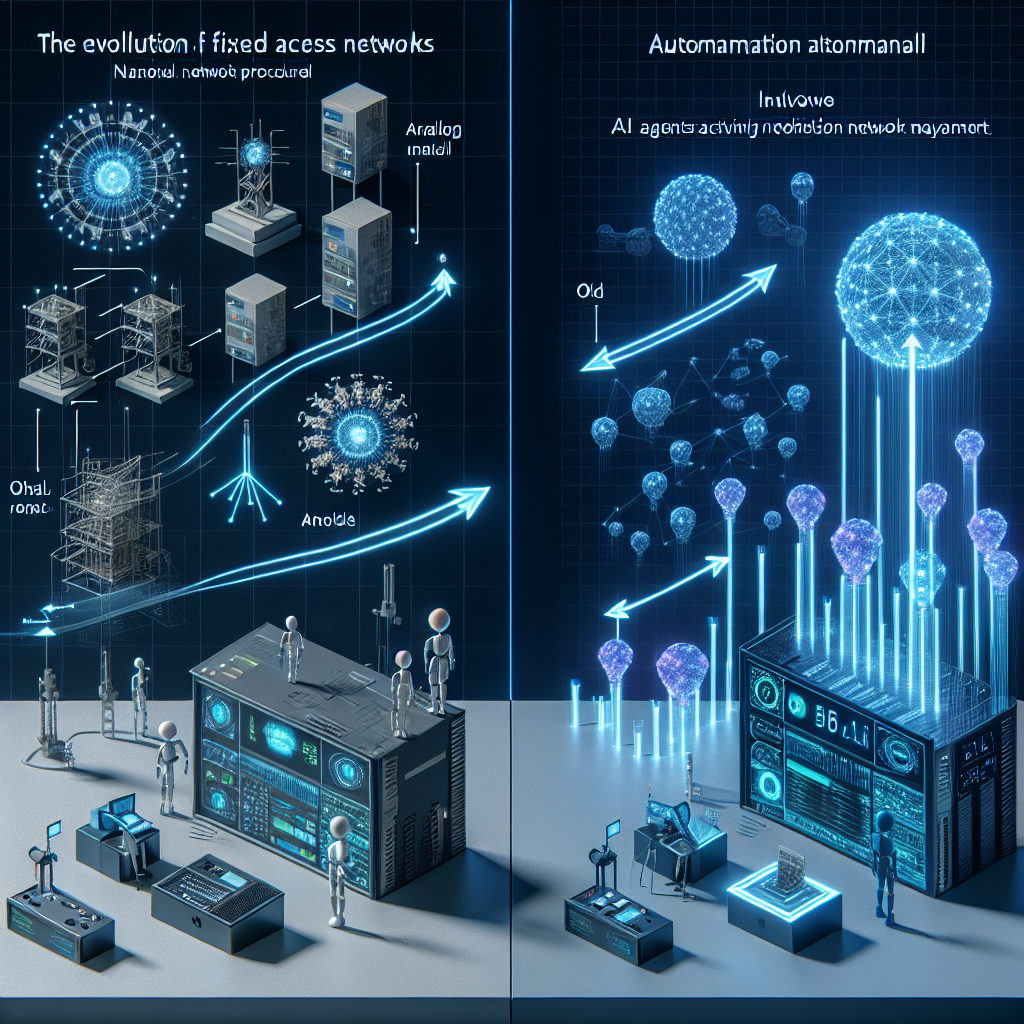
The world of telecommunications has undergone significant changes over the years, primarily due to an increasing reliance on automation and machine learning. These technologies have not only expedited operations but have also revolutionized the management of complex networks. Operators have witnessed marked improvements in various aspects such as alarm correlation and predictive maintenance. However, despite these advancements, many networks still function in a reactive mode—effectively identifying issues but lacking a comprehensive understanding of their underlying causes and optimal solutions.
This brings us to the next pivotal shift in network management: the implementation of AI agents and agentic AI. This approach is set to enhance the effectiveness of network operations dramatically.
Understanding the Foundations
Historically, telecom operations have relied heavily on rule-based automation. This method has proven effective for repetitive tasks, allowing for swift and reliable responses to specific events: when event X occurs, workflow Y is triggered. Such deterministic rules have provided consistency and predictability, essential for managing extensive networks efficiently.
With the advent of machine learning (ML), intelligence was layered on top of this foundational approach. By scrutinizing massive amounts of telemetry data, ML models identify anomalies, glean performance trends, and predict potential failures, thereby preventing future disruptions. These tools excel at recognizing patterns and making informed forecasts. Nonetheless, both rule-based systems and ML have inherent limitations. While rules can falter in the face of new or ambiguous situations, ML lacks the capacity to comprehend context or causality. In multi-domain environments—where issues may span optical, IP, and access layers—troubleshooting often requires a more sophisticated reasoning capability.
The Emergence of AI Agents
Enter AI agents, who leverage large language models (LLMs) and domain-specific knowledge to introduce this much-needed reasoning layer. Unlike previous models, AI agents can interpret alarms, correlate diverse data streams, hypothesize potential causes, and recommend the most effective actions—all the while learning from outcomes to improve over time.
For instance, in a fixed access network such as a passive optical network (PON), assessing performance degradation among several optical network terminals (ONTs) can be complex. Traditional responses may include simply restarting the ONT—a basic rule-based reaction that may not address the root of the issue. On the other hand, while ML models can predict anomalies based on previous data, AI agents delve deeper. They can analyze metrics like optical power, configuration history, and traffic changes, to reason about dependencies, ultimately identifying issues such as misaligned topologies or damaged splitters. These agents not only suggest optimal fixes but can also implement them autonomously, potentially rectifying problems before customers even notice them.
The Importance of Contextual Reasoning
This capability exemplifies the significance of contextual reasoning within fixed access networks. The complexity of these systems means that a single problem can create widespread challenges across multiple layers. For instance, a drop in optical power might be symptomatic of a larger issue affecting interconnected nodes. Leveraging reasoning allows AI agents to address the root cause efficiently, minimizing downtime and enhancing user experience.
Commercial Implications
The shift from traditional automation and ML to AI agents presents immense commercial advantages for telecom operators. By minimizing reactive responses and fostering proactive network management, operators can drive significant cost savings, optimize resource allocation, and improve service quality. The autonomy afforded by AI agents significantly reduces labor-intensive troubleshooting while enhancing reliability and service performance.
In summary, as the telecommunications landscape continues to evolve, the transition to AI agents represents a transformative step for network operations in fixed access networks. With their advanced reasoning capabilities, these agents promise not only to streamline operations but also to redefine what can be achieved in terms of efficiency and service delivery.
-
Micron Samples Industry’s Highest Capacity 192GB SOCAMM2 Memory For AI Servers

In an impressive demonstration of innovation in the memory storage space, Micron Technology has announced the sampling of its latest high-capacity module, the 192GB SOCAMM2. This new product aims to address the burgeoning demands of artificial intelligence (AI) servers, which require increased memory capacity to handle complex workloads efficiently. The introduction of the SOCAMM2 memory module marks a significant milestone, as Micron claims it holds the title of the highest-capacity SOCAMM2 module available globally.
Micron’s announcement comes at a time when the AI sector is experiencing exponential growth, necessitating enhancements in data center capabilities. As AI workloads escalate, the balance between energy efficiency and capacity becomes ever more critical. Raj Narasimhan, senior vice president and general manager of Micron’s Cloud Memory Business Unit, underscored this perspective, emphasizing that the requirement for data center servers to maximize efficiency is paramount. The SOCAMM2 aims to deliver superior data throughput while minimizing power consumption, enabling the next generation of AI data centers.
The specifications of the 192GB SOCAMM2 are noteworthy. Compared to its predecessor, the first-generation LPDRAM SOCAMM, Micron’s latest offering boasts a remarkable 50% increase in capacity without expanding its physical footprint. This compact design significantly reduces the time to first token (TTFT) for AI real-time inference workloads by over 80%, which is a crucial enhancement for performance-sensitive applications. Furthermore, the module showcases a 20% improvement in power efficiency, further solidifying its appeal in the energy-conscious landscape of modern data centers.
At scale, the implications of this power efficiency are profound. Full-rack AI installations are now leveraging more than 40 terabytes (TB) of CPU-attached lower-power DRAM main memory, and transitioning to Micron’s 192GB SOCAMM2 could yield substantial power savings across large deployments. The module’s low-power capabilities are especially vital as data center operators seek to curb energy costs while maintaining high-performance standards.
Micron’s technological advancements in the SOCAMM2 stem from the low-power DRAM technologies originally designed for mobile devices. This transition necessitated specialized design features and enhanced testing protocols to ensure that the memory modules could stand up to the rigorous demands of data centers. Micron asserts that its expertise in low-power DRAM underpins the functionality of the SOCAMM2, marking a significant upgrade over traditional RDIMMs.
According to Micron, comparing performance figures reveals that SOCAMM2 modules have managed to enhance power efficiency by more than two-thirds, while simultaneously packing their performance into a module one-third the size of conventional offerings. This compact design not only optimizes data center footprint but also boosts overall capacity and bandwidth, essential for data centers dealing with large-scale AI tasks. Additionally, the modular design and innovative stacking technology facilitate improved serviceability, enabling the design of liquid-cooled servers that respondent to the temperature challenges posed by high-performance AI computing.
In conclusion, Micron’s launch of the 192GB SOCAMM2 memory module signifies a critical advancement in memory technology for AI applications. This product not only meets the increased demands for memory within the data center sector but also offers substantial improvements in power efficiency and processing speed. As AI continues to permeate various industries, the scaling of memory solutions like Micron’s SOCAMM2 will become vital in supporting the infrastructure necessary for future advancements in artificial intelligence. The implications for business leaders and investors are clear; those who adopt such innovative memory technologies will undoubtedly position themselves ahead in the competitive landscape of AI-driven markets.
-
Dublin engineer’s AI voice start-up tackles call-centre overload

In a world where technology is becoming increasingly integrated into daily life, the rise of AI voice technology presents a revolutionary solution to a persistent issue: call-centre overload. With the growing reliance on sensors for safety and security, such as fire alarms and low blood sugar alerts, there has been a dramatic increase in the volume of calls to monitoring centres. Mark Harkin, a software engineer turned entrepreneur, recognized this challenge and founded Vox Talk AI, a company dedicated to alleviating the strain on call-centre staff.
The sheer number of alerts that modern sensors produce is remarkable. However, as monitoring centres face challenges in scaling their operations to match this influx, traditional solutions have often involved hiring more personnel, which can lead to heightened costs without resolving the underlying issues of fluctuating call volumes. Enter Vox Talk AI, which seeks to enhance operational efficiency through the application of advanced AI voice agents.
Vox Talk AI emerged from Harkin’s passion for AI and large language models. His venture leverages sophisticated text-to-speech and speech-to-text capabilities, empowering AI voice agents to tackle the burden of repetitive, low-risk alerts. Harkin’s vision is clear: he believes that as society continually adapts to AI technology, interactions with voice agents will become commonplace in daily life. Having researched industries where AI could make a significant impact, he determined that the security and alarm monitoring sectors were particularly ripe for transformation.
Harkin’s innovative approach was not merely theoretical. Before launching Vox Talk, he reached out to over 50 response centres across Ireland, the UK, Europe, and North America, gathering insights about their operational difficulties and identifying AI as a potential solution for a significant challenge in the sector. The feedback he received underscored the necessity for an AI voice that could manage the escalating demand for responses without overburdening human staff.
The global security and monitoring market represents a staggering opportunity, estimated at over €70 billion, with ongoing pressures related to scale, cost-efficiency, and regulatory compliance. Harkin’s Vox Talk AI stands to offer a unique competitive edge by utilizing AI agents capable of simultaneously handling hundreds of calls, ultimately eliminating frustrating wait times for customers. This is a game-changer for the industry, providing potential for security companies seeking to expand their reach internationally.
Customers benefit from Vox Talk AI’s capabilities, which support more than 30 languages, enabling companies to bridge communication gaps while ensuring compliance with relevant regulations. Moreover, the platform is designed to handle specific industry workflows, effectively replacing outdated interactive voice response (IVR) systems with more natural, human-like interactions. Such improvements can significantly contribute to a more satisfying customer experience.
A key milestone for Vox Talk AI was its integration with Sentinel, a well-established alarm-response software developed by Monitor Computer Systems in York. This partnership not only solidified Vox Talk’s status as a designated AI voice provider but also provided access to a vast client base, building credibility and establishing momentum for future growth.
As the demand for effective communication solutions continues to surge worldwide, Vox Talk AI is poised to reshape the landscapes of call-centre operations within the security sector. With Harkin’s entrepreneurial spirit and dedication to leveraging AI technology, Vox Talk AI stands at the forefront of innovation, presenting businesses with the tools they need to address operational challenges while improving customer interactions.
Looking to the future, the evolution of AI in voice technology is expected to have an even greater impact on various industries and day-to-day operations. Companies that embrace this wave of technologies will thrive, while those that hesitate may find themselves overwhelmed by the call-centre overload.
-
African languages for AI: project that’s gathering huge new dataset

The emergence of artificial intelligence (AI) technologies has ushered in a new era of communication and interaction. However, these technologies predominantly reflect the languages and cultures of the global north, leaving a significant gap when it comes to representing African languages. Recognizing this disparity, a dedicated team of African computer scientists, linguists, and language specialists has embarked on a groundbreaking initiative known as the African Next Voices project, aimed at developing a substantial dataset of various African languages to enhance AI capabilities.
Funded primarily by the Gates Foundation, with additional support from Meta, the African Next Voices project has become a beacon of hope for inclusivity in the AI landscape. The project spans several countries, including Kenya, Nigeria, and South Africa, where the initiative has kicked off with tremendous enthusiasm. The recently released dataset is believed to be the largest collection of African language data specifically designed for AI training, marking a significant milestone in AI development.
Language is fundamental to how we interact, express our needs, and hold meaning within our communities. It is the medium through which we articulate requests to AI systems and validate their responses. Unfortunately, many modern AI models, often referred to as large language models (LLMs), primarily rely on datasets derived from a limited selection of languages such as English, Chinese, and some European languages. This lack of representation not only hampers AI’s ability to engage with a diverse user base but also diminishes its understanding of cultural nuances intrinsic to African languages.
As the usage of AI applications grows across various fields—from education to healthcare and agriculture—the need for AI solutions that truly understand and respect local languages becomes increasingly urgent. The reality is that without robust African language datasets, training AI to function effectively in these contexts becomes nearly impossible. This limitation has led to serious issues such as inaccurate translations and unreliable voice recognition, which further alienates users from technologies that could benefit them.
The historical marginalization of African languages adds another layer of complexity to this challenge. Decades of policy choices favoring colonial languages in education and governance have resulted in a striking shortage of high-quality digital content in African languages. This ongoing neglect has made it difficult to collate the necessary linguistic data to create viable AI models that serve African populations.
There are several hurdles involved in building an effective dataset, such as the availability of dictionaries, terminologies, and basic language tools that are frequently taken for granted in other linguistic contexts. African language keyboards, appropriate fonts, and advanced text processing tools capable of handling orthographic variations and dialect diversity are just some of the challenges that need addressing. Without these fundamental resources, the development of reliable AI systems remains out of reach for many African languages.
The consequences of neglecting African languages in AI development are far-reaching. Poorly developed models can lead to harmful outcomes, such as mistranslations that could distort critical information in healthcare and education. Furthermore, without systems capable of communicating in local dialects, many Africans find themselves excluded from accessing vital news, educational resources, and essential services.
In conclusion, the African Next Voices project exemplifies a significant step towards leveling the playing field in the AI space. By prioritizing African languages and cultural contexts, this initiative not only aims to enhance the performance of AI tools but also fosters a sense of ownership and representation among African users. This endeavor recognizes that achieving true AI inclusivity is about much more than mere functionality; it’s about respecting cultural identities and ensuring that technology serves all of humanity equitably.
-
AppFolio (APPF): Evaluating Valuation After Launch of New AI Property Management Platform

AppFolio (APPF) has recently gained significant attention following the debut of its Real Estate Performance Management platform, a sophisticated AI-powered suite designed to enhance property management outcomes. This launch is particularly noteworthy as it introduces cutting-edge automation features that tackle common challenges within the industry, positioning AppFolio as a pivotal player in the evolving landscape of real estate technology.
The response from the market has been immediate and positive, with AppFolio’s shares experiencing a sharp 5.46% increase in a single trading day post-launch. However, the company faces a complex landscape; despite this surge, the stock’s year-to-date performance remains at -5.08%. Over the one-year period, the total shareholder return is much more promising at 17.09%. This longer-term perspective reveals a robust three-year total shareholder return of 140.86%, indicating substantial value creation for investors even amidst fluctuations driven by product launches and impending earnings reports.
As interest in AppFolio’s innovative approach to property management grows, questions arise about whether the firm represents an overlooked value play with untapped potential or if the market has already factored in its anticipated growth trajectory. Recently, analysts have identified a significant shift in sentiment, suggesting that 28.7% of the market views AppFolio as undervalued.
At present, AppFolio’s share price stands at $235.51, significantly lower than the narrative’s estimated fair value of $330.20. This discrepancy invites a debate on whether Wall Street is adequately accounting for the company’s promising future. The accelerating adoption of AI-powered workflow automation across property management is evidenced by a staggering 46% increase in the industry’s intent to utilize AI, coupled with an impressive 96% of AppFolio’s customers actively engaging with AI solutions. These trends position AppFolio to expand its unit counts and bolster revenue growth, which in turn may enhance net margins through efficiency improvements.
Investors intrigued by the unfolding narrative around AppFolio will find value in examining the ambitious revenue growth projections, alongside shrinking margins and the potential for an earnings multiplier that could challenge conventional market wisdom. The fair value of $330.20 suggests that AppFolio may indeed be operating in undervalued territory. However, this scenario is not without risks; rising research and development costs, coupled with an overdependence on the U.S. market, could pose challenges if competitive or regulatory pressures materialize.
Moreover, looking at market multiples, AppFolio’s price-to-earnings ratio currently rests at 41.6x—a considerable premium compared to the peer average of 22.6x and the U.S. software industry’s 34.9x. This elevated ratio hints at investor expectations for growth that exceed broader market trends. However, such a high multiple also introduces valuation risks if AppFolio fails to meet these lofty expectations, raising critical questions about the sustainability of its growth narrative.
Thus, the release of the Real Estate Performance Management platform comes at a crucial juncture for AppFolio. By leveraging AI to enhance operational efficiency, AppFolio has the potential to revolutionize property management and solidify its market leadership position. The implications are significant for business leaders and investors alike, who will need to stay vigilant as they navigate this rapidly changing environment.
In light of these developments, those interested in tech investments should keenly observe AppFolio to gauge its impact on the property management sector and the broader implications for AI adoption across various industries.
-
Is That Avocado Really Ripe? This AI App Wants to Tell You for Sure

Avocados, the creamy green fruit beloved by many, have become a staple in kitchens around the world. Yet, despite their popularity, determining the perfect moment to enjoy them has always been an elusive challenge. Many people have experienced the disappointment of buying an avocado only to find it either rock-hard or overly mushy, leading to unnecessary food waste. With reports indicating that avocados are among the most wasted fruits globally, researchers at Oregon State University and Florida State University are stepping in with an innovative solution that harnesses artificial intelligence (AI).
The team has developed a smartphone application that promises to accurately determine an avocado’s ripeness with over 90% accuracy. By utilizing a deep-learning model trained on more than 1,400 iPhone photos of Hass avocados, the AI analyzes various subtle indicators, including texture, color, and shape, which are often overlooked by the human eye. Assistant Professor Luyao Ma from OSU explains that the initiative aims to provide an invaluable tool for consumers and retailers alike. The goal is to make smarter decisions regarding the use and sale of avocados, effectively reducing the astonishing levels of waste associated with this fruit.
The impact of food waste is staggering; nearly one-third of all food produced for human consumption ends up in landfills. The United States government has recognized this issue and committed to halving food waste by 2030. This ambitious target necessitates innovative solutions across the food supply chain. Ma emphasizes that the avocado ripeness app is merely the start of a broader movement. “Avocados are just the beginning,” he asserts. The technology has the potential to transform how various fruits and vegetables are evaluated for their optimal consumption window.
While the application is not yet available to the public, its development signifies a significant stride towards leveraging technology in combating food waste. This app could empower consumers to make better purchases and help retailers manage their inventories more efficiently. As food waste continues to pose a critical global challenge, innovations like this highlight a path toward sustainability within the food industry.
The practicality of being able to instantly assess the ripeness of avocados—and potentially other fruits in the future—could change shopping habits for countless consumers. As we become increasingly environmentally conscious, the capacity to reduce food waste feels more crucial than ever. The app serves not only as a tool for individual consumers but also as a means for retailers to optimize their operations and reduce unnecessary losses, fostering a better relationship between the food industry and sustainability.
As consumers eagerly await the release of this technology, there are still plenty of traditional methods to help identify ripe avocados. Simple tips, such as checking the avocado’s color and gently squeezing it to feel for firmness, are still effective alternatives while this app is in development.
In conclusion, the collaboration between Oregon State University and Florida State University represents a promising advancement in the application of AI for everyday decisions. With the creation of an avocado ripeness detection app, they aim not only to assist consumers in selecting the perfect avocado but also to contribute to larger environmental goals by addressing the pressing issue of food waste. As we look to the future, this project could pave the way for further technological advancements that enhance our understanding and consumption of food.