
-
AI News

Tencent researchers have made significant strides in the intersection of artificial intelligence and strategic reasoning with their newly developed training framework known as “Think in Games” (TiG). This innovative framework harnesses the complexities of multiplayer gaming, specifically targeting the popular battle arena game Honor of Kings, to enhance AI models’ decision-making capabilities. The incorporation of gameplay dynamics into AI training not only escalates the learning curve but also bridges the gap between human-like strategic thinking and machine learning.
The TiG framework employs a blend of supervised and reinforcement learning techniques, showcasing a hybrid approach that draws upon the rich dataset derived from actual matches in Honor of Kings. The researchers adeptly fused this with a method termed Group Relative Policy Optimization (GRPO). This strategic combination has proven effective in allowing smaller language models to demonstrate superior performance compared to their larger counterparts, especially in discerning and executing strategic decisions.
In a noteworthy achievement, Tencent’s Qwen3-14B model recorded an impressive 90.9% accuracy in making correct strategic decisions after just 2,000 training steps. This statistic is remarkable as it outperformed the larger Deepseek-R1 model, which achieved 86.7% accuracy. The practical implications of this breakthrough suggest not only a potential shift in how AI training is approached but also indicate that size does not always dictate performance. Smaller models can be optimized effectively through innovative training methods to yield substantial competitive advantages.
Moreover, the TiG framework’s implications extend beyond the realm of gaming, positing that the principles derived from strategic game-playing can be applied to various sectors that require complex decision-making processes. Industries such as finance, logistics, and even healthcare can benefit from the strategic reasoning capabilities cultivated through this framework. By incorporating game theory and competitive strategy into AI training, businesses might develop models that can navigate real-world challenges more adeptly.
As the gaming environment integrates sophisticated AI and engagement methodologies, the outcomes exhibit incredible promise for the future of AI applications. The researchers underscore that these systems not only enhance gameplay abilities but also offer a pathway to more explainable and transparent AI reasoning. This transparency is paramount, particularly in sectors where decision-making rationales must be articulated clearly to stakeholders.
With the accelerating pace of AI advancements, Tencent’s research could serve as a pivotal reference point for future developments in AI training regimes. By leveraging the intrinsic complexity of strategic games, AI developers and researchers can potentially enable machines to mimic human-like cognitive abilities in navigating complex scenarios. Furthermore, the integration of such strategic frameworks could lead to more adaptable and responsive AI systems capable of evolving as new challenges emerge.
Overall, Tencent’s TiG framework exemplifies how the confluence of entertainment and academic research can yield practical innovations. It invites business leaders, product builders, and investors to critically reconsider existing paradigms surrounding AI training and deployment, emphasizing the viability of smaller, strategically trained models in addressing practical business challenges. The implications of this research propel us closer to a landscape where AI can not only execute tasks but also understand the underlying strategies, leading to more effective outcomes across various industries.
-
Fujitsu and Nvidia Expand Partnership to Accelerate AI Implementation

In a significant development for the artificial intelligence landscape, Fujitsu and Nvidia have announced an expansion of their existing collaboration, focusing on the acceleration of AI implementation across various industries. This partnership marks an important step introducing advanced AI technologies into business operations, aiming to enhance productivity and efficiency.
The announcement, made on October 4th, highlights the companies’ intentions to jointly develop a robust computing foundation that synergizes Fujitsu’s powerful central processing units (CPUs) with Nvidia’s cutting-edge graphics processing units (GPUs). This combination aims to create next-generation computing systems with unparalleled efficiency and speed, setting a new standard for AI applications. The goal is to enable agent-type AI that can autonomously perform tasks traditionally handled by humans, potentially revolutionizing how businesses operate.
This collaboration is not just about fostering AI capabilities; it also represents a strategic move to facilitate industrial automation. In conjunction with their partnership, Fujitsu and Nvidia are in discussions with Yaskawa Electric, a leading player in industrial robotics. Their goal is to integrate autonomous robots within manufacturing and industrial settings, thereby streamlining operations and reducing reliance on manual labor.
The implications of such advanced AI implementations are vast. By harnessing high-performance computing resources, the partnership aims to address critical challenges industries face, such as labor shortages and the need for enhanced operational efficiencies. As businesses look to AI for solutions, the collaboration between Fujitsu and Nvidia positions them at the forefront of delivering practical, scalable applications.
Moreover, the integration of AI with industrial robotics can lead to a new era of smart factories, where machines not only automate processes but also learn and adapt to improve performance over time. This alignment between AI and robotics could significantly boost production rates and innovation capabilities in various sectors.
As the demand for AI technology continues to grow, Fujitsu and Nvidia’s strengthened partnership exemplifies how technology giants can collaborate to drive significant advancements. Their approach not only addresses immediate business needs but also lays the groundwork for future innovations that could transform the industry landscape.
Furthermore, as they embark on this journey, both companies are expected to leverage their expertise in hardware development and software innovation. Fujitsu’s experience in computing infrastructure combined with Nvidia’s prowess in AI and graphics processing presents a compelling value proposition for businesses seeking to adopt AI solutions.
In summary, the expansion of the Fujitsu and Nvidia partnership signals a pivotal moment for AI technology, particularly in the realm of industrial applications. With a focus on developing agent-type AI and autonomous robots, this collaboration is poised to accelerate the practical use of AI across various sectors, heralding a new era of efficiency and innovation. As industries continue to embrace automation, this partnership could be a game-changer, setting benchmarks for AI adoption and implementation.
-
Accelerating Loan Processing with AI on Databricks: How Vantage Bank Texas Transformed Lending Workflows
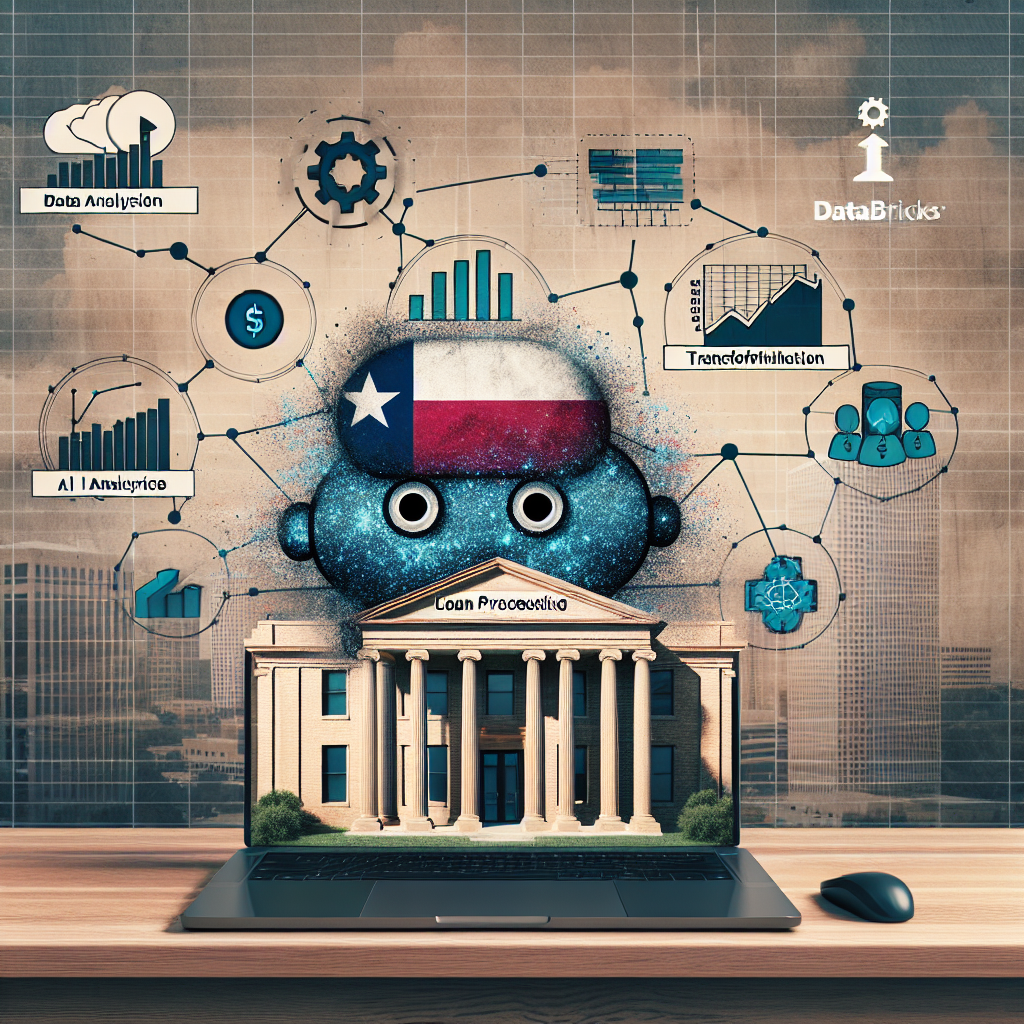
The financial landscape is evolving rapidly, and Vantage Bank in Texas is leading this transformation by harnessing the power of Artificial Intelligence (AI) to streamline its lending workflows. Faced with labor-intensive and error-prone loan processing methods, the bank sought a solution that would not only minimize errors but also allow their lenders to concentrate more on customer engagement and satisfaction.
According to Shawn Main, the Chief Business Architect at Vantage Bank, “Processing loan requests efficiently is critical to offering our customers tailored products.” The traditional approach requires extensive manual review of policy documents and coding manuals, which can result in significant oversight. Even minor discrepancies could lead to downstream complications, increasing workloads, and delaying approvals.
To address these challenges, Vantage Bank collaborated with Cavallo Technologies, leveraging the robust capabilities of the Databricks platform. Together, they developed an AI-powered lending assistant specifically aimed at enhancing the lending process. The solution is designed not only to handle complex lending questions but also to ensure security, scalability, and user trust—all of which are paramount in the financial services sector.
One of the standout features of this implementation is the unprecedented speed with which value was realized. Cavallo Technologies delivered a functional minimum viable product (MVP) on the very first day of collaboration. This efficiency highlights the advantage of using the Databricks unified platform, presenting unique opportunities for rapid integration and iteration.
As Guillaume Colley, Director of AI and Analytics at Cavallo Technologies, explains, “Databricks allowed us to deliver a product on Day 1, enabling the Vantage team to begin integrating the chatbot into their lending origination system as we refined the AI engine and user interface.” This rapid development is a game changer for financial institutions looking to innovate at speed.
Importantly, this AI lending assistant is built for accuracy. A custom large language model (LLM) evaluator continuously monitors the AI engine’s performance, ensuring an impressive 94% accuracy for answers pertaining to complex lending inquiries. The focus here extends beyond simply providing answers; it emphasizes delivering the right answers consistently, which is vital in the financial realm.
To foster user trust, the chatbot interface includes citations from relevant documents and allows users to rate the quality of responses. Such transparency encourages lenders to verify sources and contribute to a feedback loop that promotes continuous improvement. This contributes to a user-centric approach, reinforcing the banking ethos of reliability and customer trust.
Additionally, the solution features smart cost management capabilities. The AI engine and user interface can scale down to zero during off-hours, resulting in significant cost savings. However, they ramp back up seamlessly when functional demands increase. This flexibility ensures optimal resource allocation and budget management.
To guarantee that lenders are equipped with the most current information, automated workflows refresh the AI’s knowledge base upon detecting new or modified loan policy documents. This ensures accuracy and relevance in an industry heavily influenced by regulatory changes and market conditions.
Furthermore, the deployment includes an AI and business intelligence (BI) dashboard that delivers real-time metrics on usage, performance, and user feedback. This strategic visibility empowers leadership teams to make informed, data-driven decisions that can steer the organization in the right direction.
The choice of Databricks as a foundational platform for the development of this AI lending assistant made a significant difference in the project’s success. It provided Cavallo Technologies with the tools necessary to execute a complex vision within a tight timeframe, setting Vantage Bank on a trajectory of progressive innovation in lending.
Through the collaboration of Vantage Bank, Cavallo Technologies, and Databricks, the financial industry witnesses a prime example of how AI can dramatically enhance customer experience and operational efficiency within lending workflows. The success of this initiative underscores the viability of AI solutions in transforming traditional banking processes into modern, efficient systems.
-
AI for Sales & Marketing Market Global Forecast Report 2025-2030: Competition Intensifies as Tech Giants, Startups, and Specialists Drive Innovation Through Acquisitions and Partnerships

In the ever-evolving landscape of business, the role of artificial intelligence (AI) is becoming increasingly pivotal, particularly in the realm of sales and marketing. The newly released report titled “AI for Sales & Marketing Market – Global Forecast 2025-2030” sheds light on this dynamic sector, revealing significant growth trends and advancements that promise to reshape how organizations interact with their customers.
The report indicates a substantial increase in the AI for Sales and Marketing Market, which has surged from USD 22.32 billion in 2024 to USD 25.63 billion in 2025. This upward trajectory is expected to continue with a compound annual growth rate (CAGR) of 15.38%, ultimately reaching USD 52.68 billion by 2030. Such figures underline the importance of AI technologies in achieving competitive advantage and driving innovation across various industries.
Artificial intelligence is not just a buzzword; it is redefining the way businesses engage with their prospects and customers. As organizations grapple with increasingly complex data landscapes and heightened buyer expectations, they are turning to AI to ensure precision and personalization in their sales and marketing strategies. The deployment of AI capabilities has emerged as a critical differentiator, enabling businesses to offer tailored solutions that resonate with their audiences.
Key AI applications such as automated lead scoring, dynamic content generation, and predictive customer insights are becoming essential tools in the marketer’s arsenal. These technologies empower organizations to make smarter, faster decisions at every stage of the customer journey. For instance, automated lead scoring allows sales teams to prioritize their efforts on leads that are more likely to convert, ultimately optimizing resource allocation and boosting conversion rates.
Market leaders today understand that leveraging advanced algorithms not only streamlines operations but also unveils hidden growth opportunities. However, the integration of machine learning models, natural language processing engines, and computer vision applications into existing workflows requires a balance of technical capabilities, change management skills, and strict data governance policies. Decision-makers must foster cross-functional alignment to fully harness the power of these emerging technologies, ensuring that all team members work toward shared objectives.
The executive summary of the report provides a comprehensive overview of the current state of the AI for sales and marketing landscape, highlighting transformative shifts in go-to-market strategies and assessing the impact of U.S. tariff policies on market dynamics through 2025. Furthermore, it presents an in-depth segmentation analysis across various components, technology types, organizational sizes, deployment modes, applications, and end-user industries.
Importantly, the report addresses how revolutionary forces are redefining go-to-market dynamics. The advancements in machine learning, deep learning, and natural language processing are fundamentally altering traditional sales and marketing models. Companies that historically relied on manual segmentation are now employing predictive analytics and computer vision technologies to forecast customer needs with unprecedented accuracy.
In conjunction with these developments, generative AI tools create personalized content on a large scale, while advanced recommendation engines and dynamic pricing strategies enhance customer engagement and conversion efficiency across multiple channels. Additionally, integration platforms serve to bridge gaps between various customer relationship management (CRM) systems and customer-facing technologies like chatbots and voice assistants, creating seamless customer experiences.
The insights from this report are invaluable for business leaders, product builders, and investors, providing actionable recommendations for navigating the complexities of the AI for sales and marketing terrain. It also presents a transparent overview of the research methodology employed, ensuring the credibility and relevance of the findings.
As the competition intensifies with tech giants, startups, and specialists driving innovation through acquisitions and partnerships, understanding these trends will be crucial for stakeholders looking to capitalize on the growth potential of AI technologies in sales and marketing. The future is bright for organizations ready to embrace AI, empowering them to navigate the changing tides of consumer expectations and market demands.
-
AI Turns Wi-Fi Signals Into High-Resolution Images With Stable Diffusion 3

Recent developments in artificial intelligence have unveiled a groundbreaking application that transforms Wi-Fi signals into remarkably accurate visual representations of rooms and their occupants. Researchers from the University of Tokyo have leveraged the capabilities of Stable Diffusion 3 along with Wi-Fi Channel State Information (CSI) in a project dubbed LatentCSI. This innovative method signals a remarkable step forward in the field of non-invasive surveillance technology, utilizing existing infrastructure in entirely new ways.
The core of this technology lies in its ability to combine the interpreted data from Wi-Fi signal bounces with the sophisticated image-generation capabilities of Stable Diffusion 3. By analyzing the intricate patterns generated by Wi-Fi signals as they interact with objects and people, this system can create high-resolution images of a space, relying solely on signals that are omnipresent in our daily environments. Although current output images are approximations, they demonstrate the vast potential of using AI to derive meaningful insights from invisibly transmitted data.
LatentCSI operates on the premise that Wi-Fi CSI, previously used for motion detection since as early as 2019, can be repurposed for creating visual images. However, the system does rely on previous photographs of the room and its potential occupants to achieve more accurate representations. Through a sophisticated training process, Stable Diffusion 3 is equipped to convert the chaotic pixelation derived from Wi-Fi signals into coherent, recognizable images that can be visually interpreted, enhancing our understanding of surrounding environments.
This technology naturally raises questions about privacy and surveillance, particularly in areas that lack traditional camera systems. While the capability to visualize a room through Wi-Fi signals necessitates prior knowledge of that space, its implications for enhancing surveillance mechanisms—even in low-visibility conditions—are noteworthy. Businesses and government facilities might find the capacity to perceive activity within their premises invaluable, potentially mitigating risks associated with unauthorized access or other security concerns.
Although the advancement of AI in this context is thrilling, it comes with inherent caveats. The requirement for stability and accuracy in output images could limit real-world application, especially in dynamic spaces where objects may shift rapidly, disrupting the fidelity of the generated visuals. However, the implications for fields such as security, health monitoring in elderly care, and smart home automation are profound. This technology could eventually evolve to support improved emergency response systems, disaster management, and even privacy-focused applications that prioritize consent.
As this research progresses and the technology matures, key milestones in the process will need to be highlighted, particularly concerning the mechanisms that ensure user privacy and ethical considerations in deploying such surveillance capabilities. While the potential for misuse exists, so does the opportunity for creating enhanced safety measures. The challenge moving forward will be to strike a balance between leveraging advanced technology for safety and respecting individual privacy rights.
In conclusion, the intersection of AI, machine learning, and everyday technologies like Wi-Fi presents both stunning possibilities and serious social quandaries. The advancements represented by LatentCSI are not just technical novelties; they signify a shift towards a future where our environments can be interpreted in unprecedented ways. As we stand on the brink of this transformation, scrutiny, and dialogue regarding the ethical implementation of such technologies will be critical in shaping their role within society.
-
Japan’s AI Demand Will Increase 320x by 2030, Industry Leader Says at NVIDIA AI Day Tokyo

During NVIDIA AI Day Tokyo, a crucial event for AI enthusiasts, industry leaders gathered to discuss the transformative landscape of artificial intelligence in Japan. With over 900 attendees, the conference featured extensive sessions covering a range of topics, from agentic and physical AI to the exciting capabilities of quantum computing and the rise of AI factories.
One of the standout presentations came from Kuniyoshi Suzuki, the senior director of the cloud AI service division at SoftBank Corp. He pointed to a staggering forecast for Japan’s AI computing power demand—a 320-fold increase from 2020 levels by the year 2030. This prediction underscores the urgency for infrastructure and technological advancements as businesses and industries gear up for an AI-driven future.
The implications of such a significant increase in demand are profound. It suggests a seismic shift in how businesses operate, requiring them to rethink their IT strategies and embrace innovative AI solutions. The rise of AI is no longer a matter of theoretical possibilities, but an imminent reality that organizations must prepare for.
To meet this burgeoning demand, industry players like SoftBank, GMO Internet, and KDDI showcased their latest advancements at AI Day Tokyo. Each of these companies is at the forefront of developing AI technologies, illustrating their commitment to building robust ecosystems that empower developers in creating AI models and services. The collaboration between these organizations not only enhances technological capabilities but also focuses on ensuring safety and transparency in AI adoption.
One crucial point raised by Suzuki was the necessity for Japan to build a foundation of domestic technologies. He emphasized the importance of not only developing high-performance, Japan-made large language models but also establishing a large-scale domestic computing infrastructure capable of sustaining continuous development of these models. This approach is essential for fostering innovation while mitigating potential risks associated with data privacy and security.
The significance of establishing a self-sufficient AI ecosystem cannot be overstated. It allows Japan to safeguard its technological sovereignty and provides businesses with the tools necessary to harness AI effectively. In a world where reliance on foreign technologies can pose risks, developing homegrown solutions creates a more stable and autonomous technological environment.
Moreover, the discussions at AI Day Tokyo reflect a broader global trend toward embracing AI in various sectors, including healthcare, finance, and manufacturing. By prioritizing AI development, Japan is not only positioning itself as a leader in the technology space but also enhancing its competitive edge on the global stage.
Looking ahead, the path toward achieving this ambitious forecast involves concerted efforts across multiple fronts. Companies will need to invest significantly in research and development, infrastructure, and talent acquisition to ensure they remain leaders in the AI race. Collaboration between academia, industry, and government will be essential to create supportive policies and frameworks that promote innovation.
In conclusion, the insights shared at NVIDIA AI Day Tokyo highlight the monumental shift anticipated in Japan’s demand for AI technologies by 2030. With predictions of a 320-fold increase in AI computing power, the stakes are high for businesses to adapt and innovate. The emphasis on building a domestic foundation for AI technologies represents a strategic move towards ensuring Japan remains at the forefront of the AI revolution. As organizations continue to navigate this evolving landscape, the need for vigilance and proactive development will be paramount to thrive in an increasingly AI-centric world.
-
New AI Tool Finds Hidden Brain Lesions That Doctors Miss in Children With Epilepsy
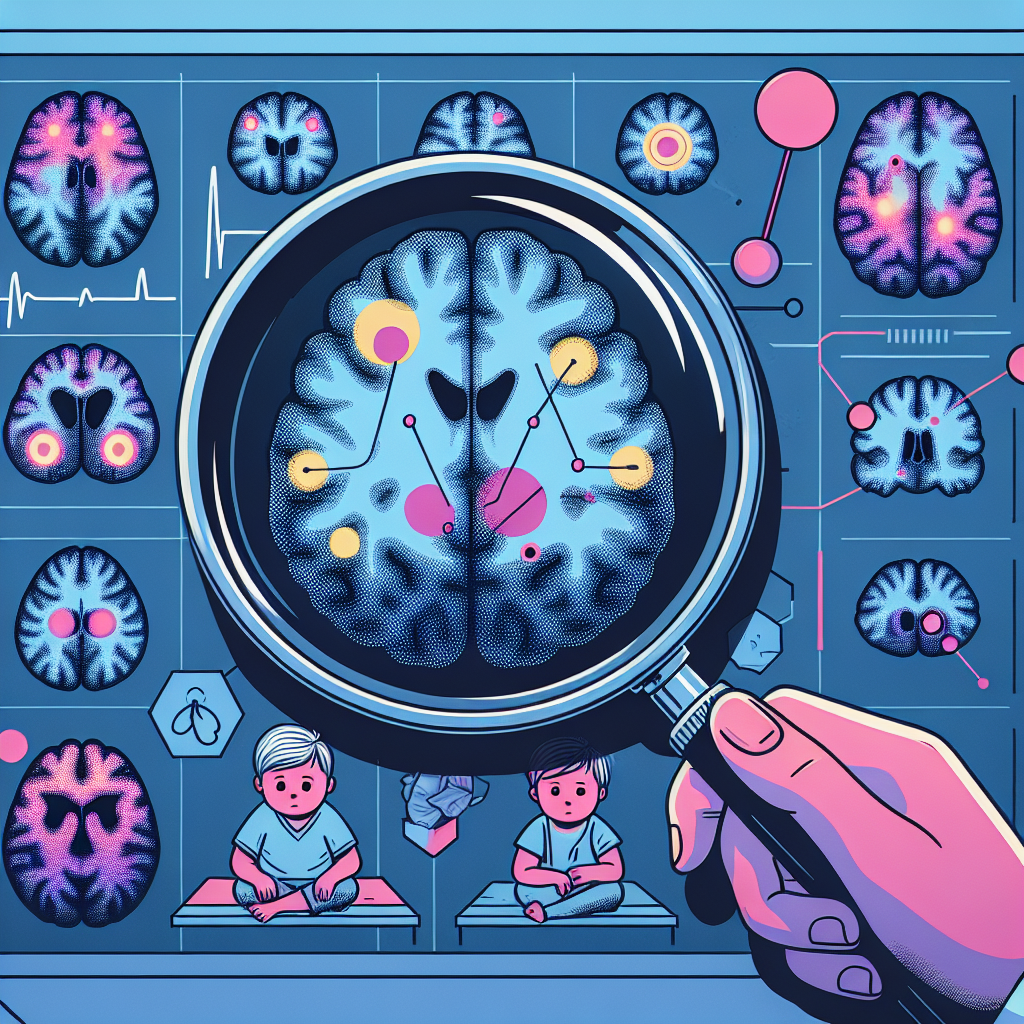
An innovative artificial intelligence (AI) tool, recently developed by Australian researchers, is paving the way for quicker and more accurate diagnoses for children suffering from epilepsy. This critical advancement in the medical field addresses a longstanding challenge: detecting tiny, often elusive brain lesions that traditional imaging methods frequently overlook. The breakthrough was announced on a Wednesday, with researchers highlighting its potential to significantly improve patient outcomes.
Epilepsy can arise from various causes, with structural abnormalities in the brain accountable for about one in three cases, according to medical experts. These abnormalities are often not visible on standard MRI scans, particularly the smallest lesions that may be hidden within the folds of the brain. The researchers have taken a significant step towards overcoming this limitation, stating that their AI tool can detect lesions the size of a blueberry or smaller—something that has been a crucial barrier for surgical intervention.
At the helm of the research is Emma Macdonald-Laurs, a pediatric neurologist from the Royal Children’s Hospital in Melbourne. She emphasizes that this AI tool does not intend to replace the expertise of radiologists and neurologists. Instead, it acts as an adjunctive aid, likening its function to that of a detective—helping healthcare professionals to piece together the complex puzzle of diagnosis more efficiently. This advancement aims to help many children who have previously been overlooked as surgical candidates due to missed abnormalities in their brain scans.
The study reported impressive outcomes from a cohort of patients suffering from conditions like cortical dysplasia and focal epilepsy. Notably, around 80 percent of these children had previously been labeled as having normal MRI scans. However, when the AI tool was applied to analyze both MRI and PET scans, it demonstrated a remarkable success rate: 94 percent in one test group and 91 percent in another. Among the 17 children in the first group, 12 underwent surgical procedures to remove their brain lesions, resulting in 11 children achieving freedom from seizures post-operation.
Macdonald-Laurs’ team, associated with the Murdoch Children’s Research Institute, expressed optimism regarding the further application of this technology. Their next step will involve testing the AI detector in real-world hospital settings on patients who are yet to receive any diagnosis. This transition from a controlled research environment to practical application will help validate the tool’s efficacy in everyday medical practice.
The implications of this technology are profound, especially considering that epilepsy affects approximately one in 200 children, with about one-third of these cases proving resistant to standard drug treatments. The growing success of AI in diagnostics, such as this tool, represents a compelling shift towards more intelligent, data-driven approaches in healthcare. Experts like Konrad Wagstyl, a biomedical computing specialist at King’s College London, applaud this research as a promising proof of concept, noting the “really impressive” results yielded.
Interestingly, this AI initiative is part of a larger trend wherein machine learning algorithms are deployed to interpret medical imaging data. Similar studies, including work accomplished by Wagstyl’s team, noted that AI systems successfully identified 64 percent of epilepsy-related brain lesions that had previously gone undiagnosed by human radiologists. It is evident that AI is not only augmenting diagnostic capabilities but is reshaping the very framework of medical imaging.
Despite its advantages, the study does note a few caveats. The use of PET scans, while beneficial, comes with concerns regarding cost-effectiveness and the degree of radiation exposure, similar to that of CT scans or X-rays. The researchers urge caution and recommend further exploration into more accessible imaging technologies. As the field continues to evolve, the potential for similar AI tools could herald a new era of healthcare where early diagnosis and intervention become more routine, ultimately leading to better health outcomes for children suffering from epilepsy and beyond.
-
Mureka V7.5 Makes History With the World’s First Fully AI-Generated Song

The advent of artificial intelligence (AI) in creative industries has transformed the landscape of music production, significantly altering how songs are created and experienced. Mureka V7.5 has made headlines as it introduces the world’s first fully AI-generated song, a significant milestone that marks a new era in music technology.
This groundbreaking development showcases the immense potential of AI in areas traditionally dominated by human artistry. By leveraging advanced algorithms and machine learning techniques, Mureka V7.5 can compose music without any human intervention. The AI analyzes countless patterns, genres, and styles to produce compositions that can resonate emotionally with listeners.
Unlike previous attempts at AI music creation, which often relied on simple algorithms or pre-existing templates, Mureka V7.5 employs sophisticated neural networks to generate unique sounds, harmonies, and lyrics. This advancement signifies a leap toward more authentic and intricate AI-generated music that challenges the notion of creativity and authorship in the music industry.
The significance of this achievement goes beyond mere technological novelty. The implications for artists, musicians, and producers are profound. As AI tools become more sophisticated, they may serve as collaborators rather than mere assistants, enabling musicians to explore new sonic territories while potentially enhancing their creative processes.
Moreover, the commercial potential is extensive. Music production costs could decrease significantly, allowing independent artists with limited budgets to create high-quality tracks. It opens doors for personalized music experiences, where AI-crafted songs can be tailored to individual preferences and moods, enhancing user engagement across streaming platforms.
However, the rise of AI in music presents challenges, particularly regarding copyright issues and the role of human creativity. As songs generated by AI become more mainstream, questions will inevitably arise about who holds the rights to these compositions and how they should be credited.
The entertainment industry is already witnessing a significant shift in the way music is produced and consumed. Major record labels are exploring partnerships with AI technology developers to integrate these tools into their production processes. This collaboration could lead to the emergence of hybrid models, where human creativity is augmented by the analytic precision of AI.
In conclusion, the introduction of Mureka V7.5 and its fully AI-generated song marks a watershed moment in the intersection of technology and the arts. As AI continues to evolve, it may redefine not just how music is made, but also the very essence of creativity itself. Music creators and industry leaders must navigate this new landscape with caution while embracing the innovative opportunities it presents.
-
Google Stax Aims to Make AI Model Evaluation Accessible for Developers

In a world increasingly driven by artificial intelligence, the need for effective model evaluation has never been more pronounced. Google Stax emerges as a pivotal framework designed to transform how AI developers assess the quality of their models. By replacing subjective evaluations with a data-driven and repeatable methodology, Stax aims to empower developers to customize their evaluation processes to fit specific use cases, departing from reliance on generic benchmarks.
Evaluation is crucial in the AI domain, as it directly influences the selection of the right model for any given task. Google emphasizes that quality assessment, latency considerations, and cost-effectiveness are vital parameters that must be compared to make informed decisions. Furthermore, effective evaluation plays an essential role in assessing the impact of prompt engineering and fine-tuning efforts, ensuring that improvements are real and measurable. In fields such as agent orchestration, repeatable benchmarks become invaluable, helping to guarantee that agents and their components interact reliably.
One of the standout features of Stax is its provision of both data and tools that enable developers to build benchmarks that merge human judgment with automated evaluators. This versatility allows for extensive customization; developers can import existing, production-ready datasets or create novel datasets using LLMs to generate synthetic data. The framework offers a suite of evaluators for common metrics like verbosity and summarization, while also permitting the creation of custom evaluators tailored for more specific, nuanced criteria.
Creating a custom evaluator in Stax is a streamlined process. It begins with selecting a base LLM that will serve as the judge. This judge receives a prompt detailing how to evaluate the outputs of the model under test. The prompt outlines various grading categories, each assigned a numerical score between 0.0 and 1.0. Additional instructions dictate the expected response format, allowing the integration of variables that refer to specific elements such as the model’s output, input history, and metadata. For reliability, the evaluator can be calibrated against trusted human ratings through classical supervised learning techniques. Moreover, the prompt can undergo fine-tuning iteratively, enhancing the consistency of ratings to align with trusted evaluators.
While Google Stax presents a robust solution for AI model evaluation, it exists alongside a range of competitors. Alternatives like OpenAI Evals, DeepEval, and MLFlow LLM Evaluate all have distinct approaches and capabilities, catering to various aspects of evaluation within the AI landscape. Developers looking for flexibility and customized solutions will find distinct value in Stax’s offerings.
As of now, Stax supports benchmarking for an expanding array of model providers, including industry leaders such as OpenAI, Anthropic, Mistral, Grok, DeepSeek, and Google’s own models. The framework also accommodates custom model endpoints, further extending its utility. The exciting news for developers is that Stax is currently available for free while in beta, although Google has indicated that a pricing model may be introduced once the beta phase concludes.
Another key consideration for users is data privacy. Google assures that it will not own user data, which includes prompts, custom datasets, or evaluators. Furthermore, the company commits to not using this data to train its language models. However, as users interact with different model providers, it remains crucial to be mindful of those providers’ data policies, as they will apply concurrently.
In summary, Google Stax is a significant advancement in the realm of AI model evaluation, offering a framework that standardizes and refines the assessment process. As the AI landscape continues to evolve, tools like Stax will be essential for developers seeking to fine-tune their models and ensure optimal performance in real-world applications.
-
Insta360 Just Launched an AI-powered Speaker for Offices That Automatically Takes Meeting Notes

Insta360 is known for its innovative action cameras, but the company is making bold strides beyond this realm into enterprise technology. With their latest product, the Wave, they are clearly signaling a strategic pivot towards the business market, aiming to revolutionize how meetings are conducted. This new AI-powered speakerphone not only enhances audio quality but is designed to take notes, transcribe conversations, and generate summaries, positioning itself as an essential tool for office environments.
The Wave stands out from traditional speakerphones through its impressive design. Unlike the ubiquitous and often disregarded hockey puck-shaped speakers, the Wave presents itself as a tall, sleek cylindrical tower that commands attention on any conference table. Available in matte black and an arctic white variant, it combines aesthetics with functionality. The distinctive cylindrical shape, along with a thin vertical LED strip that indicates its operational status, reflects a modern design philosophy that aims to appeal to a corporate audience.
Thoughtfully engineered, the Wave features a weighted base for stability during discussions, while the USB-C port and power button are discreetly placed at the back to maintain its elegant appearance. One of the most unique attributes of this device is its telescoping feature; the entire speaker section can be extended to reveal a circular touchscreen interface. This multifaceted design not only provides a user-friendly interface for setting adjustments but also enables a clean, minimalist look when the device is stowed away.
At the heart of the Wave’s functionality is an advanced 8-microphone 3D array. This cutting-edge setup captures audio at a professional 48kHz sampling rate, equipped with automatic gain control that ensures every participant’s voice is heard clearly. With a pickup range extending up to 16 feet, users can comfortably move around the space without compromising audio quality. Early reviews have highlighted the speaker’s exceptional clarity in voice reproduction during calls, making it an excellent choice for team discussions, although some opinions suggest that music playback could benefit from improved bass response.
The premier innovation of the Wave lies in its AI capabilities. The device can transcribe meetings in real time, effortlessly identifying different speakers and producing summaries that streamline follow-up discussions. Utilizing customizable templates, the intelligent system quickly organizes action items, key decisions, and future agendas into concise bullet points. This feature alone is a game-changer for corporate teams looking to maximize efficiency and minimize the manual labor associated with meeting notes.
Furthermore, the Wave includes the ability to create custom glossaries tailored to specific industry jargon, enhancing its accuracy in specialized settings. This thoughtful inclusion assists in ensuring that all attendees are aligned with the terminology discussed, which can be particularly useful in technical or project-heavy industries.
By entering the realm of AI-enhanced office technology, Insta360 not only diversifies its portfolio but also challenges competitors in the conferencing space. With major players already existing in communications solutions, the Wave’s integration of high-quality audio and advanced AI capabilities creates a unique value proposition aimed at business leaders and organization managers. The potential to automate note-taking and simplify follow-up processes presents tangible benefits, highlighting the product’s value in practical settings.
In summary, Insta360’s Wave is more than just a speakerphone; it’s a sophisticated tool that represents a merger of technology and thoughtful design. As companies increasingly embrace remote and hybrid work environments, having an effective communication tool that streamlines meetings could significantly boost productivity. The Wave is a step forward in this direction, signaling how traditional office equipment can evolve to meet modern needs, and it could very well become a staple in conference rooms around the world.