
-
Streaml Launches AI-Powered End-to-End Sales Automation

In a significant move for the B2B sales and marketing landscape, Streaml has introduced an AI-driven Sales Development Representative (SDR) platform that could redefine how companies manage their sales workflows. Launched on September 09, 2025, in Nashville, TN, this innovative platform promises to streamline sales processes by managing sourcing, outreach, follow-up, and meeting scheduling all within a single intelligent system.
The impetus for the creation of Streaml stems from the frustrations of its founders, who recognized the limitations of outdated and fragmented sales development processes. By consolidating these once-disparate workflows into one cohesive solution, Streaml not only reduces operational costs but also enhances overall efficiency. The platform seeks to free up time for sales teams, allowing them to focus on high-value strategies and relationship building, which are crucial for sustained growth in a competitive marketplace.
In a statement from the founding team, they emphasized that “with Streaml, you don’t need a $100K agency contract. We handle everything—LinkedIn, email, SMS, social—so your team can spend time where it matters most: closing deals.” This approach targets a significant pain point for many companies, particularly those struggling to balance comprehensive outreach with the demands of nurturing leads into customers.
Streaml sets itself apart not just by being an all-in-one solution but through its key differentiators that enhance its appeal to businesses. Notably, its full-funnel coverage takes users from the initial contact through to signed contracts, making outreach and engagement seamless across the entire customer journey.
In addition to this streamlined approach, Streaml leverages proprietary datasets that extend beyond LinkedIn. With millions of high-quality leads at its disposal, the platform broadens a company’s reach and significantly improves targeting accuracy. This expansion into diverse industries allows for a customizable approach that can be tailored to a variety of business models and needs.
Moreover, one of the standout features of Streaml is its reliance on intelligent execution through AI agents. These agents prioritize and engage high-value prospects, which not only reduces the manual workload for teams but also sharply accelerates sales cycles. The reduction in administrative tasks means that sales personnel can invest their efforts where they truly matter: building relationships and converting leads into paying customers.
Streaml’s focus on cost efficiency is another crucial element that positions it well in the market. By consolidating the functionality of multiple tools and significantly reducing the need for external agencies, Streaml provides the equivalent value of a traditional $100K+ sales agency, but at a fraction of the cost. This budget-friendly option makes it especially attractive for small to mid-sized businesses looking to optimize their sales operations without exorbitant expenditures.
The initial results from companies adopting Streaml’s platform are promising. Firms across a range of sectors, including private equity, venture capital, recruiting, and B2B tech sales, have begun to see tangible improvements in their growth trajectories. For instance, the platform has been instrumental in onboarding researchers from multimodal dataset companies and CEOs of enterprise firms, accelerating early-stage traction and customer acquisition.
In the manufacturing and logistics sector, Streaml has successfully captured millions in B2B shipping and fulfillment deals by identifying eCommerce businesses actively searching for reliable shipping and fulfillment partners. By using advanced data analytics and AI reasoning, Streaml’s impact resonates clearly across industries, leading to increased sales efficiency and better alignment of resources with market demands.
Overall, Streaml is not just another sales tool; it’s a comprehensive solution designed to meet the challenges of modern B2B sales and marketing head-on. As companies continue to navigate the digital landscape, platforms like Streaml that offer seamless integration, cost savings, and intelligent automation will likely become essential for achieving long-term success.
-
Nuclearn gets $10.5M to help the nuclear industry embrace AI

The nuclear power industry, often viewed through the lens of safety and stringent regulations, is beginning to embrace the transformative potential of artificial intelligence (AI). Nuclearn, a startup founded by Bradley Fox and Jerrold Vincent, recently secured $10.5 million in Series A funding, indicating strong investor confidence in the integration of AI into traditional nuclear operations. With participation from firms like Blue Bear Capital and Nucleation Capital, this investment is set to facilitate the development and deployment of AI tools across nuclear facilities worldwide.
Founded with a focus on enhancing operational efficiency, Nuclearn is already making waves by utilizing AI to optimize tasks in over 65 nuclear reactors globally. Fox’s initial experiences at the Palo Verde Nuclear Generating Station served as a fertile ground for the development of state-of-the-art AI solutions designed specifically for the nuances of the nuclear industry. What began as exploratory work has blossomed into a demand-driven service, with other reactors reaching out to replicate Palo Verde’s success.
The interest in AI from the nuclear sector isn’t merely a trend but a significant shift towards modernization. While completely autonomous reactors remain a distant vision due to safety and regulatory constraints, the application of AI for streamlining business processes has garnered attention. Fox states that the nuclear industry is ready to leverage AI to enhance productivity, yet critical responsibilities remain firmly in human hands. Regulatory frameworks delineate AI’s role as a complementary tool rather than a replacement for human oversight.
Nuclearn’s software specializes in generating routine documentation—a fundamental requirement in the nuclear field—while empowering reactor employees to verify and finalize outputs. This dual approach minimizes the bureaucratic burden often associated with regulatory compliance. Moreover, Nuclearn’s adaptive AI models can be trained to align with specific operational terminology, further enhancing their utility within individual power plants.
The onset of the COVID-19 pandemic catalyzed Fox and Vincent’s startup journey, transforming idle time into an opportunity to innovate. Their collaborative efforts have culminated in a robust platform that not only addresses existing inefficiencies but also aligns with the nuclear industry’s current digital transformation efforts. As interest in maintaining a competitive edge in the energy sector grows, Nuclearn’s tailored solutions present a compelling proposition for power providers aiming to harness AI’s capabilities.
One of the standout features of Nuclearn’s offering is the dual deployment option. While the software operates primarily in the cloud, it is also adaptable to on-site installations for facilities that prioritize stringent security measures. This flexibility speaks to the diverse needs of the nuclear industry and highlights the importance of developing scalable solutions to ensure ubiquitous adoption.
The potential for AI to revolutionize the nuclear sector is immense, yet the journey is fraught with challenges. Current nuclear regulations limit how much automation can be implemented, as the Nuclear Regulatory Commission categorizes AI as a tool, akin to utilizing software like Excel or Mathematica. Thus, reactor operators may dictate their level of automation based on operational thresholds, ensuring that human oversight remains a priority.
As Nuclearn fine-tunes its technology, the future would ideally see a hybrid ecosystem where AI tools enhance decision-making and efficiency without sacrificing the stringent safety protocols that define nuclear energy. Moreover, successful implementation of AI across the industry could translate into significant advancements in other high-stakes sectors, representing a broader trend where automation complements human expertise.
Nuclearn’s journey is just starting, but with strategic funding and a clear vision for the future, this startup is positioned to make a lasting impact on the nuclear industry. Business leaders, investors, and stakeholders keen to explore the implications of AI in regulated sectors will find Nuclearn’s achievements especially relevant as the conversation around digital transformation continues to evolve.
-
Light-powered chip makes AI 100 times more efficient

In an era where artificial intelligence (AI) is at the forefront of technological evolution, efficiency and sustainability have become paramount concerns. AI systems are not only integral to various applications such as facial recognition and language translation, but their growing complexity comes with significant energy demands. Researchers at the University of Florida have taken a monumental step towards alleviating this issue by developing a groundbreaking chip that leverages light instead of electricity to execute one of the most energy-intensive tasks in AI.
This innovative chip, as detailed in the research published in Advanced Photonics, is engineered to perform convolution operations, which are critical for machine learning models to identify patterns across images, text, and video. Traditionally, these convolutions have required hefty computational power, resulting in high energy consumption. By embedding optical components directly onto a silicon substrate, the team has pioneered a system that employs laser light and microscopic lenses in place of conventional electronic processing, significantly slashing both energy consumption and processing time.
Volker J. Sorger, the study’s lead and an esteemed Professor in Semiconductor Photonics at the University of Florida, affirmed the breakthrough: “Performing a key machine learning computation at near zero energy is a leap forward for future AI systems. This is critical to keep scaling up AI capabilities in years to come.” Such a paradigm shift not only highlights the technological advancements being made but also aligns perfectly with the growing need for eco-friendly computing solutions.
The prototype chip has shown impressive performance, classifying handwritten digits with approximately 98 percent accuracy — an efficiency level on par with traditional electronic chips. This was achieved through the utilization of two sets of miniaturized Fresnel lenses, engineered with precision using standard semiconductor manufacturing methods. These lenses, remarkably thinner than a human hair, are directly etched onto the chip, facilitating the efficient conversion and manipulation of laser light.
The operational process begins with the conversion of machine learning data into laser light, which then transverses through the Fresnel lenses to conduct the necessary mathematical operations. The outcome is converted back into a digital signal, completing the AI task with remarkable precision and speed. Hangbo Yang, a research associate professor involved in the study, emphasized this pioneering effort: “This is the first time anyone has put this type of optical computation on a chip and applied it to an AI neural network.” The research marks a significant milestone in the intersection of optics and artificial intelligence.
Additionally, the team successfully demonstrated the chip’s ability to handle multiple data streams concurrently through a technique known as wavelength multiplexing. This allows for different colors of laser light to pass through the lens system simultaneously, exemplifying the immense potential of photonics in enhancing computational efficiency. Yang noted, “We can have multiple wavelengths, or colors, of light passing through the lens at the same time. That’s a key advantage of photonics.” Such capabilities not only promise substantial advancements in speed but also open new avenues for processing large datasets more efficiently.
This research was a collaborative effort alongside the Florida Semiconductor Institute, UCLA, and George Washington University, signaling a collective push towards the next frontier of AI technology. Sorger’s insights on the industry further suggest that companies like NVIDIA, which are already incorporating optical elements into certain AI systems, may find integrating this novel technology seamless.
As the landscape of AI continues to evolve, Sorger’s vision is clear: “In the near future, chip-based optics will become a key part of every AI chip we use daily. And optical AI computing is next.” With such advancements paving the way for a more energy-efficient approach to AI, this light-powered chip could redefine the standards for future AI architectures — balancing the demand for power with the urgent need for sustainability.
-
VCI Global Showcases Integrated AI and Cybersecurity Platforms at Smart City Expo KL 2025
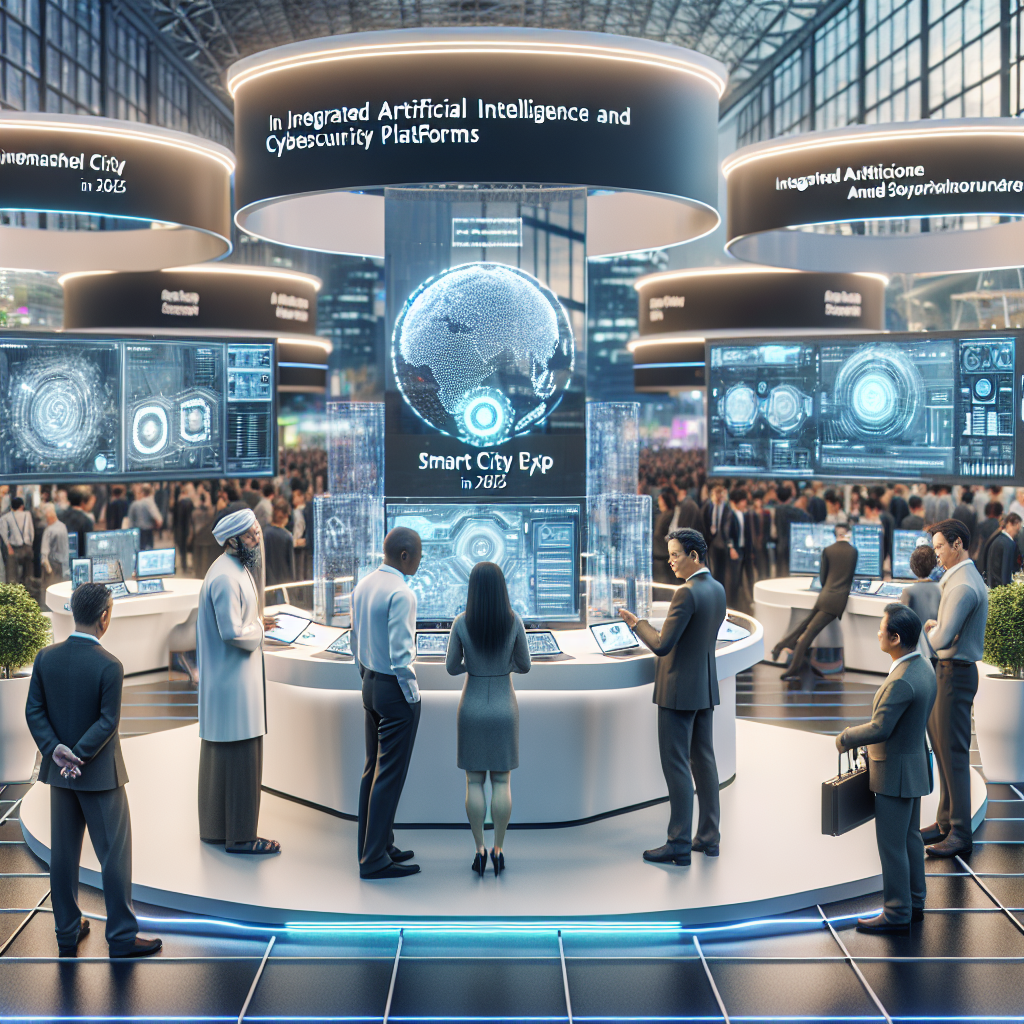
KUALA LUMPUR, Malaysia – VCI Global Limited, a trailblazer in cross-sector platform development, is poised to make waves at the upcoming Smart City Expo Kuala Lumpur (SCEKL25) taking place from September 17 to 19, 2025. The expo, a significant gathering for city innovation and digital transformation in Southeast Asia, serves as an ideal platform for VCI to showcase its cutting-edge technologies aimed at transforming urban ecosystems securely and efficiently.
VCI Global has crafted a suite of integrated solutions tailored for diverse stakeholders, including governments, enterprises, and city operators. At SCEKL25, attendees can expect to see innovations such as the Smart City Security Infrastructure, which acts as a foundational digital backbone enabling secure and AI-ready urban ecosystems.
One standout product in the portfolio is the V Gallant CyberSecure. This military-grade cybersecurity solution promises automated instant recovery, making it especially appealing to organizations looking to bolster their defense mechanisms against digital threats. Early adopters can take advantage of an exclusive 50% launch discount, making it an attractive option for municipalities grappling with tight budgets.
Another remarkable offering is V Gallant DeepAI, an AI model training platform designed for scalability and efficiency. With this solution, institutional and municipal clients can accelerate their AI initiatives without compromising on performance or security. Moreover, V Gallant SecureGPU provides hardware-based encryption technologies that safeguard enterprise AI workloads, ensuring sensitive data remains protected, even in the most challenging of environments.
Complementing these are the QuantGold QsecureCam, an AI-driven surveillance system equipped with real-time monitoring features and uncompromising data protection measures. These innovations collectively create a robust smart city security framework, deftly merging cutting-edge AI and cybersecurity to instill confidence among city collectors and stakeholders in tech adoption efforts.
The significance of this technological convergence cannot be overstated, especially as cities worldwide grapple with the demands of increasingly interconnected urban environments. The need for scalable AI systems fortified with top-notch cybersecurity measures is on the rise. Research indicates that the smart cities economy is projected to soar beyond US$1.04 trillion by 2025, driven by a compound annual growth rate (CAGR) of 29.4% through 2030. As municipalities across the globe strive to integrate smart technologies, VCI Global’s solutions present a timely answer to their challenges.
Dr. Chan Wai Mun, Chief AI & Data Officer at VCI Global, will take center stage as a thought leader at the expo. He is slated to deliver a solo keynote presentation spotlighting the ever-narrowing intersection of AI, cybersecurity, and infrastructure. Additionally, Dr. Mun will participate in a strategic panel discussion which aims to dissect the future trajectory of connected cities and how innovation in technology can catalyze their growth.
As the emergence of predominantly urban lifestyles continues to shape global demographics, the focus on smart city solutions becomes increasingly vital. VCI Global’s offerings promise to address pressing security and ethical challenges while enhancing the overall efficacy of urban operations. The smart city solutions presented by VCI at SCEKL25 are not just technological advancements; they embody a forward-thinking ethos that aligns with the pressing demands of modern urban governance.
Wrapping up, VCI Global’s showcase at the Smart City Expo KL 2025 heralds a pivotal moment in the convergence of AI and cybersecurity, emphasizing the need for integrated approaches in navigating the complexities of urban digital transformation. With the backing of robust market forecasts indicating rapid growth in both the smart cities and cybersecurity domains, VCI Global is well-positioned to be a leader in this transformative journey.
-
Koah raises $5M to bring ads into AI apps

In a rapidly evolving landscape of artificial intelligence applications, the startup Koah has emerged with an innovative approach to monetizing AI products. Recently raising $5 million in seed funding, Koah is charting a course that integrates advertising into AI apps. This move not only signifies a shift in how developers think about revenue generation but also reveals the growing importance of user engagement within AI environments.
As AI becomes increasingly prevalent in everyday applications, developers face the ongoing challenge of monetizing their solutions effectively. Traditional business models often struggle to keep pace with the fast innovations that define the AI sector. Many startups find themselves in a quandary: how do you provide value to your users while also generating sustainable income? Koah’s approach attempts to solve this dilemma by tapping into the familiar yet sometimes contentious world of advertising.
The emergence of advertisements within AI applications might initially evoke a mixed response from users. After all, many consumers are increasingly wary of intrusive advertising in their digital experiences. However, the goal of Koah’s strategy is to seamlessly integrate ads, enhancing rather than detracting from the user experience. This nuanced approach could appeal to both consumers who appreciate free services and developers seeking valuable monetization pathways.
Koah’s model aims to offer targeted advertisements that are contextually relevant to users’ interactions with AI applications. By leveraging advanced algorithms and data analytics, the startup believes they can tailor ads to match user behavior and preferences. The key challenge will be to maintain a balance that doesn’t overwhelm or alienate users.
Notably, the $5 million seed funding indicates significant investor confidence in Koah’s vision. This capital will likely be used to further develop its technology, enhance its platform, and explore partnerships with other businesses. As Koah refines its approach, the company may set a precedent for other AI startups attempting to navigate the same monetization challenges.
This is particularly pertinent as various industries look to harness AI for productivity improvements, customer engagement, and data analysis. By successfully integrating ads into AI applications, Koah could open new revenue streams not just for itself but for a myriad of app developers in the AI ecosystem.
Furthermore, the timing of this funding and announcement highlights an ongoing trend where ad revenues are gaining traction in non-traditional venues, especially amidst rapid digital transformations. Thus, there is a growing confidence in the sentiment that ads can coexist with user-friendly AI technology.
Moreover, discussions surrounding ad integration are not merely theoretical. If executed correctly, such strategies can drive user interaction and satisfaction—essential components of successful tech solutions. The potential for scaling this monetization model across different verticals marks a natural progression in the business strategies of AI application developers.
The results of Koah’s approach will be keenly observed as their journey unfolds. Will users embrace this model, or will there be backlash against the intrusion of ads into AI-powered tools? Answers to these questions could have profound implications not only for Koah but for the larger ecosystem of AI startups that are on the brink of financial sustainability.
As we move into a future where AI applications are likely to serve an even broader array of functions, innovative monetization strategies like Koah’s will be essential to fostering a thriving environment where both developers and consumers can benefit. The success of advertising within AI apps may well set the tone for future business models in this fertile and rapidly maturing space.
In conclusion, Koah’s initiative to incorporate advertising into AI applications may not only reshape how startups approach monetization but also represent a shift in user expectations. The arrival of this concept could signify the dawn of a new era where strategic ad placements coalesce with immersive AI experiences, thereby enhancing engagement while maximizing revenue potential.
-
Steel industry looks to leverage AI in value chain, boost green transition financing

The steel industry is poised for a revolutionary transformation as stakeholders gather for the Steel Conclave 2025, taking place on September 8-9 in the national capital. This two-day event aims to explore the integration of artificial intelligence (AI) within the steel value chain, potential financing avenues for a greener transition, and strategies to augment the availability of raw materials. With prominent figures such as Union Steel Minister H D Kumaraswamy and Minister of State for Heavy Industries and Steel Bhupathiraju Srinivasa Varma in attendance, the discussions promise to set a strategic direction for the sector’s future.
As detailed by the Indian Steel Association (ISA), one of the primary focuses of the conclave will be on leadership strategies that foster growth within the steel industry. Participants will delve into how AI can be effectively leveraged to enhance efficiency throughout the value chain, identifying pathways that support Aatmanirbharta—the initiative aimed at reducing dependence on imports by making India self-reliant in raw materials like iron ore.
Another major theme will be the financing necessary for the steel sector’s transition towards environmentally sustainable practices. Industry leaders are aware that decarbonizing the steel production process is not just a regulatory requirement but also an opportunity to innovate. The ISA aims to discuss frameworks that would mitigate price risks, improve logistics, and enhance infrastructure efficiency, laying the groundwork for a future-ready industry.
ISA President Naveen Jindal expressed the association’s commitment to steering the steel sector towards sustainability while reinforcing India’s position on the global stage. The emphasis on a resilient and future-ready steel industry reveals a proactive approach to sustainability imperatives, ensuring that economic growth does not come at the cost of environmental degradation.
Significantly, the Indian government’s recent decision to reduce the Goods and Services Tax (GST) on renewable energy products from 12 percent to 5 percent is seen as a substantial boon for the steel industry. It is anticipated that this policy change will facilitate a shift towards green power sources, enabling manufacturers to lessen their reliance on coal-based energy, which currently constitutes 85 percent of the sector’s energy consumption and contributes heavily to carbon emissions.
The need for a greener transition is underscored by the fact that the steel industry accounts for approximately 20 percent of India’s total industrial energy consumption, making it a focal point in the country’s quest for a sustainable future. By reducing coal dependency, the industry can make significant strides in cutting down its carbon footprint and contribute to broader climate change goals.
Fujiyama Power Systems highlighted that the government’s reform is expected to enhance the affordability of rooftop solar installations, promoting adoption across various segments, including residential, commercial, and institutional users. According to them, this reform could accelerate India’s progress towards achieving its net zero targets and strengthen initiatives like the PM Surya Ghar Muft Bijli Yojana, which aims to promote solar energy usage.
Ultimately, the discussions and outcomes from the Steel Conclave 2025 will not only shape the immediate future of the steel industry in India but could also serve as a model for other sectors grappling with similar challenges related to energy transition and sustainability. By embracing AI and innovative financing solutions, the steel sector can navigate its path towards a greener and more resilient future, aligning with global efforts to combat climate change while ensuring continued economic growth.
-
Meta’s backstop is linchpin for $26 billion AI data-center deal

In a significant move that underscores the growing intersection of technology, finance, and artificial intelligence, Meta Platforms Inc. has secured a staggering $26 billion in debt funding for the construction of a state-of-the-art data center in Louisiana. This funding arrangement has sparked intense competition among lenders primarily due to a unique guarantee offered by the tech giant, which essentially shields investors from potential losses through a residual value guarantee.
The Hyperion facility, poised to become one of the largest data centers in the world at 4 million square feet, will be constructed and owned by a joint venture while Meta will utilize the space under a 20-year lease. However, what’s particularly noteworthy about this deal is the innovative financing structure that allows Meta to keep this debt off its balance sheet. This strategic maneuver not only liberates financial resources for further investment in artificial intelligence developments but also allows Meta to maintain flexibility as it navigates the rapidly evolving technological landscape.
To further incentivize lenders, Meta provided a novel safety net: should the company choose to terminate the lease prematurely or if the value of the data center depreciates below an agreed-upon threshold, Meta promises to reimburse investors for any incurred losses. This pioneering approach is particularly relevant given the rapid advancements in technology which could render such assets obsolete in the foreseeable future. Experts agree that while the demand for AI infrastructure is escalating, it also brings along a heightened risk factor. Teddy Kaplan, who oversees a net lease real estate strategy at New Mountain Capital, remarks on the unprecedented nature of these deals and the potential for quick technological advancements that could outdate the facility’s capacity.
Meta’s decision to implement this residual value guarantee is setting a precedent in the industry. Historically, such guarantees have been more common in other sectors but using them in the context of a massive data center is a novel approach that could reshape how tech companies finance such ventures in the future. This structure not only reassures investors but also encourages them to participate in financing a sector that is projected to grow exponentially as demand for AI models and their underlying infrastructure surges.
The competitive nature of this financing round is indicative of the increasing interest from major asset managers in the AI infrastructure space. Pacific Investment Management Co. (PIMCO) was selected to lead this impressive financing effort, showcasing their capability to manage such a colossal investment efficiently. Adding to the financial muscle behind this deal, Blue Owl Capital Inc. is contributing a notable $3 billion in equity to the joint venture, signaling substantial confidence in the returns from this investment despite inherent risks.
The structured bonds from this deal are slated to span a remarkable 24 years, encompassing four years dedicated to construction prior to the initiation of lease payments. Anticipated to receive investment-grade ratings, these bonds will likely appeal to a wide range of institutional investors seeking exposure to the burgeoning AI sector. It’s essential to recognize that the incredible scale of this investment not only aligns with Meta’s ambitions but also exemplifies the broader trend where tech companies are racing against time to secure substantial financing for their AI initiatives.
As this case illustrates, the intersection of artificial intelligence and finance is evolving rapidly. Tech giants like Meta are demonstrating the lengths to which they will go to secure the resources needed for competitive advancement in AI. With financial pipelines being established to underwrite these critical infrastructure projects, other companies might regard Meta’s innovative financing structure and risk management strategies as a blueprint for future endeavors. The implications for business leaders, product builders, and investors are vast, as we witness a new era where technology continues to leverage financial ingenuity to achieve groundbreaking innovations.
-
I tested the AI-enhanced Geekom A9 Max mini PC – and the superb performance makes it a must-have pro-grade office machine

In an era where technology demands exceptional performance in compact form factors, the Geekom A9 Max mini PC emerges as a powerful contender. This mini PC seamlessly integrates advanced AMD Ryzen AI technology, specifically with the Ryzen 9 HX 370 equipped with a Neural Processing Unit (NPU). With its stylish design and impressive specs, the A9 Max is tailored to meet the needs of professionals, particularly those in creative and technical fields.
The initial testing phase revealed the Geekom A9 Max’s remarkable prowess. The integrated processor demonstrated substantial improvements in application speed, notably when using AI-optimized applications such as Photoshop. The combination of 32 GB of RAM and a 2 TB SSD ensured that even the largest files and most demanding applications ran smoothly, making it a robust choice for office-related tasks. From browsing heavy documents to multitasking with various applications, this mini-PC managed to strike a harmonious balance between performance and usability.
One of the standout features of the Geekom A9 Max is its ability to handle demanding video editing tasks. While it performed admirably during 1080p video editing in software like Premiere Pro and DaVinci Resolve, users seeking to push the boundaries to 4K video editing might encounter some performance limitations. Although the CPU holds its ground, the lack of a dedicated GPU means that the system’s potential could be hampered during these intensive tasks. Users needing to work with high-resolution projects may want to consider this factor in their purchasing decision.
Connectivity is another area where the A9 Max shines. Equipped with multiple LAN ports enhances its capability to integrate seamlessly into any office setup. Furthermore, robust Wi-Fi 7 support ensures reliable internet access, although initial testing showed some connection issues with older routers. Switching to a more updated Wi-Fi 7 network resulted in improved speed and stability, a boon for professionals relying on consistent internet performance.
The design aspect of the A9 Max does not go unnoticed either. Its compact size does not compromise on connectivity; featuring four USB ports on the front, it caters to the diverse needs of users in creative environments. The inclusion of an SD card slot on the side provides quick access for offloading media files, a thoughtful touch for photographers and videographers who frequently transfer data from cameras.
Moreover, the ability to expand internal storage through an additional M.2 SSD slot adds significant value for users who work with large files or run multiple demanding applications concurrently. This flexibility is vital in modern workplaces where data demands continue to grow.
In conclusion, the Geekom A9 Max mini PC is a commendable option for professionals in need of a dependable, compact workstation. Its features, particularly the AI-enhanced processing capabilities and robust connectivity options, are designed to enhance productivity and efficiency. While there are some limitations regarding graphics performance for high-end video editing, the overall package delivers exceptional value and functionality suited for a range of professional applications. Whether for general office work, light creative tasks, or AI-enhanced applications, this mini PC indeed stands out as a worthy addition in any modern workspace.
-
US: Anthropic to pay $1.5 billion in AI lawsuit settlement

In a landmark decision, US artificial intelligence giant Anthropic has agreed to pay at least $1.5 billion to settle a class action lawsuit brought by authors claiming copyright infringement. This settlement, if approved by the court, will become the largest in US copyright history, suggesting a significant shift in how intellectual property rights are managed in the age of AI.
The lawsuit was initiated by a trio of authors—Andrea Bartz, Charles Graeber, and Kirk Wallace Johnson—who accused Anthropic of utilizing pirated books to enhance the functionality of its AI chatbot, Claude. This chatbot has emerged as a formidable competitor against industry leaders such as OpenAI’s ChatGPT, reflecting the intensifying competition among AI firms. The plaintiffs are stressed the need for proper authorization when using copyrighted material to train AI systems, aiming to safeguard authors’ rights against unauthorized exploitation.
The potential implications of this settlement reach beyond mere financial restitution. The deal, which is expected to encompass about 500,000 books, mandates that approximately $3,000 (€2,500) be paid for each affected work. This unprecedented legal precedent emphasizes the crucial balance between technological advancement and the protection of intellectual property rights—a discussion increasingly important as the AI industry continues to grow rapidly.
Mary Rasenberger, CEO of the Authors Guild, highlighted the broader significance of the settlement, emphasizing that it sends a robust message to the AI sector regarding the potential legal ramifications of infringing on authors’ rights. The agreement serves as a reminder that utilizing copyrighted works without authorizations can lead to severe legal consequences, particularly in instances where authors may lack the resources to fight back against tech giants.
This settlement is not an isolated occurrence. There are numerous ongoing lawsuits against other technology companies such as OpenAI and Meta, indicating a trend where copyright holders are actively asserting their rights amidst the rising tide of AI development. The outcome of these lawsuits could shape the legal landscape surrounding AI training methodologies and copyright compliance, defining how data is sourced in the future.
With this settlement, Anthropic faces not only a hefty financial obligation but also the need to re-evaluate its AI training processes going forward. The implications of the lawsuit extend to other tech companies as well, revealing the critical importance of compliance with copyright laws. For business leaders and investors in the AI space, this case serves as a prompt to revisit their content acquisition strategies and solidify their legal standing to avoid potential pitfalls.
As we move further into the AI era, this moment serves as a crucial juncture for the industry. The settlement raises significant questions about the ethical obligations of AI developers and the legal confines within which they operate. As technology continues to evolve, so must the frameworks that govern intellectual property, ensuring a fair yet progressive approach to innovation.
In conclusion, Anthropic’s $1.5 billion settlement is poised to set a new standard in the intersection of AI technology and copyright law. It illustrates a growing recognition of the value of intellectual property in the digital age and underscores the pressing need for clear legal guidelines as we navigate this uncharted territory.
-
Meta is paying contractors up to $55 an hour to build AI chatbot characters
In an innovative move, Meta is hiring contractors at competitive rates to develop character-driven AI chatbots tailored to various international markets. This initiative underscores the company’s commitment to enhancing user engagement across its platforms — Instagram, Messenger, and WhatsApp — by integrating culturally relevant and relatable chatbot experiences.
According to job postings, contractors fluent in languages such as Hindi, Indonesian, Spanish, and Portuguese can earn up to $55 an hour. These contractors are tasked with bringing a creative vision to life, shaping the personalities of chatbots that resonate with local cultures. Along with a strong foundation in storytelling, candidates must possess knowledge of prompt engineering and AI content pipelines, ensuring that the chatbots are not only engaging but also contextually appropriate.
Meta’s CEO, Mark Zuckerberg, envisions these AI characters as a means to expand social interactions, suggesting they could complement real-world friendships. This reflects a broader trend in AI where digital companions are increasingly seen as valuable additions to social media interactions. In his words, “Over time, we’ll find the vocabulary as a society to articulate why that is valuable.” This sentiment highlights the evolving perception of AI as not merely a tool but as an integral part of modern social dynamics.
The company began experimenting with AI chatbots in 2023, initially featuring celebrity alter egos such as Kendall Jenner and Tom Brady. However, following a swift re-evaluation, Meta shifted its strategy to empower users by launching the AI Studio platform, which enables anyone to create their own chatbots. This transition emphasizes the balance between user-generated content and company-driven initiatives in shaping the AI landscape.
By employing contractors for localized chatbot development, Meta signals a significant investment in qualitative enhancements to its AI offerings. This strategic approach allows the company to maintain a direct influence on the personalities it cultivates, ensuring they align with the cultural expectations and nuances of key markets like India and Indonesia.
However, this expansion into AI chatbots has not been without controversy. An investigation revealed that Meta’s internal guidelines previously permitted bots to engage in inappropriate conversations, including romantic dialogues with minors and the dissemination of misleading medical advice. These revelations have triggered demands from U.S. lawmakers for more stringent oversight of Meta’s AI operations, underscoring the ethical dilemmas inherent in AI deployment.
In light of these challenges, Meta has made modifications to its chatbot policies, but the consequences of such previous oversight raise pertinent questions about the responsibility tech giants bear in deploying advanced AI systems. The incorporation of character-driven chatbots into mainstream applications not only changes how users interact with technology but also necessitates a conversation about governance and ethical boundaries in AI development.
Furthermore, privacy concerns loom large as researchers warn that influencers and local contractors, despite their creative potential, may also complicate the privacy dynamics regarding personal data shared with these bots. As businesses and individuals grow more accustomed to AI interactions, establishing secure practices that safeguard user privacy will be crucial to fostering trust.
In conclusion, Meta’s efforts to invest in AI chatbot development through localized contractor roles reflects a significant movement towards personalized and culturally relevant digital experiences. As the landscape of social media continues to evolve, the role of AI will undoubtedly expand, necessitating ongoing dialogue regarding its impact on communication, safety, and interpersonal relationships.