

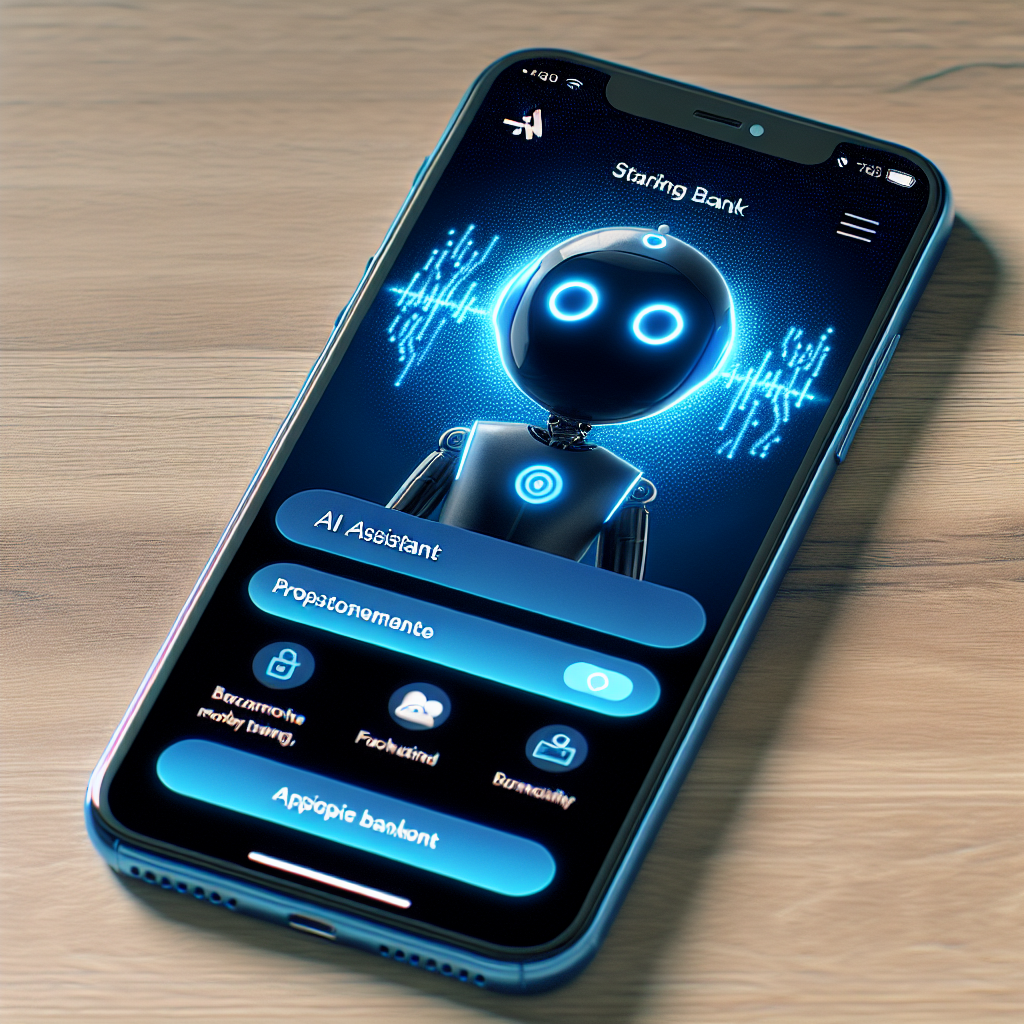
Starling Bank has taken a significant leap in the fintech sector with the addition of an agentic artificial intelligence (AI) financial assistant, known as Starling Assistant, to its mobile banking app. This innovative feature is rolling out to personal account customers starting March 20, with plans for broader implementation targeting business and joint accounts in the near future. The initiative signifies a transformative move towards integrating AI technology into everyday banking.
The Starling Assistant efficiently responds to both voice and natural language prompts, enabling customers to carry out various banking tasks effortlessly. According to Starling’s press release, the assistant is designed to help users manage their finances more effectively, offering personalized insights and guidance tailored to individual needs. For instance, customers can initiate automatic transfers or even engage in interactive quizzes that reveal their spending patterns—all through simple conversational interactions.
Harriet Rees, the group chief information officer at Starling, emphasized the vision behind the technology, stating, “It’s time to embrace a new era of banking, one that’s powered by agentic AI.” Rees advocates for the trustworthiness of AI in assisting customers with their monetary management, reflecting the bank’s commitment to leveraging cutting-edge technology to enhance user experience.
At its core, the Starling Assistant leverages Google Cloud’s Gemini technology, ensuring secure data handling by storing customers’ information within its Google Cloud environment. Importantly, the data collected will not be utilized for training purposes, addressing privacy concerns that often accompany AI advancements. The ease of access combined with security makes this feature particularly appealing not only for tech-savvy users but also for those looking to simplify their banking experience.
Commenting on the AI trend, Graham Drury, director of Financial Services Intelligence at Google Cloud in the U.K. and Ireland, noted that AI is fundamentally changing the way individuals engage with their finances. He highlighted a paradigm shift from traditional navigation through complex app menus towards a more conversational interaction with one’s banking services. This shift aligns with the ongoing trend across the financial services industry to enhance user engagement and streamline operational processes through AI technology.
Starling has a history of integrating AI-driven features into its application. In addition to the Starling Assistant, the bank previously introduced ‘Scam Intelligence’ in October. This advanced tool alerts users about potential scams by employing specific indicators and educating them on what signs to look for in future transactions. Additionally, ‘Spending Intelligence,’ launched in June, empowers users to track their expenses by providing insights into specific spending behaviors.
The ongoing research reported in “Is AI the Master Key to Banking’s Next Era?” highlights personalization as the key area for growth in AI applications within the banking sector. Starling’s pioneering efforts, particularly with the Starling Assistant, highlight the significance of tailoring banking experiences to meet the specific needs of customers while enhancing financial literacy and openness to emerging technologies.
This integration of AI into banking services is not merely a technological enhancement; it represents a broader shift towards user-centric innovation in financial management. By embracing such advancements, Starling aims to set a high standard in the competitive fintech landscape, where customer experience and security are paramount.
Overall, the introduction of Starling Assistant marks a crucial milestone in the advancement of personal banking in the UK. As financial institutions increasingly adopt AI to redefine customer engagement, innovations like the Starling Assistant will play a key role in shaping the future of how people manage their finances.
Leave a Reply