

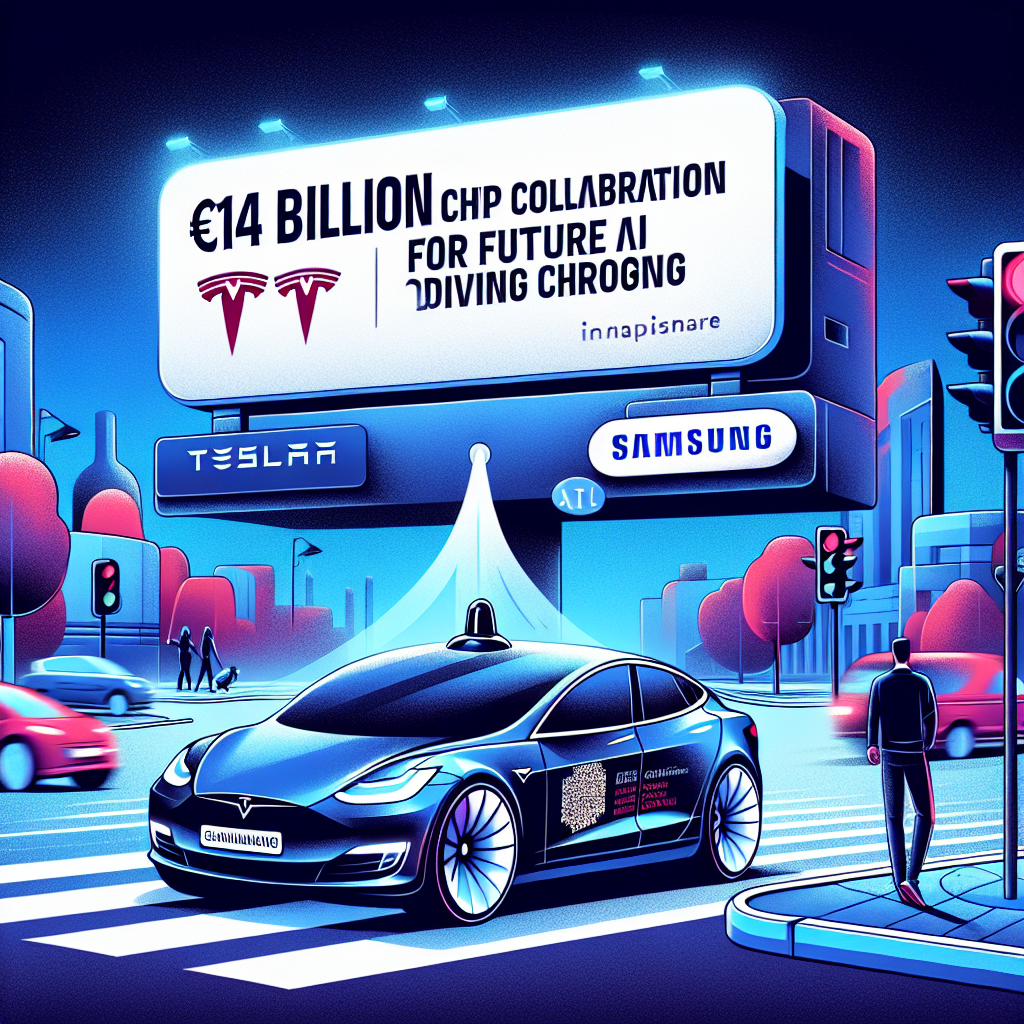
In a landmark development for both the automotive and semiconductor industries, Elon Musk has announced a significant €14.08 billion deal between Tesla and Samsung Electronics. This agreement will see Samsung manufacture Tesla’s next-generation AI chips, marking a transformative step towards enhancing self-driving technology in electric vehicles. The deal underscores an important collaboration aimed at pushing the boundaries of innovation in automotive technology.
The newly unveiled chip, designated as AI6, is poised to power Tesla’s upcoming driver-assistance systems. This chip will be produced at Samsung’s state-of-the-art factory in Taylor, Texas, and the arrangement is projected to extend through the end of 2033. Musk indicated that the €14.08 billion figure might be just the initial estimate, suggesting the actual production value could significantly exceed this amount. He mentioned in a recent post on X, “The €14.08 number is just the bare minimum. Actual output is likely to be several times higher.” This projection hints at a robust future for both companies as they leverage cutting-edge technologies.
The implications of this partnership are particularly favorable for Samsung, which has faced challenges within its foundry business segment. The Taylor factory struggled to secure clients, and earlier this year, some analysts reported that it incurred losses exceeding €3 billion due to various operational issues, including delays in receiving necessary production equipment. With this new contract, Samsung has not only secured a major client but has also managed to boost investor confidence significantly. Following the announcement, Samsung’s stock surged to its highest price in nearly a year, indicating strong market optimism about the company’s potential rebound.
On the flip side, this deal also strategically benefits Tesla as it diversifies its chip supply chain. Currently, Tesla sources its existing AI4 chips from Samsung, while the AI5 models are being developed by TSMC—one of the leading chip manufacturers worldwide. By collaborating with Samsung for the AI6, Tesla aims to mitigate risks associated with reliance on a single supplier. Moreover, Musk quipped that the proximity of Samsung’s plant to his residence in Texas would allow him the convenience to monitor progress personally.
While the details of the production timeline remain slightly ambiguous, experts speculate that despite the official confirmation of the deal, the production for AI6 may not commence until 2027 or 2028. This timeline is influenced by the fact that the opening of the Texas facility has been postponed to 2026, and Tesla’s historical track record suggests that these estimated dates may be subject to adjustment. Nevertheless, the anticipation surrounding these developments remains high.
As it stands today, Samsung holds a mere 8% of the global semiconductor market, while TSMC dominates with a staggering 67% share, supplying chips to industry giants such as Apple and Nvidia. The partnership with Tesla enables Samsung a rare opportunity to enhance its position in the highly competitive chip manufacturing landscape and aspire to close the gap with TSMC.
This collaboration is not just a win for Tesla and Samsung; it represents a broader trend where AI capabilities are becoming integral to enhancing driving safety and efficiency. As the automotive sector increasingly leans on advanced AI technologies, the successful development of the AI6 chip could pave the way for significant advancements in self-driving capabilities, enabling vehicles to operate more independently and safely on the roads. This partnership may just set the stage for a new era of automotive innovation that others in the industry will be eager to follow.
Leave a Reply