

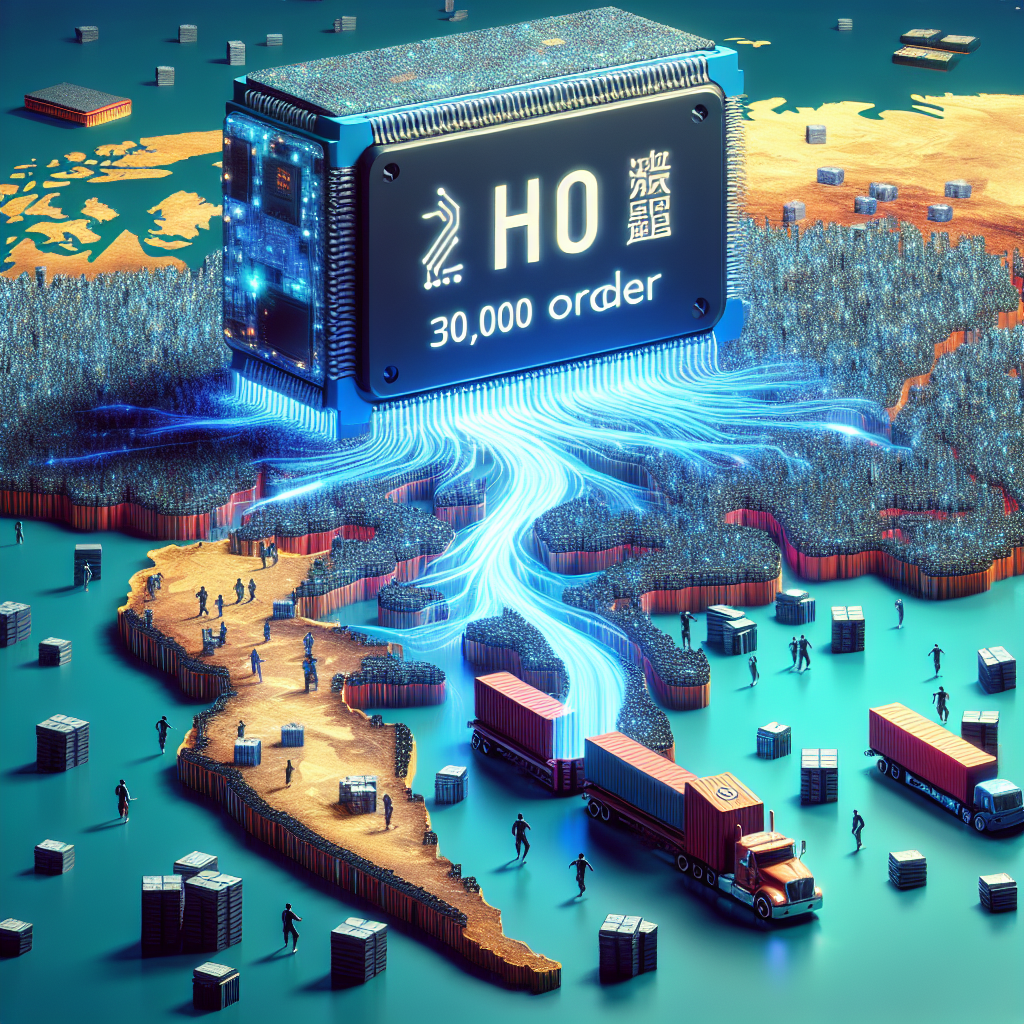
In a significant development in the semiconductor industry, TSMC, the leading manufacturer of high-end chips worldwide, has secured a monumental order from NVIDIA for an additional 300,000 Hopper H20 AI accelerator chips. This order caters specifically to Chinese consumers and highlights the soaring demand for AI technology in this rapidly growing market. As reported by Reuters, the surge in orders signals not just business growth for TSMC and NVIDIA, but also reflects the geopolitical tensions surrounding technology access between the U.S. and China.
The backdrop of this order is quite telling. NVIDIA, which boasts a current stockpile of between 600,000 and 700,000 H20 chips, decided to place this additional order following a meeting in Beijing where CEO Jensen Huang discussed production metrics that could very well dictate the pace of chip manufacturing. Huang emphasized that the volume of H20 orders would significantly impact whether they would resume production. This statement is particularly relevant given that the overall chip supply chain ramp-up is a complex process that could take up to nine months.
The reasons for NVIDIA’s large stockpile of H20 chips can be traced back to the stringent technology export restrictions imposed by the United States in light of ongoing trade tensions. This particular model, designed for AI acceleration, represents a compromise crafted for the Chinese market, allowing NVIDIA to navigate some of the hurdles presented by these restrictions. Despite the uncertainties surrounding trade agreements, NVIDIA managed to sell around one million H20 chips in 2024 alone.
Now that the flow of H20 sales is poised to restart, the path ahead for NVIDIA remains complicated. Although Huang expressed optimism regarding the procurement of export licenses critical for the sale of this stockpile, it’s important to note that such interactions with the U.S. Department of Commerce are rarely seamless. The process requires navigating a series of regulatory challenges, which could delay or impair the timeline for these sales.
The implications of this scenario extend beyond mere numbers; they signal a broader strategic battle between the U.S. and China over advanced technology, particularly in AI. The H20 chipset, pivotal to NVIDIA’s technology ecosystem, enters the full spotlight as a negotiable asset amidst recent discussions about rare earth minerals, integral to semiconductor production. Critics from both sides of the U.S. political spectrum have expressed concern that allowing Chinese access to these chips might jeopardize the country’s technological edge in AI—a fear that NVIDIA’s management contests by arguing against fostering alternatives within the Chinese ecosystem.
This latest development from TSMC and NVIDIA encapsulates the intricate interplay between commerce, politics, and technology. For business leaders, product developers, and investors, this news is a reminder of the volatility and dynamic global landscape that characterizes the AI semiconductor market today. With both companies opening avenues to meet what appears to be burgeoning demand, stakeholders stand to benefit from keeping an eye on this evolving narrative.
In conclusion, the order for 300,000 H20 chips not only solidifies NVIDIA’s foothold in China but also underscores the pressures and complexities at play within international technology trade frameworks. As AI continues to evolve as a critical driver in global markets, watching how these dynamics unfold in relation to semiconductor supply chains will be crucial for those invested in the future of technology.
Leave a Reply