

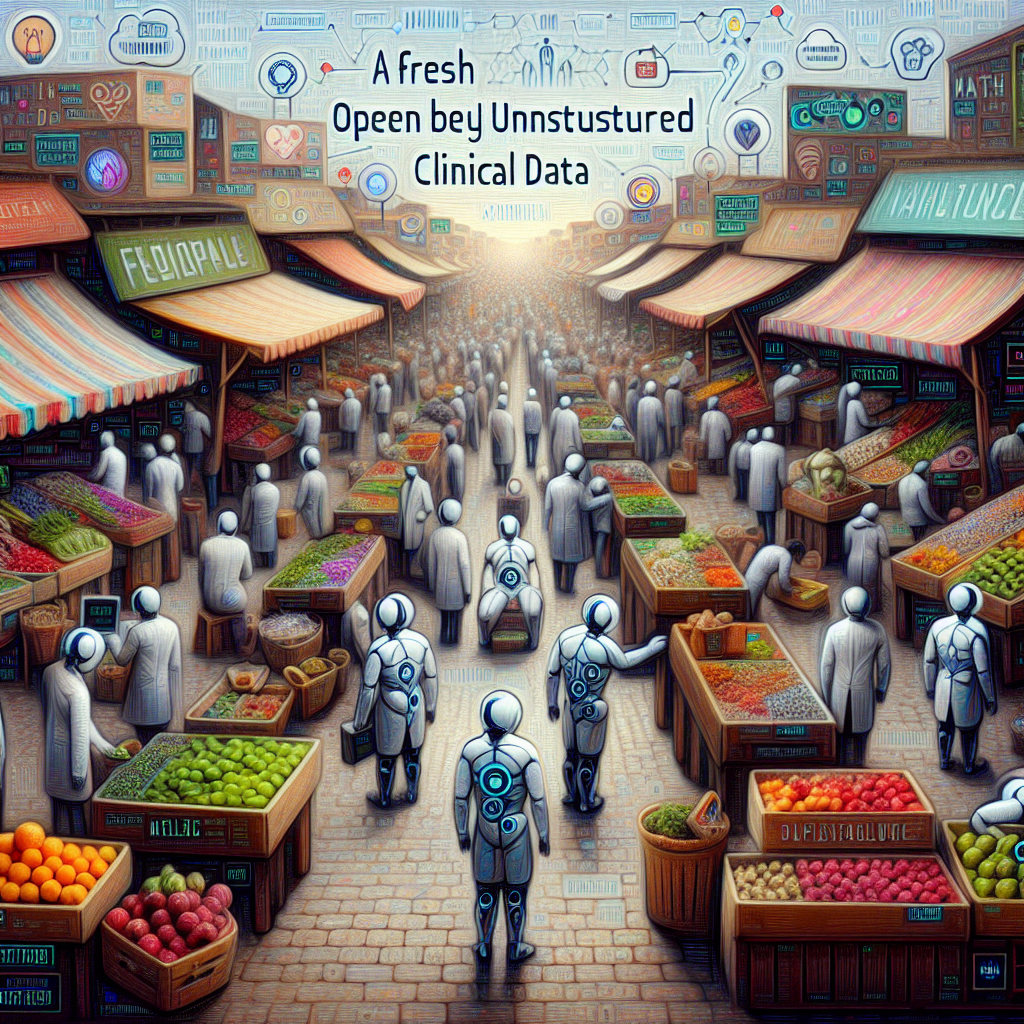
The healthcare industry is witnessing a transformative shift as unstructured clinical data emerges as a significant market opportunity for Artificial Intelligence (AI) firms. Experts highlight that much of the invaluable patient information remains trapped in free-text notes, PDFs, and medical reports. This unstructured data, which encompasses clinical notes, lab reports, medical images, and patient correspondence, presents a goldmine for AI-driven solutions capable of extracting actionable insights.
Unstructured clinical data is defined as healthcare information that lacks a predefined format. Traditional software has struggled to process this type of data, as it predominantly relies on structured fields like billing codes and lab values. This limitation has hindered the extraction of nuanced clinical insights, thereby affecting diagnostics, personalized care, and medical research. However, advancements in AI, particularly through tools like Natural Language Processing (NLP) and Large Language Models (LLMs), are changing this landscape.
Saksham Arora, a startup founder and engineer at Savant Bio, emphasizes the critical importance of addressing unstructured data. Arora states that solving the unstructured data issue represents healthcare AI’s most valuable opportunity, as it unlocks about 80% of health data that has been previously inaccessible. By translating ‘dark data’—the critical reasoning of doctors and the narratives of patients—into computable formats, AI has the potential to vastly improve healthcare delivery.
Startups like Eka Care, HealthPlix, and Axone Health are at the forefront of this data revolution, focusing on harnessing unstructured clinical information. A report by global consultancy firm EY-Parthenon-OPPI emphasizes the potential of AI integration within India’s healthcare sector. The report identifies that as of 2024, the number of AI-driven healthcare companies in India rose from a mere two in 2011 to eight, showcasing a growing interest in this domain.
Furthermore, the integration of AI and advanced technologies into various healthcare processes is redefining how therapies are researched and delivered. Applications such as AI-driven molecule design, predictive diagnostics, virtual clinical trials, and real-world data analytics are enhancing efficiency and precision across the healthcare value chain. This integration signifies a move towards smarter processes that promise faster turnaround times and reduced costs.
India’s unique position—founded on its tech leadership and the convergence of life sciences, data, and digital capabilities—poises it to leapfrog traditional healthcare models. As the country embraces high-science, high-value innovations, it stands to establish itself as a leader in the global healthcare technology landscape.
Moreover, the growing interest and investments from multinational corporations (MNCs) in India are further pushing the boundaries of digital healthcare innovations. The Gulf Cooperation Council (GCC) region similarly shows a rapidly expanding landscape, driven by consistent R&D investments and the adoption of digital technologies.
In conclusion, the unlocking of unstructured clinical data heralds a new era in healthcare innovation. AI firms that can effectively navigate this data landscape not only hold the key to improving patient outcomes and operational efficiencies but also have the potential to realize substantial commercial success. Companies investing in advanced analytics and automation are well-positioned to lead this transformative wave, making it an exciting time for stakeholders across the healthcare spectrum.
Leave a Reply