

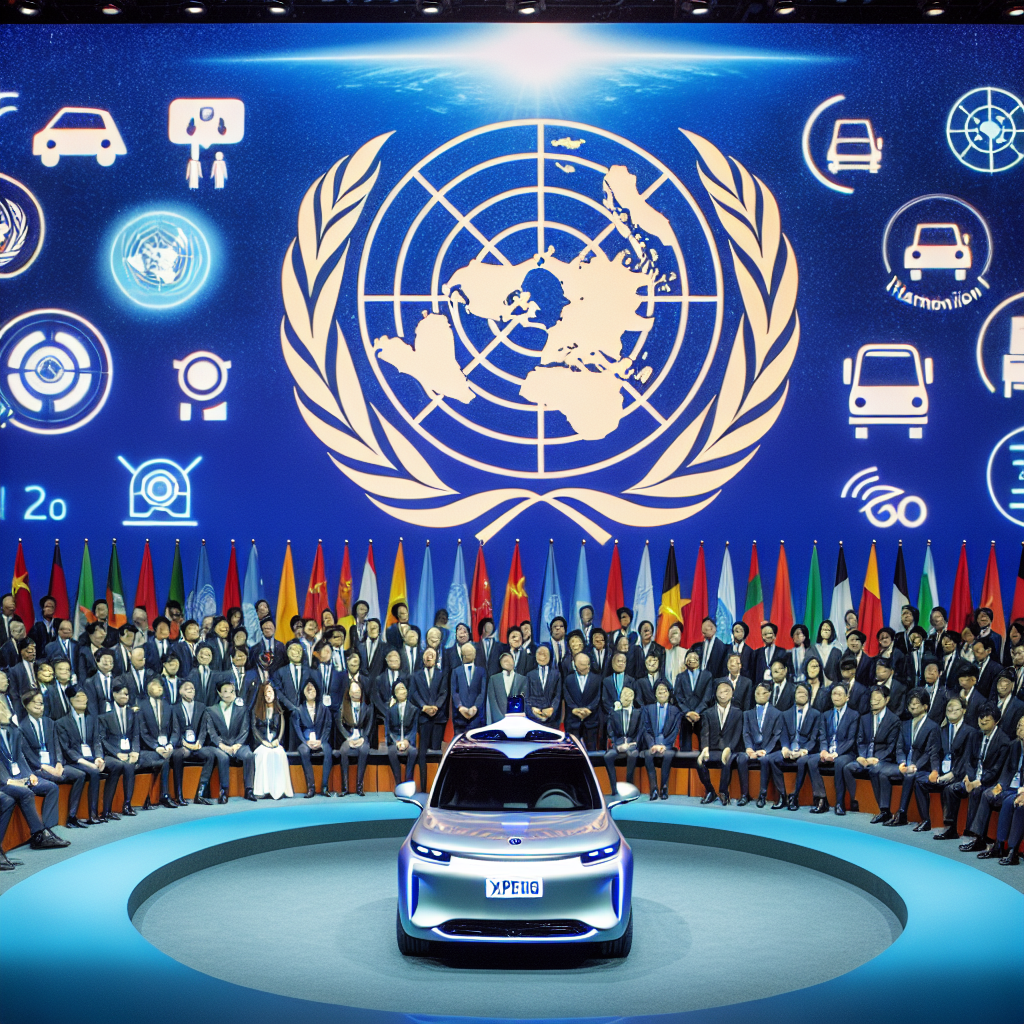
In a remarkable demonstration of advanced automotive technology, XPENG showcased its AI-driven Advanced Driver Assistance Systems (ADAS) at the UN/WP.29 Informal Working Group on Automated Driving Systems (IWG ADS) session in Shanghai. This event was notable as it marked the first offline assembly of global delegates from various sectors, including regulators, industry experts, and consumer groups, aimed at establishing harmonized regulations for Automated Driving Systems worldwide.
XPENG’s participation is particularly significant given the current state of the automotive industry, which increasingly leans towards the integration of AI technologies. The company has been actively involved in discussions related to Driver Control Assistance Systems since 2023 and has contributed to IWG ADS meetings since 2025. During this latest session, XPENG stood out as the only emerging Chinese automaker, offering live demonstrations to high-level participants from key automotive markets such as Canada, the European Union, Japan, the United Kingdom, and the United States.
The purpose of these demonstrations was not merely to present technical specifications; instead, XPENG arranged for delegates to experience firsthand the capabilities of its XNGP driving system. During the demonstrations, officials and experts were seated in the passenger seats, experiencing real urban and highway scenarios. This immersive approach established a direct connection between global regulators and a Chinese manufacturer pioneering AI-driven ADAS at scale.
One of the highlights of the session was the delegates’ opportunity to observe the XNGP system’s real-time perception, decision-making, and control capabilities. The integration of a robust safety framework, which includes driver status monitoring, human-machine interaction logic, and comprehensive safety design, indicated advancements in addressing one of the most crucial aspects of autonomous driving—safety.
Moreover, XPENG’s demonstrations took place across complex traffic scenarios, illustrating the system’s capability to navigate the unpredictable nature of real-world driving. As participants reflected on these driving experiences, it became clear that XPENG’s technology is built to enhance safety and efficiency, paving the way for a smoother transit experience.
Besides showcasing the XNGP system, XPENG seized the moment to unveil their upcoming Vision-Language-Action (VLA 2.0) architecture, which promises to redefine intelligent driving. This next-generation AI foundation is poised to streamline the translation of visual input into actionable vehicle responses, thereby ensuring faster reaction times and reduced information loss. With its aim to emulate more human-like driving performance, the VLA 2.0 system is anticipated to excel in handling the complexities of real-world scenarios.
In tandem with this technology, XPENG is diligently working towards its Robotaxi roadmap in China, with trial operations set to commence later this year. This progressive initiative showcases XPENG’s commitment to advancing intelligent mobility solutions that not only enhance the user experience but also prioritize safety and reliability.
The implications of XPENG’s innovations extend far beyond the Chinese market. As the company continues to develop and refine its intelligent driving technologies, it aims to foster international adoption of AI-driven transportation solutions. By focusing on safety, transparency, and collaborative efforts, XPENG is positioning itself as a leader in the global race towards smarter, safer mobility experiences.
In conclusion, XPENG’s live demonstrations at the UN forum stand as a significant milestone in the journey toward harmonized global automotive regulations for Automated Driving Systems. As stakeholders from various sectors observe the real-world application of AI technologies, it is evident that XPENG is not just contributing to the discussions but actively shaping the future of intelligent transportation.
Leave a Reply