

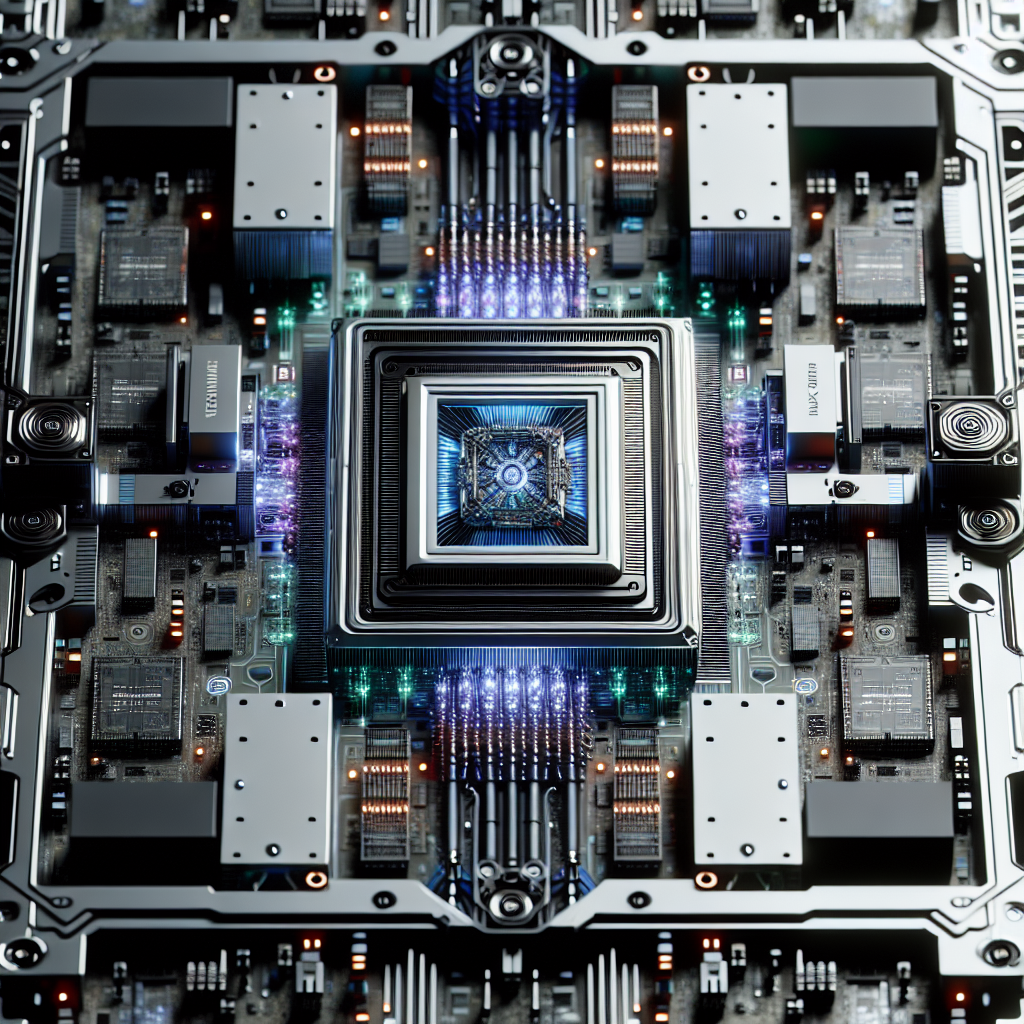
In a bold move to redefine the landscape of artificial intelligence, Google has officially announced its AI Hypercomputer at the Cloud Next 26 event. This groundbreaking innovation signifies a transition from traditional supercomputers to next-generation hypercomputers, which promise unmatched flexibility and performance for AI workloads. By integrating powerful resources such as the TPUv8 series, NVIDIA Rubin GPUs, and Axion CPUs, Google aims to equip developers and researchers with a robust platform for the emerging Agentic AI era.
The AI Hypercomputer is designed with a high-performance computing datacenter that fuses optimized hardware for compute, storage, networking, and machine learning frameworks into a single architecture. This cutting-edge system highlights Google’s commitment to pushing the boundaries of AI capabilities and enables a seamless experience for varied computational demands, from training extensive models to performing real-time inference.
A key feature of the AI Hypercomputer is its introduction of the new 8th Gen TPU lineup, which includes two distinct types: TPU 8t for training and TPU 8i for inference. The TPU 8t chip, in particular, is touted as a training powerhouse. By reducing the deployment timeline of advanced models from months to weeks, this chip boasts an impressive total FP4 compute capacity of 121 Exaflops per pod, an astounding 2.84 times higher than its predecessor, Ironwood. Such capabilities empower organizations to innovate rapidly and enhance their AI applications’ functionalities.
What stands out with the TPU 8t is its massive scalability. A single TPU 8t superpod can expand to 9,600 chips paired with two petabytes of shared high-bandwidth memory, thereby providing the infrastructure needed for the most complex AI models. This architectural design not only strategically increases compute power but also facilitates a pooled memory approach, enabling advanced collaboration and data accessibility across AI projects.
The TPU 8t chip emphasizes maximum utilization by incorporating ten times faster data storage access and leveraging the novel TPUDirect technology, which allows data to be streamed directly into the TPU without any bottlenecks. This improvement ensures that the entire system is actively engaged, optimizing resource use and reducing idle time—a critical factor in efficiency during AI training sessions.
Furthermore, Google introduces its innovative Virgo Network alongside JAX and Pathways software. This cutting-edge combination permits near-linear scaling for up to a million chips within a single logical cluster. The Virgo Network enhances the interconnectivity and data flow between integrated components, allowing for unprecedented collaboration efficiency among AI models and reducing the time-to-results for complex machine learning tasks.
In essence, Google’s foray into the Agentic AI arena with its AI Hypercomputer presents a remarkable leap forward for AI development. Companies can leverage this technology to not only increase the speed of model training but also foster a working environment ripe for innovation. The hypercomputer promises a diverse range of applications across industries, from deep learning tasks in healthcare to real-time analytics in finance.
As the AI landscape continues to evolve, Google’s AI Hypercomputer stands as a testament to the company’s pioneering spirit and its drive to shape the future of AI technology. Businesses keen on harnessing AI’s full potential will find the tools needed to do so within this advanced ecosystem, making it a vital investment for long-term growth and transformation.
Leave a Reply