
-
New MIT tech could lead to longer lasting devices and more capable AI systems

As the demand for artificial intelligence (AI) and resource-intensive computing continues to surge, so too does the energy demand that accompanies these technological advancements. Researchers at the Massachusetts Institute of Technology (MIT) have risen to the challenge by developing an innovative technique for stacking transistors and memory directly on the back of computer chips. This groundbreaking approach holds the promise of significantly reducing energy costs associated with AI and high-performance computing.
Conventional chip designs have long hindered efficiency, primarily by separating logic and memory components. This traditional method forces data to shuttle back and forth between these distinct components, resulting in substantial inefficiencies and excessive energy consumption. MIT’s new technique not only addresses this inefficiency but also marks a significant leap towards more energy-efficient designs in future electronic devices.
What sets this research apart is the new method’s ability to stack these vital components together on the backside of the chip, creating a more integrated and compact system. These developments contrast sharply with existing technologies such as Intel’s Lunar Lake and Apple’s M-series system-on-chips (SoCs), where sensitive transistors are built on one side of a silicon chip, leaving the opposite side reserved formally for wiring. As the complexity of adding more components grows, traditional fabrication approaches have struggled, primarily due to the prohibitive heat needed to fuse additional layers without damaging existing circuits.
MIT’s approach, spearheaded by researcher Yanjie Shao, overcomes these barriers through a novel low-temperature fabrication process. Utilizing a unique material known as amorphous indium oxide, the team successfully grew ultra-thin transistor layers at just 150 °C (302 °F). This temperature is sufficiently low to protect and preserve the integrity of the underlying circuits.
The breakthrough enables the stacking of active transistors directly onto the back end of the chip, merging both logic and memory functionalities into a single, compact vertical stack. This approach not only conserves space but enhances energy efficiency, paving the way for versatile electronics in ever-smaller devices. “Now, we can build a platform of versatile electronics on the back end of a chip that enables us to achieve high energy efficiency and many different functionalities in very small devices,” Yanjie Shao emphasized. However, he also noted the importance of continued innovation to fully uncover the ultimate performance limits of this promising technology.
Furthermore, the research team has improved upon existing transistor designs by incorporating a ferroelectric material known as hafnium-zirconium-oxide to formulate 20-nanometer transistors. Initial testing of these devices has shown remarkable results, with exceptionally swift switching speeds recorded at just 10 nanoseconds. Notably, this is the limit of the measurement equipment used by the team, indicating the impressive potential of their newfound designs.
The implications of this research extend beyond just technical specifications; the potential commercial upside is considerable. As industries increasingly rely on more powerful AI systems and data-driven technologies, lowering their energy consumption could translate into significant cost savings and improved sustainability practices. For business leaders, product developers, and investors, the advancement of MIT’s new transistor stacking technique represents a noteworthy step toward resolving the growing energy concerns surrounding AI applications.
In conclusion, the groundbreaking work being done at MIT not only showcases a novel fabrication technique that stacks transistors and memory but also reinforces the crucial relationship between energy efficiency and technological advancement. This innovation aligns with the general direction of the electronics industry, which seeks to develop more capable systems that are environmentally friendly and economically viable for future applications. As researchers continue to push the boundaries of performance and efficiency, the developments at MIT may very well shape the future landscape of AI and hybrid computing technologies.
-
DoorDash Debuts Zesty, an AI Social App for Restaurant Discovery

DoorDash has embarked on an exciting new venture with the launch of Zesty, an innovative AI-powered mobile app designed to revolutionize how users discover restaurants. Unlike traditional food delivery services, Zesty is focused entirely on restaurant discovery, allowing users to explore diverse dining options in a more efficient and personalized manner.
The introduction of Zesty comes at a pivotal time when consumer habits are shifting towards digital platforms that emphasize quick, outcome-oriented interactions rather than conventional search methods. Research shows that around 30 million U.S. consumers have moved away from traditional search methods, opting instead for AI-driven solutions that provide instant, personalized recommendations tailored to their preferences.
Zesty functions as a standalone platform currently in public beta, available in major urban regions such as New York and the San Francisco Bay Area. Utilizing conversational artificial intelligence, the app allows users to navigate through a crowded marketplace of dining options without the hassle of scrolling through menus, ratings, or numerous user reviews. Instead, users are empowered to ask personalized questions such as, “What’s a low-key dinner spot in Williamsburg that’s good for introverts?” or “Where can I find brunch spots nearby that are great for groups?” The app then curates an array of tailored dining options based on user inputs.
What sets Zesty apart is not just its user-friendly interface but also its incorporation of social and community signals. Users can connect with fellow diners, share photographs from their previous visits, and follow others who have similar tastes. This blend of artificial intelligence and social interaction reflects a growing understanding that organic social content can play a significant role in the discovery process, moving beyond static star ratings that often fail to capture the dining experience fully.
DoorDash Co-Founder Andy Fang has emphasized that Zesty is more than just a tool; it is a means to help users “connect with the best of their communities.” The app aggregates information from various sources, including DoorDash, Google Maps, TikTok, and other platforms, to present a wide range of curated recommendations from across the web. However, despite its promising features, Zesty also faces important questions regarding its unique value proposition.
While aggregating data can minimize friction and enhance the user experience, this alone does not guarantee differentiation in a crowded marketplace. Established platforms like Yelp already combine user reviews, location data, and images to aid in restaurant discovery, while newer entrants like Beli focus on a more social-first food discovery experience that’s deeply rooted in personal networks. Hence, the challenge for Zesty lies in effectively leveraging its AI capabilities to carve out a niche.
At the core of Zesty’s promise is the utilization of conversational AI as a differentiating factor. Rather than merely surfacing existing content, the app is designed to interpret user intent and refine options based on specific prompts. This capability raises the question of whether it can significantly alter consumer behavior or simply serve to repackage existing content in a novel chatbot-like interface.
Ultimately, Zesty represents a bold and strategic shift for DoorDash as it aims to expand its footprint in the food industry beyond mere logistics. By harnessing advanced technology and social dynamics, the app seeks to enhance the dining discovery process, positioning itself as a companion for food lovers looking for their next favorite restaurant. As it moves forward, the challenge will be to continuously innovate and refine its features to maintain consumer engagement and differentiate itself from other options available in the market.
-
Coursera to buy Udemy, creating $2.5 billion firm to target AI training

In a significant development for the online education sector, Coursera has announced its acquisition of Udemy in an all-stock deal that values the combined company at a remarkable $2.5 billion. This strategic move comes as the industry faces consolidation pressures following a post-pandemic slowdown, along with increasing scrutiny from investors. The merger is seen as a pivotal step toward enhancing offerings in the burgeoning market for AI training and workforce development.
As per the terms of the agreement, shareholders of Udemy will receive 0.8 shares of Coursera for each share they own, placing the overall value of Udemy at approximately $930 million. Following the announcement, shares of Coursera experienced a modest increase of about 4%, while Udemy’s stock surged nearly 22%. This strong market reaction reflects the optimism surrounding the merger and its potential to reshape the competitive landscape of online learning.
The combined entity will leverage its enhanced strengths to better cater to corporate demand for reskilling in key areas such as artificial intelligence, data science, and software development. As businesses increasingly allocate resources toward workforce training amid the rapid adoption of generative AI technologies, this merger positions the new firm advantageously to meet these demands. Analysts, including Stephen Sheldon from William Blair, have highlighted the strategic and financial logic behind this move, emphasizing the complementarity of the companies’ content offerings and the prospect of substantial cost synergies.
According to Coursera’s last market close, the acquisition implies a price of $6.35 per share for Udemy, representing a premium of approximately 18.3%. The transaction is anticipated to close in the second half of next year, pending necessary regulatory and shareholder approvals. This timeline suggests that Coursera and Udemy are confident in their strategic vision enough to navigate potential hurdles to a swift closing.
Coursera has long partnered with reputable universities and institutions to provide degree programs and industry-relevant certifications, focusing increasingly on attracting enterprise customers seeking scalable solutions for employee training. In contrast, Udemy thrives as a marketplace for independent educators, offering individual courses and subscription models aimed at businesses. This diverse approach to education delivery can create a robust platform that captures a broader segment of the market.
Despite the promising prospects presented by AI upskilling, investor sentiment in the online education arena remains cautious. The sector has faced challenges as shares of online education companies have lagged behind broader market trends, reflecting concerns over pervasive competition, pricing pressures, and return uncertainties related to investments in AI solutions. For instance, Udemy has witnessed a decline of approximately 35% in its shares this year, while Coursera’s stock has also seen a downturn of about 7%, indicating that both companies are currently trading well below their highs since their initial public offerings.
As the merger progresses, it will be interesting to observe how the combined resources and expertise of Coursera and Udemy will be leveraged to capitalize on the expansive opportunities within the education technology sector. The focus on AI and related training programs underscores a paradigm shift wherein traditional education is evolving rapidly to meet the demands of a digital and automated economy. By consolidating their offerings, Coursera and Udemy aim to create a powerhouse in the online education landscape that may set the new standard for effective learning solutions.
This acquisition aligns with the growing trend towards integrating technology in education, especially as businesses recognize the necessity of skilled workers in the era of AI. With the prospect of a more significant and diversified portfolio of educational resources, the newly formed company could potentially attract both learners and corporate partners seeking effective training solutions that drive innovation and development.
-
Watch: China has a new AI humanoid robot in charge of traffic control
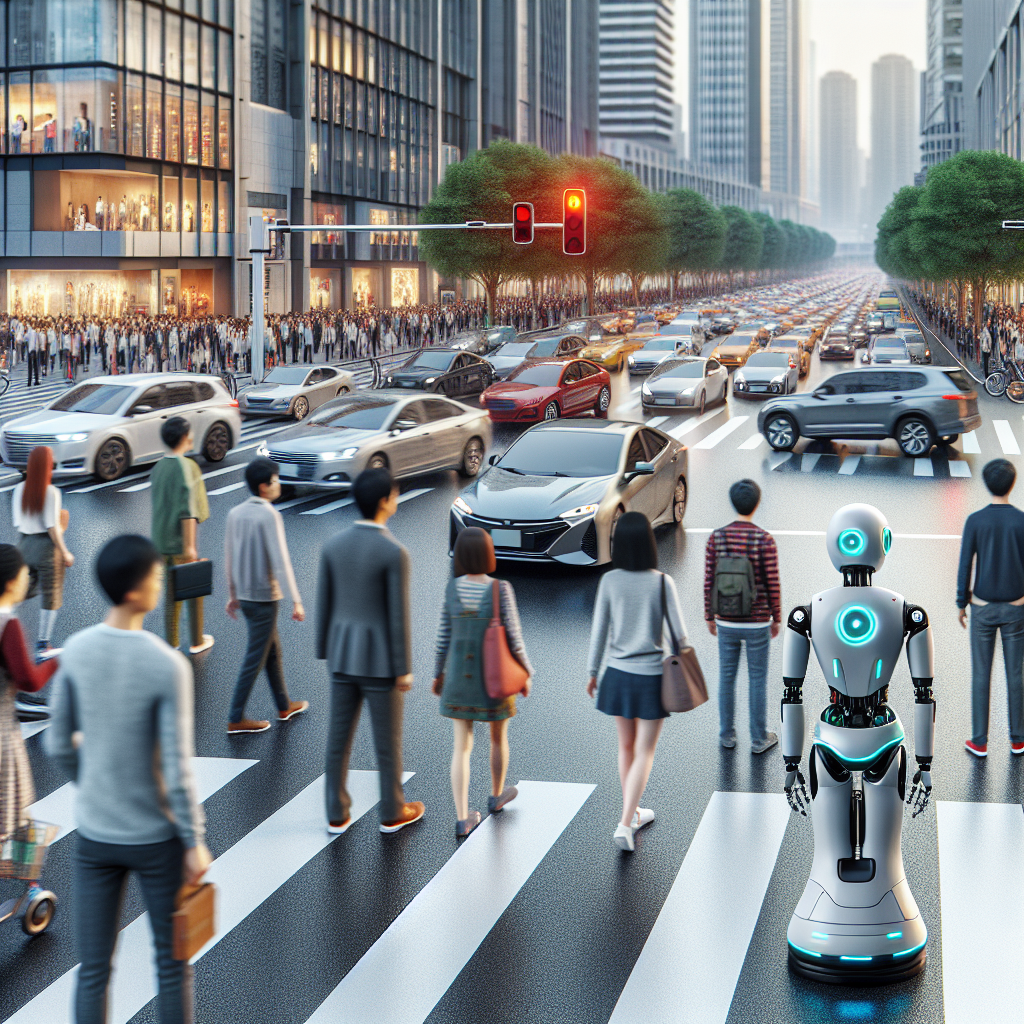
In a remarkable leap forward in urban management and safety, Hangzhou, a bustling city in China, has introduced a groundbreaking innovation in traffic control: the Hangxing No. 1, an AI-powered humanoid robot police officer. This ambitious endeavor seeks to redefine how traffic is managed at busy intersections by employing advanced robotics to aid human officers in enforcing traffic laws and ensuring pedestrian safety.
The Hangxing No. 1 stands at an impressive 1.8 meters (5 feet 11 inches) tall and operates primarily at the crowded intersection of Binsheng Road and Changhe Road in the Binjiang District. With its high-definition cameras and sensors, this humanoid traffic officer is capable of directing vehicles and pedestrians, spotting violations, and issuing polite verbal warnings to offenders. A unique feature of Hangxing No. 1 is its integration with the existing traffic signal system, allowing it to respond promptly to changes in traffic lights, further streamlining the flow of vehicles and maintaining order at one of the city’s busiest junctions.
The introduction of Hangxing No. 1 is part of a pilot program launched by the Hangzhou Traffic Police Tactical Unit at the beginning of December. While its current role is to assist human officers rather than replace them, authorities have ambitious plans to enhance its capabilities. Future upgrades will potentially include large language model (LLM) technology, enabling the robot to give more detailed directions and engage in more meaningful interactions with pedestrians and drivers alike.
One can imagine a scene where, instead of merely gesturing “stop” and “go” with its arms, the Hangxing No. 1 could guide a lost tourist or alert motorists to unexpected road closures through a conversation. The enhancements envisioned for this robot underscore the potential for AI-driven technologies to enrich daily human experiences and improve decision-making on the roads.
Another notable aspect of Hangxing No. 1 is its ability to identify specific traffic violations, such as unhelmeted cyclists and jaywalkers. This autonomous enforcement capability aims to encourage compliance with traffic rules, thereby increasing safety not only for motorists but also for vulnerable pedestrians. The robot’s movement is facilitated by omnidirectional wheels, enhancing its navigational capabilities within the intersection, ensuring that it can respond to real-time traffic conditions dynamically.
Hangxing No. 1 isn’t alone in its role as a robotic police officer within China. Other cities have also experimented with similar technologies, indicating a growing trend. For instance, Shenzhen has deployed EngineAI’s PM01 model, and Wenzhou has seen the introduction of Logan Technology’s spherical RT-G bot. Additionally, Chengdu welcomed its own humanoid traffic cop in June, showcasing a collective interest in integrating AI into public safety and urban management.
This trend speaks volumes about China’s commitment to leveraging AI technology not just for consumer applications but also for enhancing public infrastructure. The evolution of traffic control robots is reflective of a larger narrative in the tech world—one where smart cities utilize AI to create safer, more efficient urban environments.
Comparatively, the Hangxing No. 1 represents a significant advancement over earlier models, such as the AnBot, which had a rather unflattering design reminiscent of a cross between a Dalek and a refrigerator. When the AnBot was deployed in September 2016, it was considered innovative. However, technological advancements in robotics and AI have progressed so rapidly that what was once cutting-edge is quickly rendered obsolete. The trajectory of innovation suggests that within the next few years, newer and more capable models may emerge, pushing the boundaries of what robotic assistants can achieve.
In conclusion, the emergence of AI-powered humanoid robots like Hangxing No. 1 represents a noteworthy development in the intersection of technology and public safety. As these systems evolve, they hold the promise of transforming traffic management and urban experiences, reinforcing China’s position as a leading innovator in the field of robotics and artificial intelligence. The future of smart cities looks bright as we continue to embrace such advancements in the realm of AI.
-
Modine Manufacturing Company (MOD) Benefited From AI Spending

The landscape of manufacturing is rapidly evolving, particularly in the context of advanced technologies like artificial intelligence (AI). One company that has notably thrived amidst this shift is Modine Manufacturing Company (NYSE:MOD), a leading provider of thermal management products and solutions. According to Riverwater Partners’ Q3 2025 investor letter, Modine’s performance has been particularly impressive, as it benefits directly from increased AI-related infrastructure spending.
Detailing its growth trajectory, Riverwater Partners highlighted that Modine’s stock gained an impressive 11.44% over the past year, with a notable one-month return of 8.96%. As of December 15, 2025, the stock was valued at $142.27, with a robust market capitalization of $7.49 billion. This remarkable performance can be attributed to the company’s innovations in thermal management, especially its liquid cooling systems that are essential for high-density computing environments typical in AI applications.
The relevance of Modine’s solutions is underscored by the demand for data centers fueled by the exponential growth of AI workloads. As industries increasingly rely on AI for operational efficiencies, the need for effective thermal management in data centers becomes paramount. These systems help mitigate overheating, which is crucial as data centers expand to accommodate the processing power required by advanced AI technologies.
In its investor letter, Riverwater Partners stated, “Modine Manufacturing Company (NYSE:MOD) was our second-best performer. Modine’s thermal management solutions for data centers continued to benefit from exponential growth in AI-related infrastructure spending.” This assertion reflects the company’s strong market position and long-term potential within and beyond the AI sector.
The Small Cap Strategy employed by Riverwater Partners is predicated on carefully selecting companies with solid fundamentals. In a market where lower-quality stocks have recently outperformed, Modine’s focus on enduring growth characterizes its commitment to high standards and sound execution. The firm noted that even as Modine’s valuation rose, they would maintain their position given the company’s proven track record and healthy prospects for future expansion.
Despite these positive evaluations, it is important to note that Modine is not currently among the top 30 most popular stocks with hedge funds. As of the end of Q3 2025, only 49 hedge fund portfolios included Modine, which indicates a cautious approach among institutional investors regarding the broader AI stocks market. This scenario opens an interesting discussion about whether Modine represents the best growth-at-a-reasonable-price (GARP) investment or if other AI-related stocks might offer greater potential with lower risks.
Moreover, Modine’s recent performance in fiscal Q2 2026 highlights a sales growth of 12% primarily driven by its Climate Solutions segment. This statistic further cements the company’s position as a relevant player in the thermal management landscape associated with the growing AI sector.
As business leaders and investors seek opportunities in the burgeoning AI market, Modine Manufacturing Company stands out due to its innovative approach to thermal management. Its ability to adapt to an evolving technological environment bodes well for its future prospects. Although it faces competition and market pressures, its strategy of focusing on high-quality infrastructure solutions is a crucial aspect of its ongoing success.
In conclusion, Modine Manufacturing’s significant strides in the realm of AI and data center thermal management illustrate the promising intersections between manufacturing and advanced technology. For those venturing into investments associated with the AI market, understanding the dynamics behind companies like Modine could illuminate profitable pathways in an ever-changing industry.
-
Inside Bespoke AI: Samsung Reveals Development Story

Samsung Electronics has taken a significant step toward integrating cutting-edge artificial intelligence into home appliances, as demonstrated in their latest release about the Bespoke AI product line. The company recently unveiled a series of videos that delve into the craftsmanship, innovative thinking, and technological advancements that underpin their AI-enabled home appliances.
These insightful videos feature both planners and developers sharing their vision and the development journey of Samsung’s Bespoke AI refrigerators and washing machines. Set to be released sequentially on YouTube and across social media platforms starting December 16, these videos will be available in over 50 countries, allowing a wide audience to engage with Samsung’s advancements in AI technology.
A Glimpse into the AI Refrigerator
The first installment focuses on the Bespoke AI Refrigerator, which has evolved into a sophisticated, data-driven system for managing food. This segment highlights how AI Vision Inside technology is utilized to recognize food items, track their expiration dates, and even recommend recipes based on the contents. This functionality is particularly useful for users juggling multiple tasks in the kitchen, as they can access the refrigerator hands-free using Bixby voice commands to open the door without needing to touch it.
Additionally, the video showcases the refrigerator’s AI Hybrid Cooling system, which combines an AI digital inverter compressor with a Peltier cooling unit, reinforcing Samsung’s commitment to enhancing daily life through intelligent design.
Advancements in Laundry Technology
The second video turns attention to the Bespoke AI Laundry Combo, an innovative appliance that streamlines the washing and drying process into one seamless operation. This all-in-one solution features AI Wash & Dry and the Flex Auto Dispense System, which intelligently assesses fabric type, weight, and soil level to determine optimal wash cycles and the precise amount of detergent needed. Such capabilities exemplify how AI is simplifying household chores, minimizing user effort and improving overall convenience.
Moreover, the devices incorporate AI Vibration Reduction Technology Plus (AI VRT+), which adjusts to the installation environment to minimize vibration. This feature showcases Samsung’s focus on user comfort and reducing household noise, further distinguishing its products in the competitive appliance market.
Samsung’s Vision for the Future
Throughout these promotional videos, Jessie Song, Vice President and Head of Marketing Group for the Digital Appliances (DA) Business at Samsung Electronics, emphasizes the company’s unwavering commitment to enhancing consumer convenience through innovative technology. “We created these videos to illustrate the dedication and hard work of our Bespoke AI planners and developers in maximizing user convenience,” she explains. “We will continue striving to deliver new value through differentiated AI features and become a trusted brand in AI appliances.”
Samsung’s exploration of AI integration within home appliances indicates a continuing trend in the industry toward smarter, more efficient solutions that cater to modern lifestyles. As the company invests in AI technologies, it promises not only to lead the market in innovative product design but also to elevate the overall consumer experience in the home.
In conclusion, Samsung’s Bespoke AI initiative represents a noteworthy advancement in the intersection of technology and everyday life. By focusing on user-centric features and investment in AI, Samsung is not just creating appliances; they are crafting an ecosystem designed for enhanced living experiences. This development not only signals a shift in how we interact with home appliances but also sets a standard for competitors to aspire to in the fast-evolving landscape of smart home technology.
-
BlackLine Acquires WiseLayer to Enhance its AI Capabilities

In a strategic move aimed at revolutionizing financial operations, BlackLine, Inc. has announced its acquisition of WiseLayer, a New York-based company renowned for its AI technology that automates complex finance and accounting processes. This acquisition marks a significant milestone for BlackLine, expanding its capabilities in the finance sector and aligning with its vision to build the most intelligent platform tailored for the Office of the CFO.
The acquisition was officially revealed on December 15, 2025, and although the financial terms remain undisclosed, the strategic implications are profound. By integrating WiseLayer’s AI-powered agents into the BlackLine Verity™ suite, companies will have the tools to automate intricate tasks such as accruals and payroll accounting. This innovation is expected to empower finance teams to shift their focus from tedious manual tasks to strategic decision-making, thereby enhancing productivity and accuracy.
Owen Ryan, the CEO of BlackLine, emphasized the importance of this acquisition in his statement, declaring that it adds considerable new capabilities to their existing platform. With WiseLayer’s technologies embedded within their operations, BlackLine aims to deliver a seamless solution that combines audibility and intelligence, ensuring customers can trust their financial analytics and workflows.
WiseLayer, co-founded by Josh Stein and Vikram Bellapravalu, was established to give time back to finance and accounting teams, allowing them to work more efficiently. Stein noted that the integration with BlackLine’s platform will not only expedite processes but also instill confidence in the results generated by these automated systems. This collaboration promises to elevate the level of assurance that finance professionals can have in their operational metrics.
Schematically, the integration of WiseLayer’s AI agents into BlackLine’s platform is poised to minimize risks associated with manual accounting practices and expedite the closing process for finance teams. By achieving this shift, companies will have the bandwidth to focus on high-level analysis and strategic insights that are crucial for steering business growth.
Furthermore, Vikram Bellapravalu shared his enthusiasm about scaling WiseLayer’s technology under BlackLine’s umbrella. He highlighted that the blend of their innovative solutions with an established platform trusted by thousands of global enterprises represents an extraordinary opportunity for both companies. This collaboration is set to not only enhance efficiency but also to redefine the future landscape of financial operations.
As BlackLine continues to advance its offerings, the acquisition of WiseLayer is an integral part of its overarching strategy, allowing them to maintain their competitive edge in the fast-evolving financial technology sector. Moreover, BlackLine reaffirmed its fourth-quarter and full-year 2025 guidance, indicating confidence in its performance post-acquisition.
The implications of this acquisition extend beyond operational improvements; they signify a transformative approach to how finance departments can harness technology to enhance their workflows. This strategic decision places BlackLine firmly in a pivotal position to lead in the automation of finance and accounting processes, promising enhanced performance and strategic value for their clients.
In summary, BlackLine’s acquisition of WiseLayer represents a groundbreaking development in the realm of financial operations, showcasing how technology can herald significant advancements in efficiency, accuracy, and strategic focus within the finance sector. As organizations continue to grapple with the complexities of modern financial management, such integrations are crucial for evolving and optimizing operations in the fast-paced business environment.
-
CEOs seem determined to keep spending on AI – despite mixed success

In a climate of uncertainty and mixed results from previous artificial intelligence (AI) investments, a significant majority of CEOs remain optimistic about the future of AI in business. According to a recent report from Teneo, a consultancy firm, two-thirds of CEOs plan to increase their AI spending in 2026. This shift highlights a growing recognition of the essential role that AI is expected to play in reshaping workplaces and driving future job creation.
Despite initial skepticism surrounding AI technology, the narrative is changing. Many company leaders are now moving beyond mere experimentation with AI tools and are beginning to implement practical solutions that have shown positive outcomes. This transition is particularly evident in the anticipated growth of both entry-level and senior leadership positions tied directly to advancements in AI. More than half of CEOs (58%) expect an increase in senior-level roles, suggesting an escalation in demand for skilled leadership that can navigate this evolving landscape.
The concept of human-AI collaboration is emerging as a vital component of this new work paradigm. As noted by Ryan Cox, Teneo’s Global Head of AI, the prevailing sentiment is not that AI is poised to eliminate jobs; instead, it is reshaping them. For instance, new job titles such as ‘decision designer’ and ‘AI experience officer’ are being introduced, reflecting roles that integrate human insight with AI capabilities.
However, this optimistic outlook is tempered by caution. Despite the positive forecast regarding job roles, a significant portion of CEOs (about 16%) remain skeptical about the realism of obtaining quick returns on AI investments. The report indicates that less than half of AI projects have generated returns exceeding their costs, and only 53% of investors anticipate returns within six months. This presents a clear indication of the challenges that still lie ahead in fully realizing the commercial potential of AI.
The hesitancy around immediate returns is particularly pronounced in industries such as security, legal, and human resources, where progress may lag compared to sectors like marketing and customer service. Many companies are reevaluating their AI strategies in response to these challenges, perhaps seeking to diversify their investments or connect with technological initiatives that can yield faster results.
Furthermore, the economic outlook may also play a role in these investment decisions. Expectations for a global economic improvement have significantly dropped, with only 31% of CEOs anticipating an upswing in 2026—a notable decline from 51% the previous year. This prevailing sentiment may suggest that CEOs are attempting to regain control over their operational success by focusing on AI as a driver for competitive advantage and strategic growth.
The Teneo report sheds light on a crucial aspect of modern business strategy: the ongoing integration of AI into various functions and job roles. As organizations increasingly embrace the potential of AI, the traditional workforce is evolving, characterized by both the automation of routine tasks and the creation of entirely new roles that harness the strengths of both humans and machines.
As leaders prepare for the future, the insights from this report serve as a critical reminder of the need for adaptability and forward-thinking in the face of technological advancements. While the road ahead may be fraught with challenges, the consensus among CEOs reflects a determination to invest in AI technologies—heralding a new era defined by the interplay between human ingenuity and machine intelligence. Staying informed and agile will be key for businesses looking to navigate this promising but complex journey into the future of work.
-
Global funds view Indian stocks as a top hedge against AI risks

The growing integration of artificial intelligence (AI) into industries across the globe has caused an unprecedented shift in market dynamics. As companies continuously innovate and adapt to the AI landscape, investors are becoming increasingly cautious and strategic in their portfolio choices. One striking trend emerging from this shift is the rising interest of global funds in Indian stocks as a preferred hedge against potential risks associated with AI advancements.
Recent developments have underscored this trend, particularly with significant investments from global tech giants Amazon.com Inc. and Microsoft Corp. in India. Together, these companies have committed to injecting $52 billion into the region over the coming years, focusing largely on building AI infrastructure. This financial influx not only highlights India’s significance in the global tech ecosystem but also indicates a growing confidence among investors regarding the potential of Indian enterprises to thrive in an AI-driven market.
What makes Indian stocks appealing to global investors in this uncertain environment? Firstly, India’s burgeoning startup ecosystem has demonstrated remarkable resilience and innovation, particularly in the tech sector. The country’s demographic advantages, coupled with a vibrant talent pool, offer abundant opportunities for companies poised to leverage AI technologies effectively. Additionally, Indian firms have begun embracing AI and machine learning across various domains, enhancing their efficiency and competitiveness in the market.
Moreover, the Indian government’s favorable policies aimed at digital transformation and the promotion of technology startups further bolster investor confidence. Initiatives such as Make in India, Digital India, and the Start-up India campaign have created a more conducive environment for capital investments. Through these initiatives, the government is striving to position India as a global tech hub, making it an attractive destination for foreign investments.
Investors looking to hedge against the potentially disruptive impacts of AI can harness the opportunities present in the Indian stock market. By allocating resources into sectors like IT, fintech, and telecommunications, they are not only diversifying their portfolios but also positioning themselves well to take advantage of the anticipated growth in these industries. Companies that are early adopters of AI will likely see significant returns, drawing more funds into the market.
However, it is vital for investors to remain cautious and conduct thorough research before diving into investments. The volatility of stock markets in the face of rapid technological changes presents both risks and rewards. While Indian stocks may emerge as a promising hedge, the landscape is not without challenges, including regulatory uncertainties and competitive pressures from both domestic and international players.
Another factor influencing this trend is the global shift towards more sustainable investment practices. As awareness grows regarding ethical AI practices and responsible investing, many funds are looking to back companies that prioritize sustainability and social responsibility. Indian firms increasingly recognize the value of these practices and are adapting their business models to align with these emerging trends. This alignment can further elevate their appeal among international investors seeking to promote long-term growth while mitigating risks.
In conclusion, the intersection of AI advancements and investment strategies underscores a pivotal moment for both investors and Indian companies. With global giants signaling their commitment to the Indian market through substantial investments, the potential for growth and innovation has never been clearer. As the AI landscape continues to evolve, Indian stocks may very well become a strategic asset for global funds looking to hedge against the uncertainties that accompany rapid technological change. As investors explore new horizons, the future of India’s tech ecosystem holds promise, ready to harness the power of AI while welcoming opportunities for sustainable growth.
-
NEWMEDIA.COM Launches RankOS™ From Stealth, a Proven Platform for AI and Search Visibility

In a significant development for businesses navigating the evolving landscape of digital visibility, NEWMEDIA.COM has officially launched RankOS™, an innovative operating system specifically designed to enhance brand visibility in both AI-driven and traditional search environments. Announced on December 14, 2025, this platform comes after years of meticulous development and real-world application across various client programs.
The rise of AI-driven search engines poses new challenges for brands that have traditionally relied on achieving high rankings on Google for visibility. According to Steve Morris, Founder and CEO of NEWMEDIA.COM, simply ranking well in search results is no longer adequate for ensuring that a brand will be visible in AI-generated responses. RankOS™ addresses this crucial shift by integrating several essential components—search engine optimization (SEO), public relations, structured data, and AI visibility measurement—into one cohesive system. Morris emphasized that AI systems now rank brands based on trust, authority, and citations rather than just indexing websites.
A striking finding from a recent AI visibility audit conducted by NEWMEDIA.COM revealed that 87% of Colorado businesses were absent from AI-generated search results, despite many performing well in traditional organic searches. This highlighted a growing disconnect that could hinder a business’s overall marketing effectiveness. RankOS™ was developed specifically to close that gap, providing insights and tools for brands to improve their recognition in AI environments. Key features of RankOS™ include measuring brand appearance across AI engines, tracking entity authority, and identifying gaps preventing effective AI recognition.
Unlike conventional marketing tools that concentrate solely on ranking statistics or web traffic, RankOS™ takes a comprehensive approach to visibility. It enables brands to become confirmed sources within AI-generated content by employing real-time monitoring and diagnostics to strengthen their online presence. By integrating disciplines such as PR and SEO into one cohesive approach, RankOS™ empowers businesses to create a coordinated visibility strategy.
Functionality-wise, RankOS™ serves as a technology platform as well as an operational methodology. This dual role allows NEWMEDIA.COM to implement a consistent and measurable approach to AI Engine Optimization (AEO) on a large scale. The platform continuously assesses how brands are presented across diverse media and web sources, and how they are represented in AI-centric answer engines. Armed with this data, businesses can derive targeted optimization strategies to enhance citation frequency and authority in search results.
NEWMEDIA.COM has ambitious plans for RankOS™, intending to expand the platform with new reporting modules and benchmarking tools by the end of 2025 and throughout 2026. The future enhancements promise to offer brands even greater insight and adaptation capabilities as AI technologies continue to evolve.
The market implications of this launch are profound. As AI platforms increasingly become the primary means of discovery for both consumers and B2B buyers, those businesses that fail to establish a machine-verifiable authority risk losing visibility—regardless of their performance in traditional search spaces. As noted by Morris, “AI is reshaping how trust is assigned online.” With RankOS™, brands gain access to real data and insights, enabling them to compete effectively in an environment where guesswork is no longer sufficient.
In summary, the launch of RankOS™ by NEWMEDIA.COM marks a pivotal moment for brands aiming to thrive in the new AI-centric digital landscape. By providing a comprehensive system that merges technical depth with practical application, RankOS™ is set to redefine how businesses approach visibility and engagement within the complexities of modern search technology.