
-
Anthropic Goes Global: AI Expansion Soars!

In a significant move poised to reshape the AI landscape, Anthropic is expanding its international operations to meet the soaring demand for cloud-based AI solutions. This strategic initiative comes in response to the global appetite for artificial intelligence, especially as the company aims to triple its international workforce and quintuple its applied artificial intelligence team in the coming year.
The shift toward a more global AI infrastructure is underscored by Anthropic’s insights regarding cloud usage, which reveals that a staggering 80% of cloud activity originates outside the United States. Notably, countries like South Korea, Australia, and Singapore are leading this charge, showcasing per capita consumption rates that outpace even that of the US. This highlights a profound and growing reliance on AI technology across borders.
With substantial backing from tech giants Alphabet, the parent company of Google, and Amazon, and boasting a remarkable valuation of $183 billion, Anthropic has carved a niche for itself by developing AI models that excel in various applications, particularly in coding. This specialization has rendered their large language models (LLMs) enviable in the marketplace, fueling demand from businesses needing advanced AI solutions.
The power of Anthropic’s cloud platform is reflected in its impressive growth trajectory, which has seen the company expand its global business customer base from fewer than 1,000 to over 300,000 in just two years. This rapid expansion speaks volumes about the increasing adoption and reliance on cloud-based AI technologies across various sectors.
Financially, Anthropic’s growth story is equally compelling. The company has elevated its annualized revenue run rate from approximately $1 billion at the beginning of last year to an astounding $5 billion by August of the same year. This remarkable financial performance is indicative of the heightened enthusiasm for AI and its transformative potential in various industries.
To sustain this momentum and keep pace with international demands, Anthropic is set to recruit over 100 new employees in key European locations such as Dublin, London, and Zurich. In addition, they are establishing their first Asian office in Tokyo, with plans for further expansions throughout Europe. These steps solidify Anthropic’s commitment to being a formidable player in the global AI arena.
The global expansion initiative is being spearheaded by Chris Sciauri, who has recently taken on the role of International Managing Director. His appointment, alongside that of Paul Smyth as Chief Commercial Officer, is indicative of the company’s strengthened leadership team. Both leaders are tasked with guiding Anthropic’s endeavors in international markets.
Chris Sciauri remarked on the exceptional global demand for cloud-based solutions, highlighting that industries ranging from financial services in London to manufacturing in Tokyo are increasingly leveraging cloud technologies to enhance their core operations. This demand reinforces the notion that organizations worldwide are banking on AI to streamline and optimize critical business functions.
In alignment with its growth strategy, Anthropic has also secured a significant partnership with Microsoft. This collaboration aims to integrate Anthropic’s cutting-edge cloud models into Microsoft’s Copilot assistant, marking a pivotal shift for Microsoft’s generative AI chatbot, which has historically relied heavily on OpenAI’s technology. The integration of Anthropic’s models into the suite promises to enhance capabilities and provide a diverse array of AI solutions, fostering innovation within the industry.
Anthropic’s commitment to enhancing its AI models ensures continuous improvement and development, making it a key player in the ongoing evolution of artificial intelligence solutions globally. As the company advances toward its ambitious plans for growth and expansion, its impact on the AI landscape is sure to be significant, particularly in driving advancements in cloud-based technologies.
-
AI Optimism To Retail Investors Push: Three Factors Fuelling China’s Stock Market Rally

China’s stock market is undergoing a remarkable rally this year, demonstrating resilience amid various economic concerns. This upward momentum is primarily driven by three interlinked factors: a wave of optimism surrounding artificial intelligence (AI), robust engagement from domestic retail investors, and a series of strategic government policies aimed at promoting technological self-sufficiency.
Central to this market resurgence is the rising optimism about AI technologies. Investors are increasingly convinced that advancements in AI will not only bolster productivity but also revolutionize various sectors, including retail, finance, and manufacturing. This optimism has been infectious, encouraging more capital inflow not just from domestic participants but also from foreign investors who recognize the potential of companies poised to benefit from AI innovations.
The increase in retail investor activity is another crucial element propelling the market. Chinese retail investors, known for their significant participation in the stock market, have shown a renewed enthusiasm for equity investments this year. This engagement has provided a solid foundation for the market rally, effectively offsetting some of the hesitancy stemming from concerns about economic health. The growing dominance of retail investors has also signaled a shift in market dynamics, where individual decision-making plays a pivotal role in shaping market trends.
Parallel to these developments, the Chinese government has been proactive in enacting policies that bolster the technology sector, particularly in AI. Initiatives aimed at ensuring self-sufficiency in technology have not only inspired confidence among investors but have also solidified the groundwork for long-term growth in the sector. By prioritizing technological advancement and providing necessary support to key players, the government is effectively laying the foundation for sustained market enthusiasm.
This confluence of AI optimism, retail investor support, and government policy has translated into significant gains for Chinese equity markets. For instance, benchmarks like the CSI 300 and the Hang Seng Tech Index have experienced sharp increases, indicating strong overall market performance. The Shanghai Composite Index has surged approximately 14% year-to-date, even achieving a decade-high earlier this month. Meanwhile, the Hang Seng Index boasts remarkable returns exceeding 33% in 2025 alone, showcasing the effectiveness of this rally.
These statistics underline China’s emerging position as a competitive player in the regional and global markets. The resilience displayed by indices like the Shanghai Composite and Hang Seng Index not only indicates a recovery from previous downturns but also highlights a shift in investor sentiment that could have long-term implications for the market. As China continues to harness AI capabilities, it stands poised to attract further investments, positioning itself as an attractive hub for tech-centric growth.
In conclusion, the dynamics currently fueling China’s stock market suggest a complex interplay of optimism, strategic investment behavior from retail investors, and responsive government policy. Moving forward, these elements will be critical to watch, as they may define the course of the market in the upcoming months. As AI technologies continue to evolve, their impact on the economy and, in turn, the stock markets will be significant, providing investment opportunities that could be capitalized upon by savvy investors.
-
MySQL AI Introduced for Enterprise Edition

Oracle has recently unveiled MySQL AI, a powerful suite of AI-driven capabilities designed specifically for the MySQL Enterprise edition. This introduction is particularly pertinent for organizations focusing on analytics and AI workloads in expansive, large-scale deployments. However, the announcement comes with an air of uncertainty within the MySQL community, as concerns about the future of the beloved Community edition intensify. The worry stems from possible vendor lock-in and the implications of recent internal layoffs at Oracle.
The innovative features of MySQL AI include advanced vector storage and search capabilities, enabling enterprises to seamlessly create retrieval-augmented generation (RAG) applications directly on MySQL. This functionality eliminates the need for separate vector databases, simplifying the integration process significantly. Moreover, MySQL AI is crafted to work harmoniously with leading large language models, accelerating AI-driven queries and utilizing in-database analytics to enhance workload optimization.
Nipun Agarwal, Senior Vice President of MySQL Engineering at Oracle, elaborates on the diverse applications enabled by MySQL AI. Among these are agentic workflows tailored for on-premise use, ranging from financial fraud detection through intricate bank transaction oversight to inventory management and demand forecasting. The flexibility of MySQL AI allows developers to build AI applications that access data directly from the MySQL database or file system, all without necessitating data movement or complex integrations. Additionally, the option to migrate applications to MySQL HeatWave in the cloud enhances operational versatility.
The capabilities of the new AI engine are built upon four cornerstone components: Generative AI, which empowers users to extract accurate and contextually relevant information from their documents residing in local file systems; Vector Engine, which allows developers to create vectors from documents and manage them within a vector store in InnoDB; AutoML, which streamlines common training tasks like algorithm selection, data sampling, and hyperparameter optimization; and lastly, NL2SQL, a conversion tool that utilizes LLMs enabling developers to interact with the database using natural language queries.
To further enhance developer productivity, MySQL Enterprise offers native support for JavaScript stored programs. This allows developers to use GenAI APIs to write JavaScript code that interfaces directly with MySQL data. A significant addition to the MySQL ecosystem is the introduction of MySQL Studio — a unified and comprehensive interface for MySQL AI. Agarwal notes that MySQL Studio presents an intuitive, integrated environment comprising an SQL worksheet, a chat feature for querying documents from the vector store, and an interactive notebook for crafting machine learning and generative AI applications.
The launch of interactive notebooks is particularly noteworthy as they are compatible with Jupyter. This feature allows developers to import, share, and collaborate on existing notebooks, fostering a more connected and innovative development culture. However, this progressive move also emerges against the backdrop of Oracle’s strategic focus on strengthening MySQL HeatWave, their managed MySQL Enterprise database service on OCI, raising questions about the open-source trajectory of MySQL in the future.
Concerns among industry leaders regarding MySQL’s direction have surfaced, exemplified by comments from Patrik Backman, the CEO at OpenOcean and co-founder of MariaDB. Backman reflects on MySQL’s original value proposition of openness and independence from lock-in scenarios, emphasizing that the features most desired by enterprises — such as analytics, machine learning, and vector capabilities — now appear increasingly embedded within the HeatWave framework, which could restrict users’ choices and cloud them in deeper dependence on Oracle.
In summary, the introduction of MySQL AI represents a significant leap forward in the integration of AI capabilities within enterprise-level databases. While it presents notable advantages and opportunities for innovation, it also raises essential discussions about the balance between commercial interests and the open-source foundations that once defined MySQL. As the landscape evolves, business leaders, developers, and investors must navigate these complexities to harness the full potential of these groundbreaking advancements.
-
Is the outrage over AI energy use overblown? Here’s how it compares to your Netflix binges and PS5 sessions

The debate surrounding artificial intelligence (AI) and its energy consumption has become increasingly prevalent in conversations about sustainability and technology. Headlines have claimed that AI’s energy demands rival those of entire countries, raising concerns about its environmental impact. However, a closer examination reveals an intriguing comparison between the energy used by AI and that of more familiar activities, such as streaming Netflix or playing on a PlayStation 5.
Recent reports, including one from Google, provide more concrete data on the power consumption of AI systems. Specifically, Google has published median energy figures for its Gemini text prompts, revealing an average usage of just 0.24 watt-hours (Wh) per prompt. While this statistic is enlightening, it comes with certain limitations; for instance, it only accounts for text-based outputs and does not factor in the energy used for image or video generation.
The critical question arises: how does the energy consumption of a single AI prompt measure up against daily activities? Let’s dive into this comparison. Overall, the power utilized by one AI prompt, which amounts to 0.24 Wh, equates to only 1.5% of the energy required to fully charge a new iPhone 17. In terms of streaming video, this consumption is just under 10 seconds of playback on a 55-inch television.
In reality, the majority of electricity used during a streaming session is attributed to the end device itself. For example, when enjoying video content at home, approximately 99.97% of the electricity consumed is used by the television, with data center contributions making up a mere 0.03%. This trend continues for laptops and smartphones, where data center energy use represents about 0.4% and 1.6% of the total energy consumption, respectively.
Considering AI’s power usage specifically from the data center perspective offers additional insights. While 0.24 Wh for an AI prompt may seem significant, it pales in comparison to the energy consumption associated with more intensive tasks, such as cloud gaming. In fact, the same amount of energy used for one AI prompt corresponds to approximately 3.3 seconds of playtime in a cloud gaming scenario.
So, how does this translate to daily usage? If we take into account the total number of active users and their cumulative prompts throughout the day, it’s estimated that each user engages with AI around 10 to 20 times daily. This calculation leads to an average energy consumption of roughly 3.6 Wh per user per day—representing only about 0.03% of a user’s overall daily electricity use. This figure is significantly less than the energy wasted by an indicator light on electronic devices.
The evidence suggests that while AI technology is under scrutiny for its energy demands, it is essential to contextualize its usage against traditional activities that consume far greater amounts of electricity. While the conversation around AI and energy consumption is valid, it often fails to weigh the actual impact accurately. Thus, consumers can rest assured that their nightly Netflix binges likely have a much larger ecological footprint than their interactions with AI.
This assessment not only provides transparency about the energy demands of AI but encourages a broader conversation about our daily power consumption patterns. By examining our habits and how they compare to technologies like AI, we can make informed choices that favor sustainability. In the end, the discussion surrounding AI’s energy use is not merely about the tech itself but about how we interact with various technologies in our lives.
-
Scout AI Partners with Hendrick Motorsports Technical Solutions on NOMAD – Defense UGV Automated by Fury
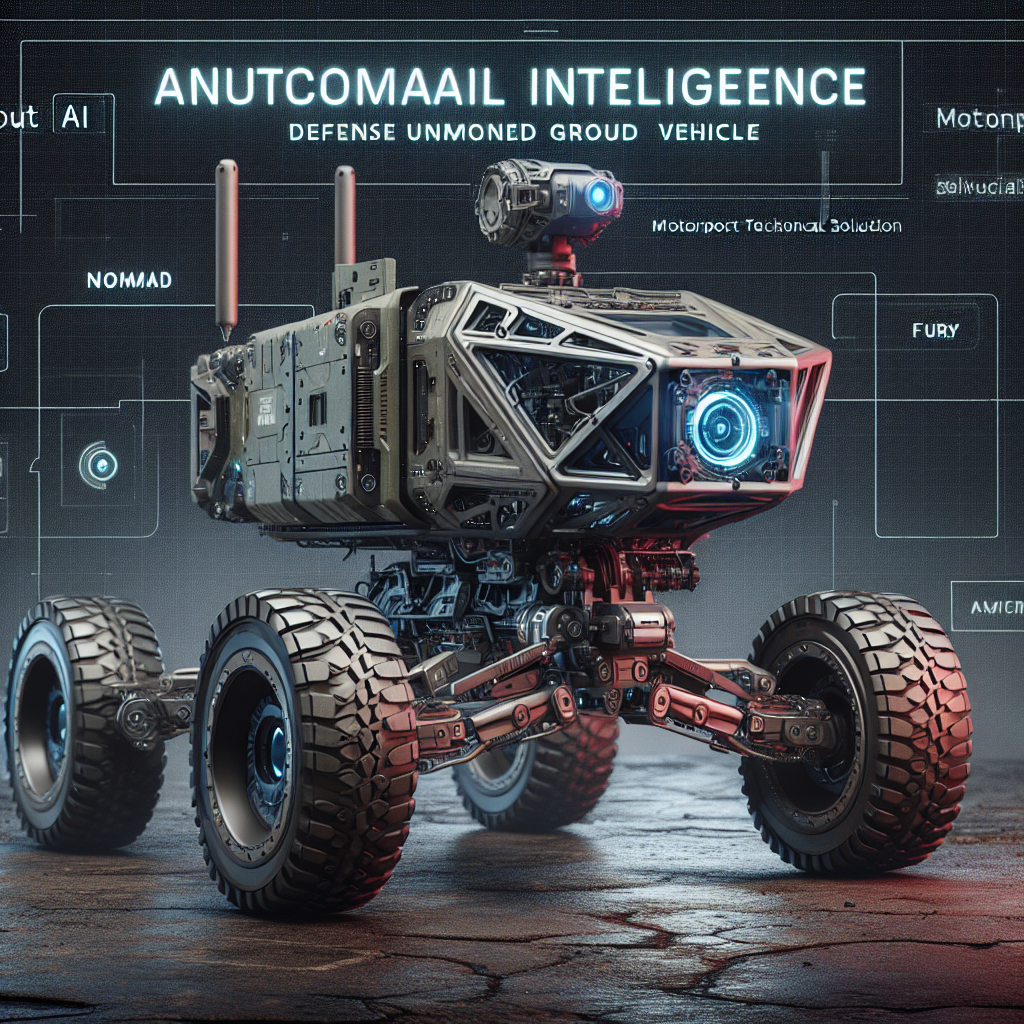
In an exciting development for the defense and technology sectors, Scout AI Inc. has partnered with Hendrick Motorsports Technical Solutions (HMS) to unveil NOMAD, a next-generation unmanned ground vehicle (UGV) powered by Scout’s innovative Fury autonomy system. Announced in September 2025, this collaboration signifies a significant step forward in the design and functionality of robotic systems intended for complex tactical operations.
NOMAD showcases the latest advancements in Scout’s Fury system, now equipped with its fastest foundational model tailored specifically for compact robotic platforms. These enhancements promote agility and speed, enabling NOMAD’s deployment in various challenging mission environments. Combining cutting-edge technology with practical applications, NOMAD is designed to operate autonomously even beyond line-of-sight, thereby enhancing its operational effectiveness.
One of the standout features of NOMAD is its second-generation Fury hardware stack, touted for being more than 90% smaller and significantly more energy-efficient than its predecessors. This compactness does not compromise performance, as NOMAD maintains low-signature capabilities and passive-sensing technologies, which are crucial in tactical scenarios requiring stealth and discretion.
The partnership highlights the shared vision of both companies to expand the horizons of autonomous systems beyond traditional applications. Colby Adcock, Co-Founder and CEO of Scout AI, emphasized the versatility of the Fury system, stating, “We’re just beginning to unlock its potential across ground, air, sea, and space domains.” This adaptability demonstrates a forward-thinking approach to military operations, potentially transforming how missions are executed in diverse terrains.
Building upon a foundation of camera-only autonomy, NOMAD integrates Vision-Language-Action (VLA) reasoning. This sophisticated capability is particularly noteworthy as it eliminates the need for expensive and often fragile sensor equipment. Instead, Fury exclusively employs learned models, allowing NOMAD to mimic human judgment in real-time scenarios, which is paramount in rapidly changing and unpredictable environments.
The implications of NOMAD extend beyond mere technical advancements; they address real-world military needs. Rhegan Flanagan, Director of Government Programs at HMS, highlighted this partnership’s commitment to enhancing the capabilities of servicemembers. Flanagan stated, “Partnering with Scout AI allows us to combine world-class vehicle engineering with cutting-edge autonomy to deliver NOMAD—a commercial platform designed to give our servicemembers greater capability, protection, and confidence on the battlefield.” This focus on improving the safety and operational effectiveness of personnel demonstrates a significant commitment to innovation within military logistics.
As technology continues to evolve, the intersection of advanced artificial intelligence and military applications is increasingly paramount. Scout AI’s collaboration with Hendrick Motorsports aims not only at perfecting UGV performance but also at ensuring mission safety and success. As NOMAD becomes operational, its ability to follow a human operator from a safe distance while integrating various payloads for light tactical missions may revolutionize logistical support in defense operations.
In conclusion, the launch of NOMAD represents a promising development for the future of unmanned systems in military contexts. By harnessing the advancements in AI and autonomy through the Fury system, Scout AI and Hendrick Motorsports are set to redefine the capabilities of unmanned ground vehicles. This forward-looking initiative embodies the potential of technology to enhance the effectiveness and safety of military operations, proving essential for future missions in evolving landscapes.
-
Beelink GTR9 Pro : The AMD Ryzen AI Max Plus 395 Mini PC Outperforming the Big Guys
What if a device no bigger than a hardcover book could outperform your bulky desktop PC? The Beelink GTR9 Pro, powered by the new AMD Ryzen AI Max Plus 395, is here to challenge everything you thought you knew about mini PCs. With its 16-core, 32-thread architecture and integrated Radeon 860S iGPU, this compact powerhouse is rewriting the rules of performance, delivering speeds and graphics capabilities that rival mid-range dedicated GPUs like the RTX 4060. Whether you’re a gamer chasing ultra-smooth frame rates, a creator rendering complex 3D models, or a professional juggling resource-intensive tasks, the GTR9 Pro promises to meet, and exceed, your expectations.
But does it truly live up to the hype, or is it just another overmarketed gadget? In this first look, ETA PRIME dives deep into the GTR9 Pro’s versatile design and innovative hardware, uncovering what makes it a standout in the competitive mini PC market. From its blazing-fast DDR5 RAM and advanced cooling system to its seamless support for both Windows and Linux, this device offers a rare blend of power, efficiency, and adaptability. But the real question is: can it handle the demands of modern gaming and AI workloads without breaking a sweat?
Stick around as we explore its real-world performance, benchmark results, and gaming capabilities to see if the GTR9 Pro is truly the compact PC revolution it claims to be, or just another fleeting trend in tech.
Beelink GTR9 Pro Overview
TL;DR Key Takeaways: The Beelink GTR9 Pro is powered by the AMD Ryzen AI Max Plus 395 APU, featuring 16 cores, 32 threads, and a 5.1 GHz boost clock, paired with the Radeon 860S iGPU for graphics performance comparable to mid-range dedicated GPUs like the RTX 4060 or RX 7600.
- It supports up to 128 GB of DDR5 RAM at 8000 MT/s.
- Features dual M.2 PCIe 4.0 slots for up to 8 TB of high-speed storage.
- Advanced cooling system includes a vapor chamber and dual blower fans.
- Connectivity features include dual 10Gb LAN, Wi-Fi 7, Bluetooth 5.4, and multiple USB ports.
When it comes to processing and graphics capabilities, the GTR9 Pro stands unmatched. The Ryzen AI Max Plus 395 APU at its heart ensures that even the most intensive tasks, from gaming to AI computations, are handled with remarkable efficiency. The integrated Radeon 860S iGPU is built on the RDNA 3.5 architecture, providing 40 compute units to deliver performance that can hold its own against dedicated GPU offerings.
Unmatched Processing and Graphics Capabilities
At the heart of the GTR9 Pro lies the AMD Ryzen AI Max Plus 395 APU, a 16-core, 32-thread powerhouse with a boost clock of 5.1 GHz. This processor is designed to excel in intensive tasks such as gaming, AI computations, and multitasking. The synergy between CPU and GPU ensures that users experience smooth and efficient performance across various applications.
The GTR9 Pro’s advanced cooling system is another notable feature, designed to maintain optimal performance during demanding workloads while keeping noise levels to a minimum. The combination of a vapor chamber, dual blower fans, and aluminum heatsinks supports sustained operations, allowing it to handle gaming sessions or intensive rendering tasks without overheating.
Beelink has also ensured that the GTR9 Pro’s connectivity options match its powerful internals. With dual 10Gb LAN ports, Wi-Fi 7, and Bluetooth 5.4, users can easily connect to high-speed networks and devices, further enhancing its utility in professional settings. The inclusion of multiple USB ports, HDMI, DisplayPort, and even a fingerprint sensor showcases a commitment to modern and versatile usability.
Conclusion
The Beelink GTR9 Pro emerges as a formidable contender in the realm of mini PCs, blending powerful hardware with a compact form factor. With its capability to support high-performance tasks, it may well be the game changer for professionals and gamers alike. As we continue to explore its performance in real-world applications, the GTR9 Pro might just set new standards for what mini PCs can accomplish.
-
Delinea releases free open-source MCP server to secure AI agents
In an era where AI agents are evolving rapidly and becoming integral parts of various workplaces, ensuring their secure operations has garnered critical attention. Delinea has launched a groundbreaking solution, the open-source Model Context Protocol (MCP) Server, designed to address the pivotal challenge of securing sensitive credentials accessed by these AI systems. This server aims to mitigate the risks associated with credential storage and access, which often involve plain text storage or unrestricted credential usage in workflows.
The MCP Server functions primarily as a secure intermediary between AI agents and the Delinea Platform, revolutionizing how credentials are handled. Instead of providing AI tools with direct access to sensitive vaults, the MCP Server allows them to retrieve and use credentials securely while strictly controlling their access through identity checks and policy rules. This structural design not only enhances security but also simplifies integration with various tools and workflows, making credential management efficient.
Phil Calvin, Chief Product Officer at Delinea, emphasizes the importance of the MCP Server in reducing the risk of credential misuse in AI contexts. He elaborates that the server implements several crucial security features—abstraction, least-privilege controls, and ephemeral authentication—to bolster AI productivity without compromising sensitive information. According to Calvin, by restricting access to a defined set of functions,AI tools can perform necessary tasks without ever interacting directly with raw credentials, significantly lowering the possibility of credential leakage.
Securing AI credentials has become increasingly essential as these agents begin to engage with sensitive systems such as databases and cloud services. The traditional approach of hardcoding credentials poses significant challenges, particularly regarding auditability and access revocation. The MCP Server counters these issues by deploying ephemeral tokens coupled with centralized policies that enforce stringent access controls. Furthermore, it integrates with industry standards like OAuth and offers connectors tailored for leading AI platforms, including ChatGPT and Claude, enhancing compatibility and ease of use.
Despite the pronounced advantages the MCP Server offers, Delinea acknowledges that organizations may encounter hurdles during the rollout, particularly those operating within complex legacy environments. Calvin notes that transitioning to the MCP Server requires thoughtful planning and careful execution, citing configuration complexities and the secure handling of credentials as potential obstacles. He advises that the integration is not simply a plug-and-play operation and merits meticulous preparation to ensure a seamless adoption.
To assist organizations in navigating these challenges, Delinea has provided a wealth of resources, including Docker images, comprehensive documentation, and sample integrations designed for popular tools like ChatGPT, Claude, and VSCode Copilot. Calvin confirms, “We provide ready-to-use Docker images, documentation, and reference integrations… best practices on how to scope tools, separate credentials from configurations, and test deployments before going live.” This thoughtful approach not only simplifies the adoption process but also equips organizations with the knowledge to effectively implement the server and maximize its potential securely.
For businesses looking to enhance their AI applications while safeguarding sensitive information, Delinea’s Model Context Protocol (MCP) Server represents a significant advancement. By providing proactive security solutions tailored for the unique challenges posed by AI technologies, organizations can foster a safer working environment while harnessing the capabilities of artificial intelligence to drive innovation and efficiency.
The MCP Server is readily accessible on GitHub, inviting organizations to integrate its functionalities into their existing workflows and experience firsthand the transformative impact of advanced AI credential management.
-
Device uses a camera, AI and electricity to boost healing time by 25%

In a groundbreaking advancement in medical technology, research from the University of California, Santa Cruz, has introduced a novel device called a-Heal, which integrates artificial intelligence, imaging technology, and bioelectronic mechanisms to significantly enhance wound healing. This innovative gadget reportedly boosts healing times by an impressive 25%, demonstrating a potential paradigm shift in how we approach wound care.
The a-Heal device comprises a range of sophisticated components designed to monitor and assist the natural healing process. At its core, a miniature fluorescence camera captures real-time images of the wound, while a circle of 12 LEDs provides adequate illumination for accurate imaging. This camera setup is not merely for observation; it plays a crucial role in enabling the advanced AI algorithm to analyze the wound’s healing progress effectively.
Once the device is placed on the skin over the wound site, it operates autonomously by capturing images every two hours and wirelessly transmitting them to a nearby computer for analysis. Here, a dedicated AI agent steps in, evaluating the current state of the wound against established healing benchmarks. In cases where healing falls short of expectations, the system can deliver targeted interventions to accelerate recovery.
One of the standout features of the a-Heal is its ability to effectuate two types of interventions based on real-time analysis. If the AI determines that a wound is not healing quickly enough, it can either apply an electric field to stimulate cellular activity or administer a dose of medication to tackle inflammation. Notably, during trials conducted on pigs over a span of 22 days, fluoxetine, a selective serotonin reuptake inhibitor known for its anti-inflammatory properties, was used to aid in reducing inflammation and improve tissue healing.
The results were significant; wounds treated with the a-Heal healed approximately 25% faster than those in a control group that did not receive such treatment. This remarkable outcome illustrates the potential of integrating AI and bioelectronics in healthcare to push the boundaries of traditional methods used for wound care.
Professor Marco Rolandi, one of the lead researchers on this project, emphasizes that the a-Heal device optimizes healing by responding to the body’s cues and implementing timely external interventions. This responsiveness is critical, especially for patients with chronic wounds or those located in underserved regions lacking access to modern medical facilities.
Wound healing is a complex process influenced by a myriad of factors, including blood flow, inflammation, and the presence of infection. The ability of the a-Heal device to continuously monitor the wound, analyze data, and intervene proactively offers an unprecedented solution to enhance recovery times effectively. The hope is that it can not only improve outcomes for individual patients but also streamline healthcare resources in areas where medical personnel and facilities are limited.
The a-Heal device is currently being researched and developed, with a vision of bringing this technology to the forefront of wound management solutions. Its commercial implications could be substantial, particularly as demand grows for innovative medical devices in a rapidly advancing healthcare landscape.
A paper detailing this research and the technology behind the a-Heal has been published in the journal npj Biomedical Innovations, shedding light on the promising future of AI-assisted medical devices. As we embark on an era where technology increasingly intersects with healthcare, innovations like the a-Heal may redefine our approach to not just wound healing, but patient care as a whole.
-
Databricks partners with OpenAI to boost AI development

In a significant move for the AI and data management sectors, Databricks announced a multi-year partnership worth $100 million with OpenAI this Thursday. This collaboration is set to enhance the availability of OpenAI’s advanced models, including the recently launched GPT-5, within Databricks’ Data Intelligence Platform and its innovative Agent Bricks ecosystem tailored for AI development.
The integration promises to make OpenAI’s large language models (LLMs) accessible to Databricks’ extensive user base, enriching their AI tool development capabilities. According to Stephen Catanzano, an analyst at Enterprise Strategy Group, this partnership is particularly noteworthy as it marks OpenAI’s first official collaboration with a vendor specializing in business-centric data platforms. The substantial investment indicates that this agreement extends beyond mere technical integration, aiming to create unique AI experiences for users working with the Databricks platform.
As firms increasingly seek to leverage AI for enhanced operational efficiency, the implications of this partnership are vast. The collaboration is designed to foster continuous improvements of OpenAI’s models, ensuring they are finely tuned for real-world enterprise applications. This is an essential shift in how large language models will be utilized, as they will evolve to address practical business needs more effectively than ever before.
Moreover, while the partnership integrates OpenAI’s technology into Databricks’ offerings, it is worth noting that Databricks has also created support for its proprietary models alongside those from competitors like Anthropic, Google, and Meta. OpenAI continues to build partnerships across various platforms, including AWS, Google Cloud, and Microsoft, among others. According to Catanzano, this broad approach may dilute the uniqueness of the Databricks-OpenAI collaboration, but it certainly enhances accessibility for Databricks’ user community of over 20,000.
Historically, the launch of ChatGPT in November 2022 altered the landscape of generative AI (GenAI) and spurred a surge in enterprise investments in AI technologies. Companies like Databricks and its competitor Snowflake, along with industry giants such as AWS and Microsoft, have since been racing to develop frameworks that simplify AI tool creation. This increased focus recognizes the rising importance of AI in business and the need for streamlined development processes.
The cutting-edge Agent Bricks, unveiled by Databricks in June, represents a major evolution in AI development environments. This component is particularly relevant as it supports agents—applications capable of reasoning and understanding context, leading to autonomous actions. The partnership with OpenAI is expected to bolster the capabilities of Agent Bricks, enabling more sophisticated use cases for users who seek to integrate powerful AI functionalities into their applications.
As businesses aim to harness AI technologies more comprehensively, the implications of the Databricks and OpenAI partnership are profound. By combining advanced AI models with a robust data management platform, this partnership is poised to ignite further innovation in the way enterprises navigate data, develop applications, and ultimately achieve competitive advantages in their respective markets.
The journey ahead for Databricks, supported by OpenAI’s cutting-edge technology, appears promising and filled with opportunities for businesses eager to adopt AI at a more strategic level. The broader impact on efficiency, innovation, and competitive differentiation in industries embracing these advancements will be crucial to watch in the coming years.
-
New AI system could accelerate clinical research

The field of clinical research is on the brink of transformation thanks to an innovative artificial intelligence system developed by researchers at MIT. As many researchers know, annotating medical images—specifically through a process called segmentation—is a crucial first step in numerous biomedical studies. This repetitive, manual task, particularly in studies involving the brain or other complex organ systems, can be exceedingly time-consuming, often consuming a significant portion of researchers’ time and resources. However, the introduction of this new AI system could fundamentally change the approach to these critical tasks, paving the way for accelerated studies and greater efficiencies in clinical trials.
Segmentation involves accurately outlining areas of interest in medical images, such as mapping the size of the hippocampus in brain scans as patients age. Traditionally, this has been a labor-intensive process requiring painstaking attention to detail. The MIT team’s groundbreaking AI model addresses this issue by allowing researchers to rapidly segment new datasets of biomedical images using simple interactions—such as clicking, scribbling, or drawing boxes on the images. This user-friendly approach leverages artificial intelligence to predict segmentation with each user interaction, vastly improving the efficiency of the segmentation process.
One of the most significant breakthroughs of this AI system is its ability to learn and improve through user interaction. As a researcher marks additional images, the AI adapts and reduces the number of interactions required by the user. Ultimately, the system can even operate autonomously, accurately segmenting new images without any additional input from the user. This automated functionality is made possible by the thoughtfully designed architecture of the AI model, which utilizes information gleaned from previously segmented images to inform new predictions. As a result, researchers can segment entire datasets without needing to repeat their efforts for each individual image.
Additionally, unlike many existing medical imaging segmentation frameworks, the MIT AI system does not require a pre-segmented dataset for training. This aspect dramatically lowers the barrier to entry for researchers who may lack extensive machine-learning expertise or high-level computational resources. It empowers a broader range of scientists and practitioners to engage with cutting-edge AI tools for new segmentation tasks without the time constraints typically associated with model retraining.
The implications of this innovation extend beyond mere efficiency. In the long run, the AI tool holds the potential to expedite studies on new treatment methods, thereby reducing the costs and duration of clinical trials and medical research. Furthermore, the system could serve as a boon for clinical applications, such as enhancing radiation treatment planning, where accurate segmentation is critical to successful outcomes. Hallee Wong, the lead author of the related research paper and a graduate student in electrical engineering and computer science, expressed optimism about the tool’s potential. She noted that many researchers currently manage to segment only a handful of images each day due to the labor-intensive nature of manual segmentation. Wong emphasizes her aim for the new system: to facilitate groundbreaking science by enabling researchers to conduct studies they may have previously found daunting due to inefficiencies.
This pioneering research will be presented at an upcoming International Conference on Computer Vision, garnering attention from the global scientific community. The research team, which includes notable figures such as Jose Javier Gonzalez Ortiz, John Guttag, and Adrian Dalca, recognizes that the tool has significant implications for the future of clinical research and medical imaging. By enhancing efficiency and reducing the load on researchers, this system represents a monumental leap forward in the utilization of AI for practical applications in healthcare.
In summary, the MIT-developed AI system promises to reshape the foundational methodologies employed in clinical research. From its user-friendly interactive segmentation capabilities to its groundbreaking autonomous efficiency, this technological advancement stands to make substantial contributions to various domains within healthcare and clinical studies. As the research community continues to explore and implement AI-driven solutions, we can anticipate profound transformations in how scientific inquiries are conducted and how patient outcomes are ultimately improved.